Amtrak's Gateway Program to replace a century-old rail tunnel and bridge from New Jersey to Manhattan, both bottlenecks on the busy Northeast Corridor, did not score well on an evaluation by the Federal Transit Administration for grant funding.


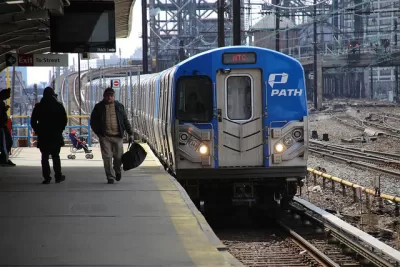
"In its annual funding recommendations report [pdf] issued this month to Congress on the Capital Investment Grants program, the Federal Transit Administration (FTA) this week rated both the Hudson Tunnel and the Portal North Bridge replacement projects as 'medium-low' in priority for federal grants," according to a clipping by Progressive Railroading on Feb. 15. "Medium-low is second-lowest rating on a five-point scale that helps determine whether federal funding is warranted."
The projects are key elements of the Amtrak Gateway program. The FTA's latest ratings indicated the Trump administration's shift away from the Obama administration's support for federal help in paying for the projects, Gateway program supporters said.
"In case it wasn't clear before, President Trump today tried to land another death blow to Gateway, by having his Federal Transit Administration vindictively and inexplicably downgrade the project in order to cut off critical federal funding," said U.S. Sen. Robert Menendez (D-N.J.) in a press release.
Under President Obama, the states of New York, New Jersey and the Port Authority of New York and New Jersey came to an agreement: the states and the Port Authority would fund roughly half the $20 billion program, though costs vary depending on which projects are included. However, that agreement came into question when Trump administration officials signaled in December that they weren't happy with the financing aspects of the agreement.
The cost for the new tunnel under the Hudson River and rehabbing the existing one, which ultimately would provide four tracks between New York Penn Station and Secaucus, New Jersey, would cost $12.7 billion.
The Port Authority announced on Feb. 15 that it would contribute $44 million to "to keep the project moving," reported Dan Rivoli of the Daily News, "so that when federal funding materializes, there will be no delay in construction."
However, with the low rating from the FTA, and much competition, unlike the agreement reached under former Transportation Secretary Anthony Foxx, there are no assurances that those funds will be forthcoming soon.
"Under Trump's plan, however, Gateway will have to compete with other projects across the country for a limited amount of grant money intended to leverage state, local and private-sector investment," report Curtis Tate and Herb Jackson for NorthJersey.com on Feb. 13.
The first blow to replace the Hudson Tunnel occurred Oct. 7, 2010, when New Jersey's from Republican governor, Chris Christie, scrapped the project. The second blow was delivered by Hurricane Sandy two year later when it flooded the existing tunnel, causing extensive damage.
Read the full story: FTA lowers grant ratings for Amtrak tunnel, bridge projects
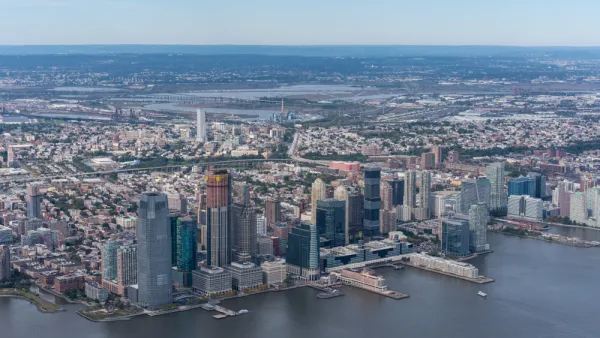
Costs, Delays Ballon on Hudson River Tunnel Project
Developers are baling the latest delays and cost increases for the Hudson Tunnel Project on uncertainty surrounding federal environmental review.
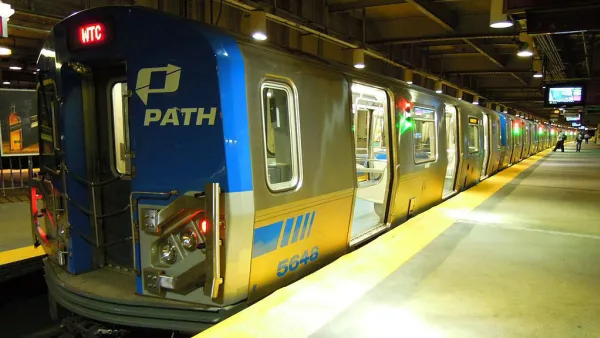
Financing of Hudson River Rail Tunnels in Peril
A funding agreement between New York, New Jersey, and the U.S. DOT for one of the most important rail projects in the nation is in danger of collapsing because of the way the two states are financing their share of the $12.9 billion cost.
Will N.Y.-N.J. Summit Kickstart America's Most Important Rail Project?
Peter Rogoff, the acting undersecretary of transportation, urged New York and New Jersey to agree to plans to advance Amtrak Gateway, the $15 billion Hudson River tunnels which he called the most important rail project in the country.

Planetizen Federal Action Tracker
A weekly monitor of how Trump’s orders and actions are impacting planners and planning in America.

Eastern Nebraska is running out of electricity
Data centers and electrification are straining eastern Nebraska’s grid, throttling economic development.

Washington state to charge fee to drivers with fuel-efficient cars
Revenue from the fee will go towards supporting the state’s highways.

Instead of building new housing, LA developers are turning mansions into mega-mansions
In the richest areas, the number of houses valued at $30 million with demolition permits has skyrocketed since 2018.

Illinois considers spending $1 billion in taxpayer money on data center
A quantum computing campus and data center are currently under construction in Chicago.

As development costs rise, Boston moves to lessen affordable housing requirements
The Boston Zoning Commission and the City Council still need to approve Boston Mayor Michelle Wu’s proposed changes

FREE Course: Walkable City 1: Why Walkability?
After describing his path towards focusing on walkability as the essence of good planning, Jeff Speck marches through his five principal reasons for making more walkable places.
Reinventing Malls: Planning Alchemy—Turning Gray Fields Into Gold
The course focuses on the opportunities and imperatives that shape reinvention of mall sites.

City of Charlotte
City of Rosemead
Rutgers University, Edward J. Bloustein School of Planning and Public Policy
University of Michigan School for Environment and Sustainability (SEAS)
Hunter College, City University of New York (CUNY)
The Architects Foundation
University District Partnership
City of Cambridge
The Pocatello Development Authority