One of two initiatives to repeal last November's 12-cents per gallon gas tax increase failed to attract enough signatures by the Jan. 8 deadline. However, the other initiative has major backing and will likely appear on the Nov. 6 ballot.


Assemblyman Travis Allen (R-Huntington Beach) had hoped his "Repeal the Gas Tax" campaign would also promote his campaign for governor in this November's election. While his name will appear on the ballot, his initiative won't.
"Allen had 150 days to collect 365,000 signatures to qualify his initiative for the November ballot, but the deadline passed this week without any signatures being turned in," reports Patrick McGreevy for the Los Angeles Times on Jan. 12.
He said he will support a campaign for a similar ballot measure backed by the Howard Jarvis Taxpayers Assn. and rival GOP candidate for governor John Cox.
Allen won a significant lower court battle over the title of his initiative in October only to lose on appeal by Attorney General Xavier Becerra in November. An appeal to the state Supreme Court was denied. He blamed the court battles for the failure to qualify his initiative.
Reform California initiative
"The initiative that has received financial backing from Cox has collected 400,000 of the 580,000 signatures needed to qualify a constitutional amendment for the November ballot," adds McGreevy. "That measure would not only repeal the gas tax but require future gas tax increases to be approved by the voters."
By contrast, the Allen initiative would have been statutory law, thus had a lower signature threshold. The "California Voter Approval for Gas and Vehicle Taxes Initiative" has until June 28 to submit sufficient signatures to the Secretary of State's office.
According to a Capital Public Radio broadcast on Jan. 22 on the two ballot initiatives, San Diego businessman Cox contributed $250,000 toward the Reform California initiative.
A UC Berkeley poll taken last month found 52 percent of voters support repealing the new 12-cents per gallon gas tax and other taxes and fees in the SB 1 legislation, while 43 percent favored retaining the taxes and fees.
Road Repair and Accountability Act to pour revenues into roads and transit
"Gov. Jerry Brown proposed to spend $4.6 billion from new gas taxes and vehicle fees on repairing California’s roads and bridges and improving rail systems in the next year, and downplayed the threat that voters might repeal the levies in November," reported McGreevy on Jan. 10.
The governor’s proposed budget includes $2.8 billion of the new tax revenue to repair neighborhood roads, state highways and bridges, $556 million to improving trade and commute corridors, $200 million to match county funds on transportation projects and $721 million to improve local passenger rail and public transit system
Over $5 billion annually is projected to be generated annually from fuel taxes and vehicle fees in the Road Repair and Accountability Act of 2017, SB 1 (Beall), passed by the legislature last April. It invests $52.4 billion over the next decade - split equally between state and local investments. [See list of programs on governor's webpage].

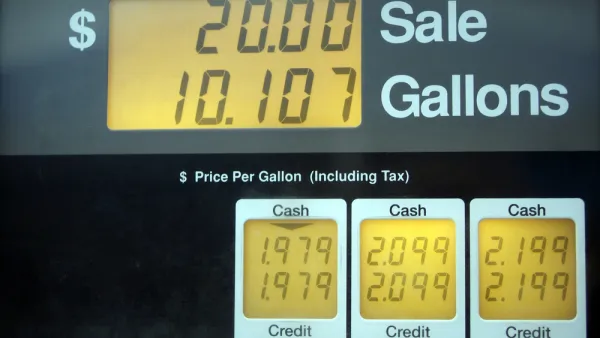
California Gas Tax Repeal Initiative Qualifies for November Ballot
The initiative is much more than whether to repeal taxes and fees enacted by the passage of the Road Repair and Accountability Act of 2017 which brings in over $5 billion a year. The measure is a means to increase GOP turnout to retain House seats.
Californians Vote to Maintain Roads and Transit by Rejecting Gas Tax Repeal
In potentially the most important transportation ballot measure in the state since 1990, the last time residents voted on the gas tax, Californians were deciding whether to repeal fuel taxes and vehicle registration fees approved last year.
California Gas Tax Repeal Provokes Internecine Republican Conflict
Chances for a repeal of California's 12-cents gas tax increase have doubled in that two measures aim to qualify for the November 2018 ballot. The initiatives are opposed by the state's major business groups that usually side with Republican causes.

The state-sanctioned urbicide of Austin
People don’t kill cities. Freeways do.

US to reduce Colorado River water deliveries to Mexico
A new Colorado Treaty amendment reduces Mexico’s Colorado River water allocation by 250,000 acre feet.

New Jersey’s second-largest city bans standalone data centers
Jersey City will continue to allow co-location facilities, such as those meant for research institutions that store their own data.

Amtrak not solely to blame for New Jersey commuter rail's unreliability, report finds
A new study from the Garden State Initiative found that NJ Transit’s budget grew 20% across a 4 year period, but reliability declined significantly over the same period.

EPA erases limits on planet-warming pollution from power plants
Under Monday’s plan, power plants would still have some limits on how much mercury, arsenic and other contaminants they can emit.

Phoenix announces new on-demand transit service, more frequent RAPID buses
Both new services will launch in October, and are part of Phoenix's Project Effective Access Solutions for Easing Congestion.

FREE Course: Walkable City 1: Why Walkability?
After describing his path towards focusing on walkability as the essence of good planning, Jeff Speck marches through his five principal reasons for making more walkable places.
Reinventing Malls: Planning Alchemy—Turning Gray Fields Into Gold
The course focuses on the opportunities and imperatives that shape reinvention of mall sites.

Eagle County Government
Harvard University Graduate School of Design
Nashville Planning Department
The Architects Foundation
University of Cincinnati Online
The Pocatello Development Authority
The Urban Renewal Agency of the City of Pocatello
Journal of the American Planning Association