Citing the psychological impact of doughnuts and the American Red Cross, one opinion writer questions the wisdom of a recent sponsorship deal.


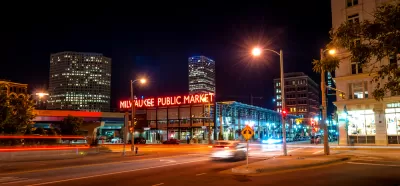
Milwaukee recently announced that, for the first year of operation, there will be no charge to ride the streetcar line now known as “The Hop.”
The arrangement was made possible the Potawatomi Hotel & Casino, which is paying $10 million for 12 years of operation in exchange for naming rights.
It’s one way to increase ridership on a new system, but at Urban Milwaukee, Jay Bullock writes, “free rides for a year is a terrible, terrible idea.”
Bullock attributes his opinion to the American Red Cross, free doughnuts, and an economic concept known as “categorical change,” which is psychologically distinct from a change in price, at least in the minds of consumers.
“In World War II, the Red Cross offered free coffee and donuts to American soldiers overseas. They charged soldiers from other Allied nations a quarter a donut, though, so there was some animosity as you might expect. The War Department kindly asked the Red Cross to charge American soldiers, too, and the soldiers flipped out.”
Or, as one economist writes, “It turns out that people typically overreact to price or income changes within an expenditure category.”
The city is likely anticipating decreased ridership after the free year, but, asks Bullock, “[W]hat if it’s not some drop-off, but a deep, deep dive? With your riders now super angry that you started charging?”
The author, in the end, raises a very modern example.
“Imagine, for example, if Facebook suddenly announced it would cost $10 a month. Well, I tell you what, I bet MySpace would come roaring back!”
FULL STORY: Don’t Make Streetcar Rides Free

Milwaukee Streetcar Gets Corporate Sponsorship—Riders Get Free Rides for a Year
Milwaukee's new streetcar line is expected to open in 2018, and riders won't have to pay for a ride for another year, thanks to a lucrative sponsorship deal.
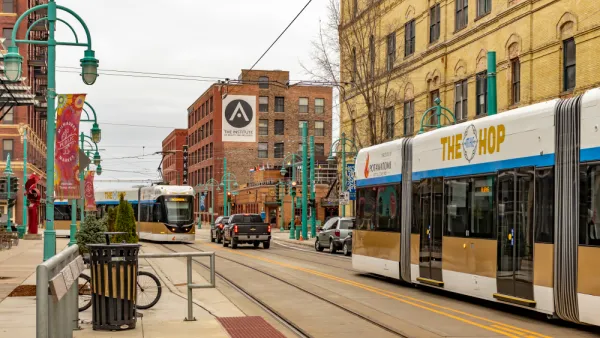
Milwaukee Streetcar To Benefit from Extended TIGER Grant
With the extension from Congress, Milwaukee can continue work on its downtown streetcar.
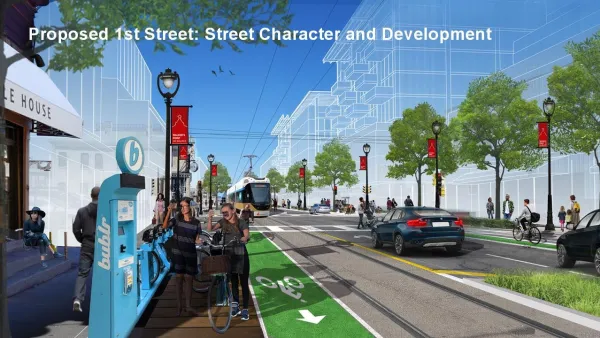
Progress Slow for Milwaukee's Streetcar Extension
Milwaukee's mayor has a $160 million plan to extend The Hop streetcar, but the proposal so far lacks the necessary political support.

Planetizen Federal Action Tracker
A weekly monitor of how Trump’s orders and actions are impacting planners and planning in America.

The state-sanctioned urbicide of Austin
People don’t kill cities. Freeways do.

US to reduce Colorado River water deliveries to Mexico
A new Colorado Treaty amendment reduces Mexico’s Colorado River water allocation by 250,000 acre feet.

Baltimore to break ground on $50 million Transit Priority Project
The project will bring faster bus trips, safer streets and better bike connections to Baltimore.

Airbnb launches $250 million 'last-dollar financing' housing accelerator, makes first investment in Austin
The company will put $6.4 million towards affordable housing development in Texas’ capital.

Guerilla urbanists are building DIY bus stop benches in Chicago
A before-and-after of one of the bus stops with a new bench. The new benches are not officially sanctioned or permitted, but the residents who placed them hope they will be the start of a network of DIY benches across the city.

FREE Course: Walkable City 1: Why Walkability?
After describing his path towards focusing on walkability as the essence of good planning, Jeff Speck marches through his five principal reasons for making more walkable places.
Reinventing Malls: Planning Alchemy—Turning Gray Fields Into Gold
The course focuses on the opportunities and imperatives that shape reinvention of mall sites.

Eagle County Government
Harvard University Graduate School of Design
Nashville Planning Department
The Architects Foundation
University of Cincinnati Online
The Pocatello Development Authority
The Urban Renewal Agency of the City of Pocatello
Journal of the American Planning Association