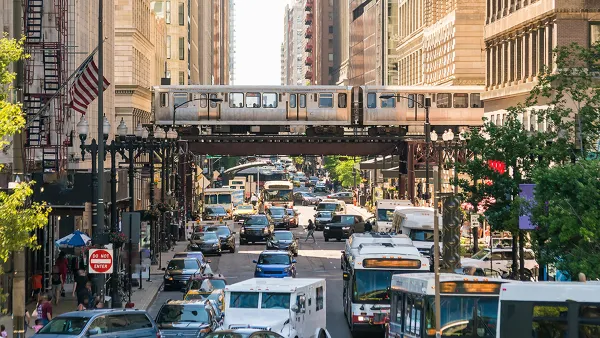
Chicago's Mayor Emanuel's proposed tax would be used for the benefit of transit.



Mayor Rahm Emanuel's proposal to tax ride sharing services will help poor Americans, argues The Washington Post Editorial Board.
While many have touted ride sharing as an alternative to car ownership that might reduce traffic and vehicle miles traveled (VMT), the rise of services like Uber and Lyft seem to be doing the opposite. "Half or more of all ride-hailing trips would not have been made at all, or would have been undertaken by foot, bicycle or transit," according to The Washington Post. Keeping people off mass transit means less funding for transit and less investment in transit from those who can afford Uber. "In a new transportation study from the University of California at Davis, researchers confirm what many urban officials already suspected — that bus and rail-system passengers are also being lured away," according to The Washington Post.
"Services such as Uber are in fact generating traffic, then they are a mixed blessing and should be treated accordingly by policymakers," they write, concluding that, "it is equitable to raise revenue from services such as Uber, which are used disproportionately by wealthier passengers, for the benefit of transit, which serves a mass clientele."
Mayor Emanuel has been given the nickname Mayor One Percent, because his moves to remove services from poor areas and people in the city. The editorial suggests that this proposal might do something to temper that reputation.
FULL STORY: Want to help poorer Americans? Tax Uber

Chicago's Innovative Ride-Hailing Tax Approved
The Chicago City Council has approved a new budget that includes a new transit funding mechanism that could level the playing field for transit.
Tax Uber and Lyft to Pay for Transit? Chicago Might
The city of Chicago is already taxing rides with transportation network companies like Uber and Lyft. Now mayor Rahm Emanual wants to raise those fees and spend the extra money on transit projects.
New Research Connects Land Use to Ride-Hailing Trips
Many of the places in Chicago generating the most ride-hailing trips with services like Uber and Lyft are accessible by transit, according to new research.

The state-sanctioned urbicide of Austin
People don’t kill cities. Freeways do.

US to reduce Colorado River water deliveries to Mexico
A new Colorado Treaty amendment reduces Mexico’s Colorado River water allocation by 250,000 acre feet.

New Jersey’s second-largest city bans standalone data centers
Jersey City will continue to allow co-location facilities, such as those meant for research institutions that store their own data.

Amtrak not solely to blame for New Jersey commuter rail's unreliability, report finds
A new study from the Garden State Initiative found that NJ Transit’s budget grew 20% across a 4 year period, but reliability declined significantly over the same period.

EPA erases limits on planet-warming pollution from power plants
Under Monday’s plan, power plants would still have some limits on how much mercury, arsenic and other contaminants they can emit.

Phoenix announces new on-demand transit service, more frequent RAPID buses
Both new services will launch in October, and are part of Phoenix's Project Effective Access Solutions for Easing Congestion.

FREE Course: Walkable City 1: Why Walkability?
After describing his path towards focusing on walkability as the essence of good planning, Jeff Speck marches through his five principal reasons for making more walkable places.
Reinventing Malls: Planning Alchemy—Turning Gray Fields Into Gold
The course focuses on the opportunities and imperatives that shape reinvention of mall sites.

Eagle County Government
Harvard University Graduate School of Design
Nashville Planning Department
The Architects Foundation
University of Cincinnati Online
The Pocatello Development Authority
The Urban Renewal Agency of the City of Pocatello
Journal of the American Planning Association