New York City intends to make sure that zoning codes are a tool for preventing the risks of flooding.


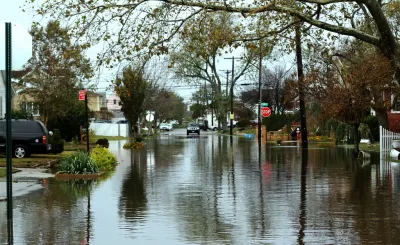
The New York Department of City Planning is currently working to update Flood Resilience Zoning rules adopted after Superstore Sandy. According to an explainers post on the NYC Planning website, the department is working with community members and property owners to create and approve a citywide zoning text amendment.
The Flood Resilience Zoning update is a part of the OneNYC plan, according to the post, and the new zoning amendment will be informed by the department's efforts "in specific neighborhoods – in residential, commercial and manufacturing areas – throughout the city’s floodplain…" The new zoning codes were preceded by climate resilience design guidelines published in June 2017.
In addition to explaining the risk of flooding in any given year in different parts of the city, the post also explains the relation between zoning and flood risks. According to the post, flood resilient zoning can reduce flood risk, promote resilient and vibrant neighborhoods, and plan for adaptation to climate change and sea level rise.
The department also created a video to explain these concepts and more in a visual format.
FULL STORY: Planning A Resilient New York City

How US Cities Can Prepare for Climate Disasters
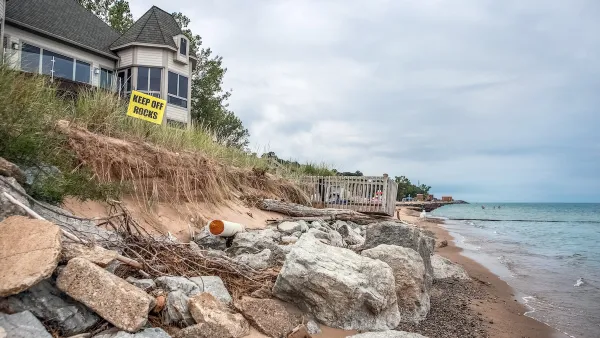
Resilience, encompassing infrastructure, governance, economic strength, and social cohesion, is critical for cities to mitigate rising climate risks like flooding, wildfires, and heat, ensuring long-term recovery and adaptability.
Climate Change Putting Coastal Infrastructure at Risk
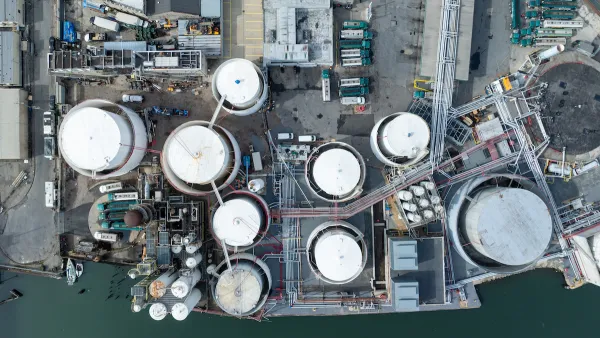
More than 1,000 coastal facilities could flood as often as once a month as sea levels rise, according to a study from the Union of Concerned Scientists.
Army Corps Proposes Sea Barriers to Protect New York from Rising Seas
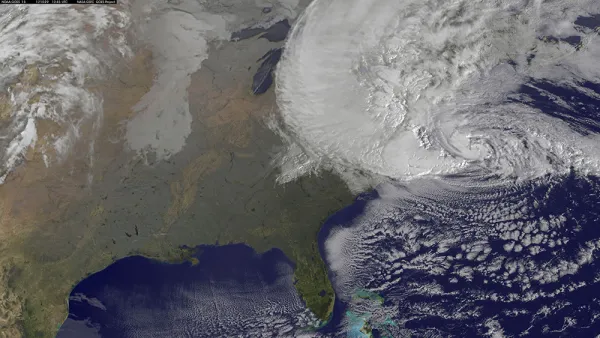
A massive infrastructure project is on the table in New York, after the U.S. Army Corps of Engineers released a new feasibility study.

Planetizen Federal Action Tracker
A weekly monitor of how Trump’s orders and actions are impacting planners and planning in America.

The state-sanctioned urbicide of Austin
People don’t kill cities. Freeways do.

US to reduce Colorado River water deliveries to Mexico
A new Colorado Treaty amendment reduces Mexico’s Colorado River water allocation by 250,000 acre feet.

5 New England states march closer to 800 megawatt wind energy project
Securing federal approval for the project may be complicated under the Trump administration, which has historically been hostile towards domestic wind power.

Baltimore to break ground on $50 million Transit Priority Project
The project will bring faster bus trips, safer streets and better bike connections to Baltimore.

Airbnb launches $250 million 'last-dollar financing' housing accelerator, makes first investment in Austin
The company will put $6.4 million towards affordable housing development in Texas’ capital.

FREE Course: Walkable City 1: Why Walkability?
After describing his path towards focusing on walkability as the essence of good planning, Jeff Speck marches through his five principal reasons for making more walkable places.
Reinventing Malls: Planning Alchemy—Turning Gray Fields Into Gold
The course focuses on the opportunities and imperatives that shape reinvention of mall sites.

Eagle County Government
Harvard University Graduate School of Design
Nashville Planning Department
The Architects Foundation
University of Cincinnati Online
The Pocatello Development Authority
The Urban Renewal Agency of the City of Pocatello
Journal of the American Planning Association