A massive infrastructure project is on the table in New York, after the U.S. Army Corps of Engineers released a new feasibility study.


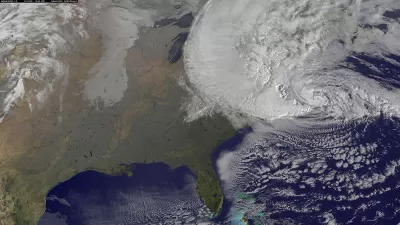
"[T]he U.S. Army Corps of Engineers has proposed several different approaches to preventing flood surges using gates and berms in and around New York Harbor, and environmentalists are sounding the alarm," reports Jonathan Hilburg.
The proposals are part of the New York-New Jersey Harbor and Tributaries Coastal Storm Risk Management Feasibility Study, a 2,150-mile survey of the region’s most vulnerable areas. The Corps has put together five schemes—four that use storm barriers, and one “as is” projection—and is soliciting feedback from New York and New Jersey residents with a series of information sessions this week.
As noted by Hilburg, the project will have to negotiate a tricky balance between property protection and environmental protection. Clean Water advocates at Riverkeeper have already expressed concerns about the Army Corps approach to infrastructure. The article includes a lot more detail about the Hudson River tidal estuary and the schemes included in the feasibility study.
The Army Corps is holding a series of public information meetings on the feasibility study this week.
FULL STORY: Army Corps of Engineers proposes swinging sea gates for New York Harbor

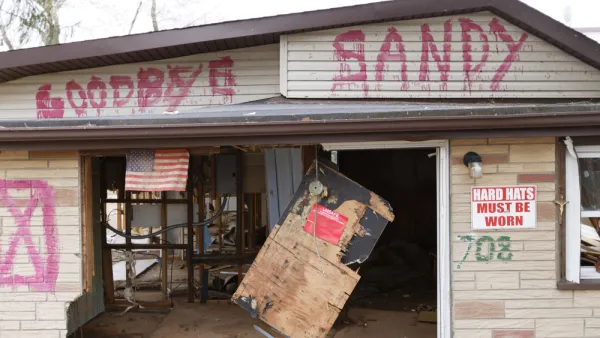
New Staten Island Zoning Rules Would Prohibit Most Development in Flood-Prone Areas
An article in Crain's Business New York calls the new zoning rules proposed for neighborhoods in Staten Island a "back to nature" scheme.

The New Boardwalk at Rockaway Beach Showcases Coastal Resilience
The new boardwalk at Rockaway Beach shows how sea level rise is requiring new design and infrastructure decisions for the resilience of coastal communities.
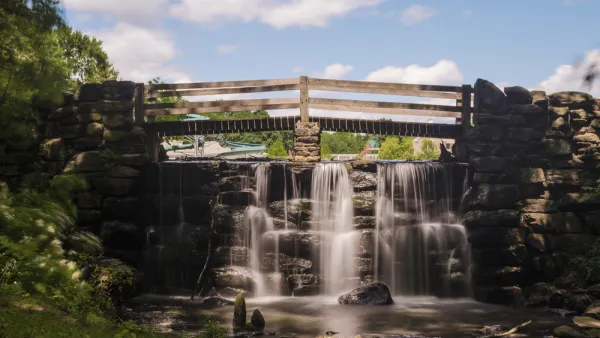
'Daylighting' Project to Restore Nature in the Big Apple
More cities are returning waterways to a more natural state—in some cases unearthing them from subterranean pipes in a process known as "daylighting." A new example can be found, perhaps surprisingly, in New York City.

The state-sanctioned urbicide of Austin
People don’t kill cities. Freeways do.

US to reduce Colorado River water deliveries to Mexico
A new Colorado Treaty amendment reduces Mexico’s Colorado River water allocation by 250,000 acre feet.

New Jersey’s second-largest city bans standalone data centers
Jersey City will continue to allow co-location facilities, such as those meant for research institutions that store their own data.

Amtrak not solely to blame for New Jersey commuter rail's unreliability, report finds
A new study from the Garden State Initiative found that NJ Transit’s budget grew 20% across a 4 year period, but reliability declined significantly over the same period.

EPA erases limits on planet-warming pollution from power plants
Under Monday’s plan, power plants would still have some limits on how much mercury, arsenic and other contaminants they can emit.

Phoenix announces new on-demand transit service, more frequent RAPID buses
Both new services will launch in October, and are part of Phoenix's Project Effective Access Solutions for Easing Congestion.

FREE Course: Walkable City 1: Why Walkability?
After describing his path towards focusing on walkability as the essence of good planning, Jeff Speck marches through his five principal reasons for making more walkable places.
Reinventing Malls: Planning Alchemy—Turning Gray Fields Into Gold
The course focuses on the opportunities and imperatives that shape reinvention of mall sites.

Eagle County Government
Harvard University Graduate School of Design
Nashville Planning Department
The Architects Foundation
University of Cincinnati Online
The Pocatello Development Authority
The Urban Renewal Agency of the City of Pocatello
Journal of the American Planning Association