The California Environmental Quality Act-mandated review process for a proposed bus rapid transit project in San Francisco took 13 years to complete.


"Late Thursday, the San Francisco County Transportation Authority Board approved the final environmental review of the Geary Bus Rapid Transit project, clearing a key hurdle for the project to move forward," reports Joe Fitzgerald Rodriguez.
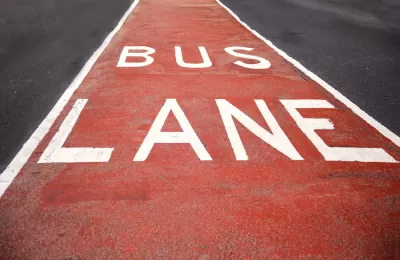
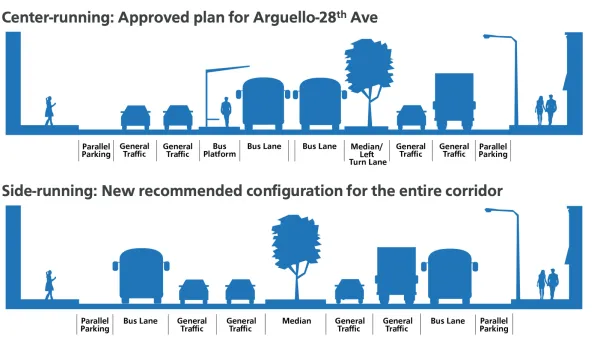
The project would transform Geary Boulevard to make the 38-Geary bus faster, and behave more like a train. A red bus-only lane would run along the sides of Geary Boulevard from 34th to 26th avenues, and the center of Geary Boulevard from 26th Avenue to just past Arguello Boulevard, and then again on the sides of Geary Boulevard the rest of the way to Market Street.
Despite the well-documented environmental benefits of bus transit, it took 13 years to complete the environmental review process for the bus project. The 38-Geary line will save an estimated 55,000 daily riders 20 minutes per round trip. The article includes the testimony from members of the public who opposed the project, and wanted to delay the vote to approve the environmental review even further.
Planning for project is not yet complete, however. According to the article, "the project will move into further planning stages under the auspices of the San Francisco Municipal Transportation Agency, requiring approvals from that agency’s board."
FULL STORY: Transit officials approve key milestone for Geary bus project

New Bus Only Lane Overcomes Opposition in San Francisco
Local business owners and the local elected official opposed the Geary transit-only lane project, but compromise and wide public support got the project across the finish line.

San Francisco’s Muni Ridership Grew in 2024
The system saw its highest ridership since before the Covid-19 pandemic, but faces a severe budget shortage in the coming year.

Van Ness BRT Speeds Travel by 36%, Earns Silver Designation
The San Francisco rapid bus line is making transit on the corridor more reliable and reducing traffic crashes and congestion.

Planetizen Federal Action Tracker
A weekly monitor of how Trump’s orders and actions are impacting planners and planning in America.

The state-sanctioned urbicide of Austin
People don’t kill cities. Freeways do.

US to reduce Colorado River water deliveries to Mexico
A new Colorado Treaty amendment reduces Mexico’s Colorado River water allocation by 250,000 acre feet.

5 New England states march closer to 800 megawatt wind energy project
Securing federal approval for the project may be complicated under the Trump administration, which has historically been hostile towards domestic wind power.

Baltimore to break ground on $50 million Transit Priority Project
The project will bring faster bus trips, safer streets and better bike connections to Baltimore.

Airbnb launches $250 million 'last-dollar financing' housing accelerator, makes first investment in Austin
The company will put $6.4 million towards affordable housing development in Texas’ capital.

FREE Course: Walkable City 1: Why Walkability?
After describing his path towards focusing on walkability as the essence of good planning, Jeff Speck marches through his five principal reasons for making more walkable places.
Reinventing Malls: Planning Alchemy—Turning Gray Fields Into Gold
The course focuses on the opportunities and imperatives that shape reinvention of mall sites.

Eagle County Government
Harvard University Graduate School of Design
Nashville Planning Department
The Architects Foundation
University of Cincinnati Online
The Pocatello Development Authority
The Urban Renewal Agency of the City of Pocatello
Journal of the American Planning Association