Tony Dutzik, senior policy analyst with the Frontier Group, presents three environmental reasons to support shared bikes and scooters, and why cities that have adopted climate plans should accommodate these small, clean, shared vehicles.


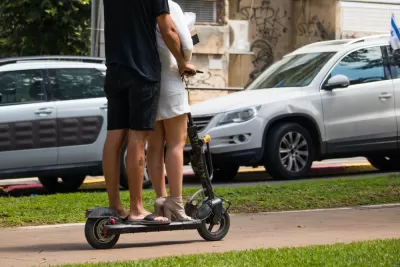
"In my home city of Boston, you can now find an increasingly madcap array of small vehicles on the streets and sidewalks – regular bikes, e-bikes, electric scooters, hoverboards, manual and electric skateboards of various kinds," writes Dutzik in a blog post for the Frontier Group. "There are even electric unicycles."
At the same time, app-based shared mobility is making some of these new types of vehicles available to anyone with a couple of bucks and a couple of minutes to download an app. The dockless bikeshare and scooter-share revolution has come quickly – often causing controversy along the way.
All these electric (and human-powered) vehicles and devices "have radical implications for our cities, and for our efforts to curb transportation’s contribution to global warming," he writes. "The environmental case for shared electric vehicles rests on three ideas."
- First, that electric vehicles are vastly more energy efficient than internal combustion engine vehicles and can run on clean energy.
- Second, that sharing vehicles eliminates the inherent incentive to drive that comes with having a vehicle sitting in your driveway that you are already paying for.
- The third – and probably least frequently discussed – idea is that internal combustion engines and individual ownership force a design logic on our vehicles that limits our opportunities to make them more efficient.
In a lengthy April interview with The New York Times in Venice, Los Angeles, where Bird has built its new headquarters, founder and CEO Travis VanderZanden makes the equity case for sharing these vehicles.
“Not everyone can afford their own electric scooter,” he said. “We shouldn’t discriminate against people that are renting versus owning.”
His point is a valid one. In the days since the Birds, as well as the Lime and Spin scooters have disappeared from the streets of San Francisco, one can still spot occasional electric scooters in the bike lanes, but without the names of the scooter-share companies.
Last words go to Dutzik:
A future in which small-scale electric and manually-powered mobility can work its transformative magic is one in which our cities must make a bold commitment to reallocating space on our streets – giving small, slow, light vehicles at least as much priority as big, heavy ones – and renegotiating the rules of how we all get around.
Read the full story: Scoot Over, Cars: Making Space for Small Vehicles

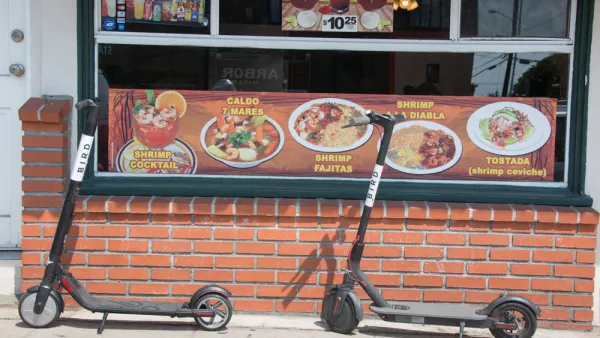
More Rights, Fewer Responsibilities, for Electric Scooter Riders in California
A bill that would toss the helmet requirement for adult e- scooter riders and allow them to ride on roads where the speed limit is 35 mph, up from the current limit of 25 mph, is on Governor Jerry Brown's desk. He has until Sept. 30 to decide.
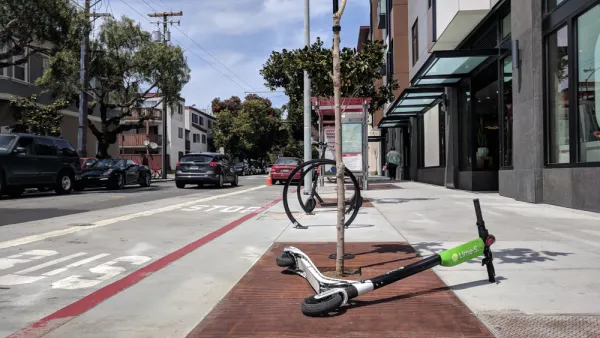
Scooter War Now a Scooter Competition
Three scooter companies, Lime, Bird and Spin, removed their scooters from the sidewalks of San Francisco earlier this month and applied, with nine other companies, for five permits to operate up to 2,500 scooters in a tightly regulated pilot program.
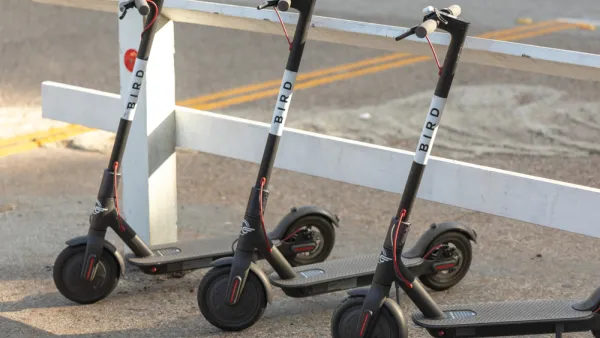
Scooter Mania in San Francisco
Entitled tech bros! Disrupted sidewalks! Mass impound sweeps! Social media convulsions!

Planetizen Federal Action Tracker
A weekly monitor of how Trump’s orders and actions are impacting planners and planning in America.

Amtrak, CN end decades-long dispute with eight-year agreement
The new operating agreement establishes an updated framework for the companies to work together, including processes to resolve disputes.

Northwest rail fans eager for Sept. 30 debut of Amtrak’s Airo fleet
Get ready for that new train smell and more seats. But they won’t go faster or run more frequently on the Cascades route in Washington and Oregon.

If Corpus Christi can’t revive desalination plant project, it may owe Texas $235 million
Earlier this month, city officials declined to pursue developing the plant for the second time in a year.

Brightline Florida expected to file for bankruptcy this week
The transit agency is over $5 billion in debt.

Atlanta City Council unanimously backs $3.5 billion Beltline light rail project
The resolution was drafted after Atlanta Mayor Andre Dickens pulled support for the Atlanta Streetcar extension last year.

FREE Course: Walkable City 1: Why Walkability?
After describing his path towards focusing on walkability as the essence of good planning, Jeff Speck marches through his five principal reasons for making more walkable places.
Reinventing Malls: Planning Alchemy—Turning Gray Fields Into Gold
The course focuses on the opportunities and imperatives that shape reinvention of mall sites.

City of Thousand Oaks
City of Wisconsin Rapids
Harvard University Graduate School of Design
The Architects Foundation
University of Cincinnati Online
The Pocatello Development Authority
The Urban Renewal Agency of the City of Pocatello