The Montgomery County Department of Transportation set up a website to explain the new rules of the multi-modal road.


For years, Montgomery County has been busy implementing innovative planning projects like bike lanes, pedestrian infrastructure, and new forms of public transit, but the general public might still need to catch up occasionally. With the need to educate the public on changes to the public realm in mind, the Montgomery County Department of Transportation recently set up a website tailored to explaining the new rules of the road for bikes and drivers navigating streets with new bike infrastructure elements like bike boxes, green bike lanes, protected bike lanes, two-way bike lanes, pocket lanes, and "mixing and conflict zone."
An interactive infographic illustrates each of these new infrastructure elements. The page also includes instructions for drivers, people on bikes, and pedestrians as well as tips and insights into traffic laws.
Finally, the county produced the following videos to further explain the new bike infrastructure elements found on streets.
Read the full story: LOOK OUT for our innovative NEW pedestrian and bikeway infrastructure and learn how to safely navigate these traffic patterns an

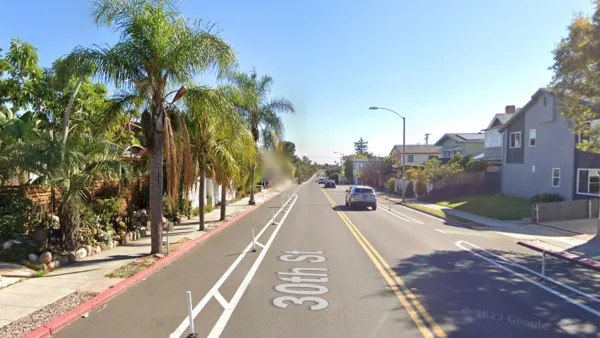
After San Diego Installed a Protected Bike Lane, Ridership More Than Doubled — and Hasn’t Stopped Growing.
“When people feel safe, they ride.”
Spokane Updates its Complete Streets Policy
Mayor Lisa Brown signed a revised version of the city’s Complete Streets framework that more closely aligns with state law and the city’s municipal code.
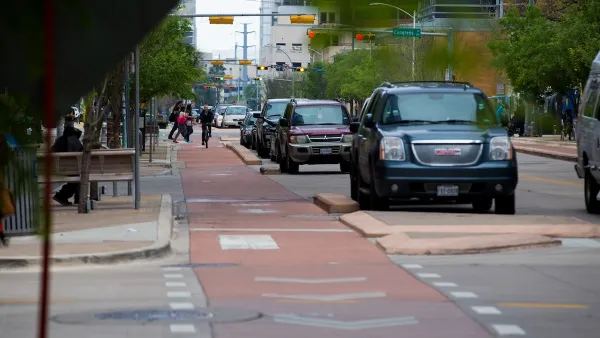
Austin Outlaws Blocking Bike Lanes
Drivers who park in bike lanes will receive citations of up to $300.

Planetizen Federal Action Tracker
A weekly monitor of how Trump’s orders and actions are impacting planners and planning in America.

California plans to bury El Niño’s downpour
If the state plays its cards right, it may be able to store a billion acre-feet of El Niño’s water in aquifers.

Chicago breaks ground on $3 billion megadevelopment
The new neighborhood, titled Foundry Park, will one day host 3,700 residences.

Satanic place names
From streams and lakes to valleys and canyons, I mapped more than 1,000 places named after the Devil.

California High-Speed Rail Authority CEO resigns after $600,000 scandal
Under Ian Choudri, the authority used taxpayer dollars to fund first class flights and trips to nightclubs.

Want to study the Missouri River? Soon, you may need unanimous approval from 10 states
Legislation would require 10 governors’ permission to study or build projects moving water outside the basin.

FREE Course: Walkable City 1: Why Walkability?
After describing his path towards focusing on walkability as the essence of good planning, Jeff Speck marches through his five principal reasons for making more walkable places.
Reinventing Malls: Planning Alchemy—Turning Gray Fields Into Gold
The course focuses on the opportunities and imperatives that shape reinvention of mall sites.

City of Rosemead
Rutgers University, Edward J. Bloustein School of Planning and Public Policy
One Hundred Miles
Hunter College, City University of New York (CUNY)
The Architects Foundation
University of Cincinnati Online
City of Cambridge
Montrose County
The Pocatello Development Authority