Citing the psychological impact of doughnuts and the American Red Cross, one opinion writer questions the wisdom of a recent sponsorship deal.


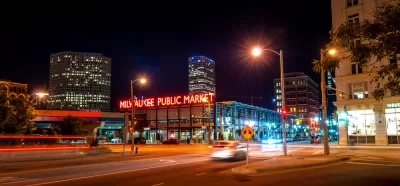
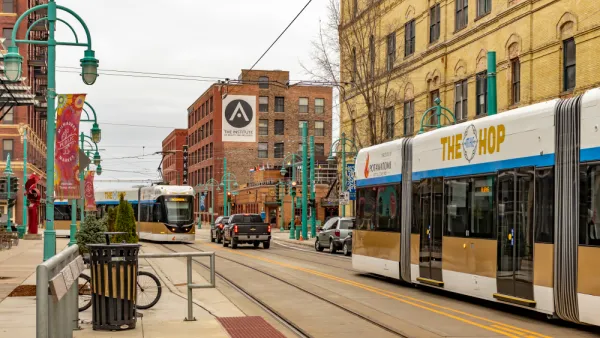
Milwaukee recently announced that, for the first year of operation, there will be no charge to ride the streetcar line now known as “The Hop.”
The arrangement was made possible the Potawatomi Hotel & Casino, which is paying $10 million for 12 years of operation in exchange for naming rights.
It’s one way to increase ridership on a new system, but at Urban Milwaukee, Jay Bullock writes, “free rides for a year is a terrible, terrible idea.”
Bullock attributes his opinion to the American Red Cross, free doughnuts, and an economic concept known as “categorical change,” which is psychologically distinct from a change in price, at least in the minds of consumers.
“In World War II, the Red Cross offered free coffee and donuts to American soldiers overseas. They charged soldiers from other Allied nations a quarter a donut, though, so there was some animosity as you might expect. The War Department kindly asked the Red Cross to charge American soldiers, too, and the soldiers flipped out.”
Or, as one economist writes, “It turns out that people typically overreact to price or income changes within an expenditure category.”
The city is likely anticipating decreased ridership after the free year, but, asks Bullock, “[W]hat if it’s not some drop-off, but a deep, deep dive? With your riders now super angry that you started charging?”
The author, in the end, raises a very modern example.
“Imagine, for example, if Facebook suddenly announced it would cost $10 a month. Well, I tell you what, I bet MySpace would come roaring back!”
Read the full story: Don’t Make Streetcar Rides Free
Milwaukee Streetcar Gets Corporate Sponsorship—Riders Get Free Rides for a Year
Milwaukee's new streetcar line is expected to open in 2018, and riders won't have to pay for a ride for another year, thanks to a lucrative sponsorship deal.
Milwaukee Streetcar To Benefit from Extended TIGER Grant
With the extension from Congress, Milwaukee can continue work on its downtown streetcar.
Progress Slow for Milwaukee's Streetcar Extension
Milwaukee's mayor has a $160 million plan to extend The Hop streetcar, but the proposal so far lacks the necessary political support.

Planetizen Federal Action Tracker
A weekly monitor of how Trump’s orders and actions are impacting planners and planning in America.

California plans to bury El Niño’s downpour
If the state plays its cards right, it may be able to store a billion acre-feet of El Niño’s water in aquifers.

Desperate measures: Advocates weigh draining Lake Powell to fill Colorado River
Draining the reservoir could reduce evaporation losses by a couple hundred thousand acre-feet.

Chicago voters approve permanent festival grounds, penalty for vacant property owners
Currently, major summer and fall festivals take over public parks for weeks at a time, drawing criticism from nearby residents

NYC votes to cut outdoor dining red tape, speed up permitting
New York City also voted to allow the Department of Transportation to begin work on urgent projects before notifying elected officials.

California appears to reject Prop. 45
The proposition would have expanded the projects that qualify for a streamlined environmental review, effectively paring down the California Environmental Quality Act.

FREE Course: Walkable City 1: Why Walkability?
After describing his path towards focusing on walkability as the essence of good planning, Jeff Speck marches through his five principal reasons for making more walkable places.
Reinventing Malls: Planning Alchemy—Turning Gray Fields Into Gold
The course focuses on the opportunities and imperatives that shape reinvention of mall sites.

City of Rosemead
Rutgers University, Edward J. Bloustein School of Planning and Public Policy
One Hundred Miles
Hunter College, City University of New York (CUNY)
The Architects Foundation
University of Cincinnati Online
City of Cambridge
Montrose County
The Pocatello Development Authority