A new study challenges the conventional wisdom regarding the superiority of light rail over bus rapid transit.


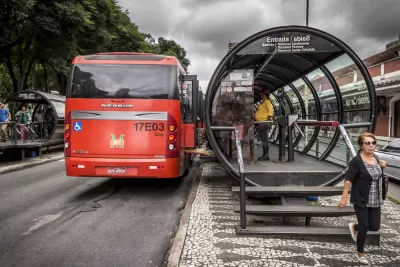
A new study published in Transport Reviews compares 86 transit systems around the world to reveal that an many cities around the world there is very little difference in the performance of light rail transit compared to bus rapid transit.
Darío Hidalgo writes an article sharing details of the new report, in effect challenging the perceived supremacy of light rail compared to bus rapid transit. According to Hidalgo's explanation of the study, researchers Jesper Ingvardson and Otto Nielsen from the Technical University of Denmark pulled date from 86 transit systems and compared several variables capturing both transit service and property development considerations—i.e., travel time savings, increase in demand from riders, modal shift, and land use and urban development changes.
After comparing some of the data revealed by the study for each of those variables, Hidalgo produces a potentially controversial conclusion: "BRTs can improve travel times, modal share and urban development at rates similar to those reported for light rail and metro."
FULL STORY: Are Trains Better Than Bus Rapid Transit Systems? A Look at the Evidence

Chicago Transit Releases 2024 Budget
The agency projects modest ridership growth while aiming to make long-term investments in bus and rail improvements.
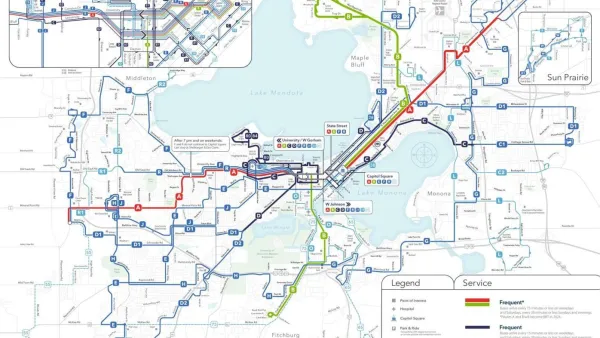
Madison Launches Redesigned Transit System
Transit riders in Madison, Wisconsin are navigating an entirely new system this week.
Madison Redesigning its Transit System, BRT Included
Transit service in the Wisconsin State Capital has been redesigned on a high-frequency grid.

Planetizen Federal Action Tracker
A weekly monitor of how Trump’s orders and actions are impacting planners and planning in America.

The state-sanctioned urbicide of Austin
People don’t kill cities. Freeways do.

US to reduce Colorado River water deliveries to Mexico
A new Colorado Treaty amendment reduces Mexico’s Colorado River water allocation by 250,000 acre feet.

5 New England states march closer to 800 megawatt wind energy project
Securing federal approval for the project may be complicated under the Trump administration, which has historically been hostile towards domestic wind power.

Baltimore to break ground on $50 million Transit Priority Project
The project will bring faster bus trips, safer streets and better bike connections to Baltimore.

Airbnb launches $250 million 'last-dollar financing' housing accelerator, makes first investment in Austin
The company will put $6.4 million towards affordable housing development in Texas’ capital.

FREE Course: Walkable City 1: Why Walkability?
After describing his path towards focusing on walkability as the essence of good planning, Jeff Speck marches through his five principal reasons for making more walkable places.
Reinventing Malls: Planning Alchemy—Turning Gray Fields Into Gold
The course focuses on the opportunities and imperatives that shape reinvention of mall sites.

Eagle County Government
Harvard University Graduate School of Design
Nashville Planning Department
The Architects Foundation
University of Cincinnati Online
The Pocatello Development Authority
The Urban Renewal Agency of the City of Pocatello
Journal of the American Planning Association