Utah's I-15 express lanes are suffering PM peak-hour congestion. The maximum charge is $1 per zone. The Transportation Commission will vote to double it, but the chair of a key legislative committee suggests charging "what the market will bear."


"Utah legislators raised questions Wednesday about a proposal to double the tolls on Interstate 15 express lanes — saying they may need to be even higher to cut congestion," reports Lee Davidson for The Salt Lake Tribune on Oct. 4.
State highway officials last month proposed doubling the flexible tolls — upping the $1 maximum per section [pdf] charge to $2, depending on traffic. The Utah Transportation Commission is considering the plan, and may vote as early as next week.
Several transportation commission members earlier suggested a maximum toll of $3 or even $5, saying even $2 was too low to really reduce congestion.
Carpooling is priority
The primary purpose of the lanes, also referred to as High Occupancy Vehicle (not High Occupancy Toll) lanes is to entice motorists to carpool "so the general-purpose lanes function better,” explained Shane Marshall, deputy director of the Utah Department of Transportation (UDOT).
"It does that by trying to maintain [express lane] speeds of at least 55 mph," adds Davidson. However, speeds have dropped to 31 mph shortly after 5 p.m.
Clean fuel vehicles
A secondary priority is to provide an incentive for consumers to purchase hybrid and electric vehicles eligible for a Clean Fuel Vehicle Decal and Permit, though UDOT has placed a cap of 6,650 decals which has already been reached.
Rep. Karianne Lisonbee, R-Clearfield, raised one more option for consideration — eliminating the toll-paying, single-passenger cars from express lanes to allow more use by clean-fuel vehicles.
Final say: legislature
The Transportation Commission's recommendation goes to the legislature for final approval. Sen. Howard Stephenson, R-Draper, chairman of the Revenue and Taxation Interim Committee, also doubted that a $1 hike would be sufficient to maintain the 55 mph traffic flow.
He encouraged considering “charging the maximum the market will bear” not only to reduce congestion, but perhaps to raise some money for highways.
Stephenson also asked if UDOT has considered requiring at least three occupants — instead of two — to carpool in the express lane for free.
Marshall indicated that wasn't yet an option, but didn't rule it out in the future.
Tolls are not meant to be revenue-maker
Marshall said UDOT isn’t seeking to make money through tolls, only to cover costs of that program and help keep down congestion enough so that carpoolers may travel at least 55 mph.
Carpool cheating is rampant
Cheating, where ineligible vehicles, i.e., single-occupant vehicles without Express Pass transponders, is the highest in the country, according to UDOT. Stephenson states the violation rate is 20 percent. However, a June 2017 Mercury News article indicates that the violation rate is 30 percent in Silicon Valley.
Hat tip to AASHTO Daily Transportation Update.
FULL STORY: Utah lawmakers question plan to double tolls on freeway express lanes

Maximum Toll on Utah's Interstate 15 Express Lanes Just Doubled
But is it high enough? Everything is relative, and with the prior toll being only a buck per zone, the hope is that $2, which took effect Saturday, will cause some motorists to carpool to keep speeds at 55 mph during peak hours.
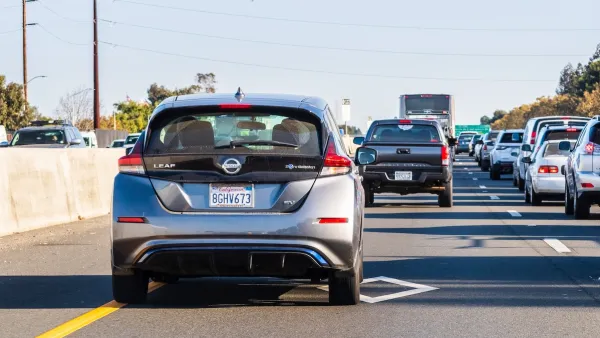
When Carpool Lanes Cause Mayhem
A newly widened Bay Area freeway serves as a reminder of the futility of HOV lanes. There are better ways to manage and mitigate traffic.
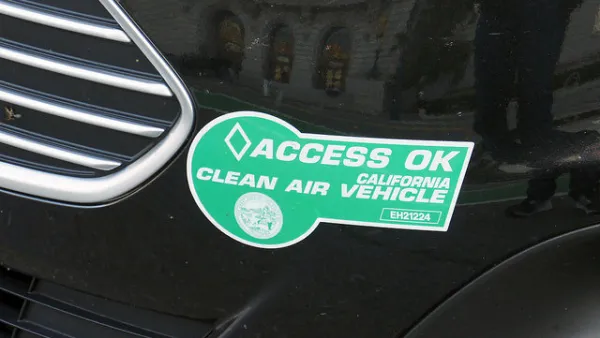
220,000 EV Drivers in California to Lose Carpool Lane Perk in 2019
The good news: the Clean Air Vehicle program for electric vehicles will be extended for at least three years. The bad news: not all EVs that have a decal now will be able to be renewed. Congestion on HOV and HOT lanes is a major concern.

Planetizen Federal Action Tracker
A weekly monitor of how Trump’s orders and actions are impacting planners and planning in America.

The state-sanctioned urbicide of Austin
People don’t kill cities. Freeways do.

US to reduce Colorado River water deliveries to Mexico
A new Colorado Treaty amendment reduces Mexico’s Colorado River water allocation by 250,000 acre feet.

5 New England states march closer to 800 megawatt wind energy project
Securing federal approval for the project may be complicated under the Trump administration, which has historically been hostile towards domestic wind power.

Baltimore to break ground on $50 million Transit Priority Project
The project will bring faster bus trips, safer streets and better bike connections to Baltimore.

Airbnb launches $250 million 'last-dollar financing' housing accelerator, makes first investment in Austin
The company will put $6.4 million towards affordable housing development in Texas’ capital.

FREE Course: Walkable City 1: Why Walkability?
After describing his path towards focusing on walkability as the essence of good planning, Jeff Speck marches through his five principal reasons for making more walkable places.
Reinventing Malls: Planning Alchemy—Turning Gray Fields Into Gold
The course focuses on the opportunities and imperatives that shape reinvention of mall sites.

Eagle County Government
Harvard University Graduate School of Design
Nashville Planning Department
The Architects Foundation
University of Cincinnati Online
The Pocatello Development Authority
The Urban Renewal Agency of the City of Pocatello
Journal of the American Planning Association