A proposed bus rapid transit route connecting Pittsburgh to the neighborhood of Oakland will surely benefit many commuters, but other transit commuters, including some of the poorest in the region, will face new hardships.


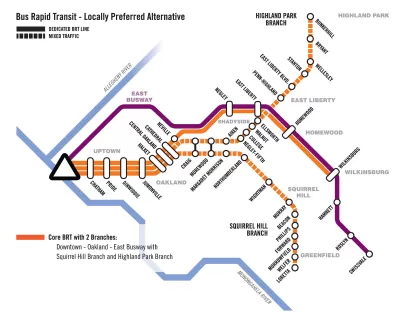
[Updated: October 12, 2017] Ed Blazina updates the status of proposed bus rapid transit route between downtown Pittsburgh and the neighborhood of Oakland, which planners have been refining for at least 18 months, and in the public consciousness for much longer.
While the $195 million project waits for funding from the Federal Transit Administration, Port Authority of Allegheny County planners are holding hearings to explain the projects impact on regular bus riders in eastern neighborhoods and suburbs in the Monongahela Valley.
"Many routes used by those riders, such as the 61A, B and C, would end in Oakland when the new system becomes available, and riders would have to transfer," according to Blazina. So the Port Authority is considering "whether to reduce outlying service, charge for transfers and establish express routes from some communities."
[Updated to reflect the actual location of Oakland in the Pittsburgh city limits.]
FULL STORY: How will 'rapid bus service' impact outlying areas?

Pittsburgh to Oakland BRT Making Planning Progress
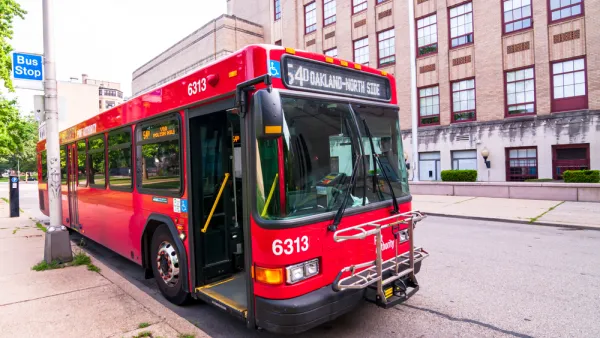
An ambitious plan to connect the Allegheny County cities of Pittsburgh and Oakland is proceeding to final stages of design, despite having fallen a little behind schedule for an expected 2021 opening date.
Electric Bus Rapid Transit Between Pittsburgh and Oakland Takes Crucial Steps Forward
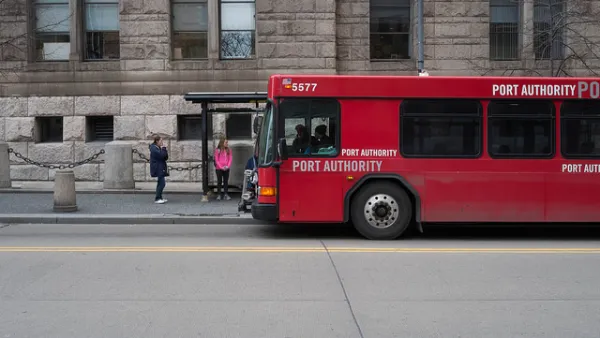
The Port Authority of Allegheny County will lead the remainder of a project to deliver major transportation improvements between Downtown Pittsburgh and Oakland.
Pittsburgh to Oakland BRT Makes Adjustments, Keeps Moving Forward
The Port Authority of Allegheny County is expected to submit a proposal for a $199.5 million electric bus rapid transit system for federal funding.

Planetizen Federal Action Tracker
A weekly monitor of how Trump’s orders and actions are impacting planners and planning in America.

The state-sanctioned urbicide of Austin
People don’t kill cities. Freeways do.

US to reduce Colorado River water deliveries to Mexico
A new Colorado Treaty amendment reduces Mexico’s Colorado River water allocation by 250,000 acre feet.

Mamdani overhauls NYC's Vision Zero plan with 100 new policy goals
The overhaul aims to reduce traffic deaths and make streets safer for pedestrians, cyclists and drivers through lower speed limits, new safety infrastructure and more.

Amtrak not solely to blame for New Jersey commuter rail's unreliability, report finds
A new study from the Garden State Initiative found that NJ Transit’s budget grew 20% across a 4 year period, but reliability declined significantly over the same period.

EPA erases limits on planet-warming pollution from power plants
Under Monday’s plan, power plants would still have some limits on how much mercury, arsenic and other contaminants they can emit.

FREE Course: Walkable City 1: Why Walkability?
After describing his path towards focusing on walkability as the essence of good planning, Jeff Speck marches through his five principal reasons for making more walkable places.
Reinventing Malls: Planning Alchemy—Turning Gray Fields Into Gold
The course focuses on the opportunities and imperatives that shape reinvention of mall sites.

Eagle County Government
Harvard University Graduate School of Design
Nashville Planning Department
The Architects Foundation
University of Cincinnati Online
The Pocatello Development Authority
The Urban Renewal Agency of the City of Pocatello
Journal of the American Planning Association