Chinese railcar-maker CRRC allowed the public a glimpse at its new "Autonomous Rail Transit" last week. The ART is more than just a bus.


"Chinese railcar-maker CRRC on Jun. 2 unveiled a new product called Autonomous Rail Transit (ART) in Zhuzhou, Hunan province, and the bus-rail combo rapid transit system is expected to speed up city’s public transportation," reports People's Daily Online.
There are reasons to be skeptical about the likelihood that the new technology is a game changer in urban transit. For instance, it wasn't long ago that a video showing a kind of elevated train passing over cars picked up viral steam on the Internet, only to be debunked as an expensive fraud. in 2014, the news was about a potential high-speed rail connection between China and the United States. In the case of ART, the new system is expected to begin operations in the city of Zhuzhou in 2018, so we'll know relatively soon about the viability of the technology.
There's also the point that the new track-less train is just a bus. According to the article, the virtual track enables a longer vehicle and, thus, more capacity than a bus.
Read the full story: Faster and cheaper: World’s first driverless rail transit system unveiled in Hunan

What $454 Million in Bus Facility Funding Pays for in the United States
Spoiler alert: not much.
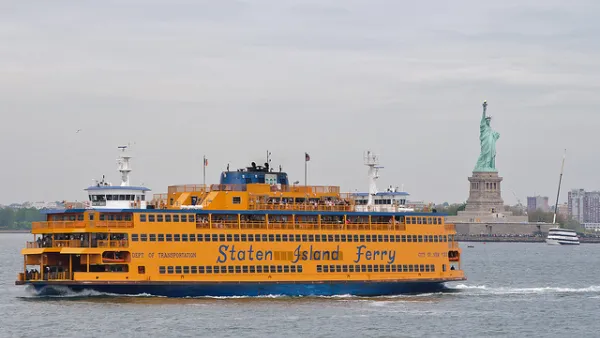
Friday Eye Candy: An Infographic for Every Transit Mode
Fans of public transit rejoice. A new infographic explores the rolling stock of most of the major cities in the United States and Canada.
Buying American Is Making Infrastructure More Expensive, Study Finds
From train cars to buses, a new study finds that buying American adds cost.

Planetizen Federal Action Tracker
A weekly monitor of how Trump’s orders and actions are impacting planners and planning in America.

Eastern Nebraska is running out of electricity
Data centers and electrification are straining eastern Nebraska’s grid, throttling economic development.

Study reveals best places in the U.S. for cycling, walking
New research from Streetlight Data examines bicycle and pedestrian miles per capita in the 100 largest U.S. cities by population.

San Antonio is using environmental review to stall ICE detention center
San Antonio sued last month to pause work on the new detention center until the federal government studied its effect on the surrounding area.

Austin plans light rail extension — before breaking ground on light rail
The planned extension is three miles long and will take riders straight to Austin-Bergstrom International Airport.

Chicago cuts ribbon on $300,000, self-cleaning public toilet
The public toilet is the city’s first, and may pave the way for a rollout of similar facilities.

FREE Course: Walkable City 1: Why Walkability?
After describing his path towards focusing on walkability as the essence of good planning, Jeff Speck marches through his five principal reasons for making more walkable places.
Reinventing Malls: Planning Alchemy—Turning Gray Fields Into Gold
The course focuses on the opportunities and imperatives that shape reinvention of mall sites.

City of Charlotte
City of Rosemead
Rutgers University, Edward J. Bloustein School of Planning and Public Policy
University of Michigan School for Environment and Sustainability (SEAS)
Hunter College, City University of New York (CUNY)
The Architects Foundation
City of Cambridge
The Pocatello Development Authority
The Urban Renewal Agency of the City of Pocatello