Spoiler alert: not much.


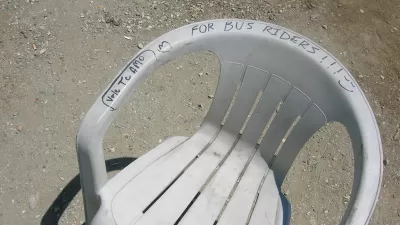
Kea Wilson provides analysis of a new pot of federal money for bus public transit, showing how the grant program is "nowhere near what our cities really need."
The Federal Transit Administration announced the availability of $454.6 million through the Grants for Buses and Bus Facilities on January 30, and Wilson's main purpose here is to provide perspective on what that amount of money can accomplish on the national scale. Documenting the data to back up the estimates, Wilson totals the deliverable impact of the funding total to 36 diesel buses per state, 12 electric buses per state, or 89 bus shelters per urban transit system.
But wait: there's more. "Maybe the most frustrating thing about our federal funding for buses is not how little the funds pay for, but what they won’t pay for at all," according to Wilson. "Legally, funds from the Grants for Buses and Bus Facilities program can’t be used to do anything besides buy physical infrastructure. That means cities can use those dollars to pay for striping for a bus lane — but if they want to pay a transportation planner to figure out the best place to put that bus lane, tough."
FULL STORY: Federal Bus Grants Are Just Too Damn Low


$1.66 Billion in Federal Infrastructure Funding Awarded to U.S. Bus Systems
The Federal Transit Administration announced the winners in the Bus and Bus Facilities and Low or No Emission Vehicle (Low-No Program) programs in August.
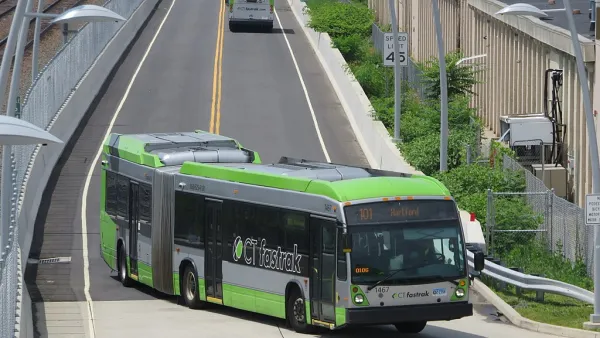
First: Grant Enables Automated Transit Buses in Connecticut
CTtransit will work with Robotic Research LLC, New Flyer of America, and the Center for Transportation and Environment to be the first public transit provider in the United States to operate full-sized, autonomous buses.

Detroit Transit Agency Requests $20M Budget Increase
The Detroit Department of Transportation wants to boost ridership by hiring more drivers, buying new buses, and enhancing station infrastructure.

Planetizen Federal Action Tracker
A weekly monitor of how Trump’s orders and actions are impacting planners and planning in America.

The state-sanctioned urbicide of Austin
People don’t kill cities. Freeways do.

US to reduce Colorado River water deliveries to Mexico
A new Colorado Treaty amendment reduces Mexico’s Colorado River water allocation by 250,000 acre feet.

Baltimore to break ground on $50 million Transit Priority Project
The project will bring faster bus trips, safer streets and better bike connections to Baltimore.

Airbnb launches $250 million 'last-dollar financing' housing accelerator, makes first investment in Austin
The company will put $6.4 million towards affordable housing development in Texas’ capital.

Guerilla urbanists are building DIY bus stop benches in Chicago
A before-and-after of one of the bus stops with a new bench. The new benches are not officially sanctioned or permitted, but the residents who placed them hope they will be the start of a network of DIY benches across the city.

FREE Course: Walkable City 1: Why Walkability?
After describing his path towards focusing on walkability as the essence of good planning, Jeff Speck marches through his five principal reasons for making more walkable places.
Reinventing Malls: Planning Alchemy—Turning Gray Fields Into Gold
The course focuses on the opportunities and imperatives that shape reinvention of mall sites.

Eagle County Government
Harvard University Graduate School of Design
Nashville Planning Department
The Architects Foundation
University of Cincinnati Online
The Pocatello Development Authority
The Urban Renewal Agency of the City of Pocatello
Journal of the American Planning Association