The California Strategic Growth Council has $140 million in cap-and-trade revenue for the new Transformative Climate Community program. The aim of the program is to catalyze environmental and economic investment in disadvantaged communities.


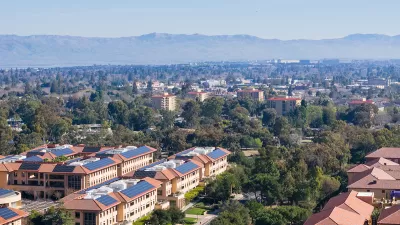
Addressing equity, climate change, and environmental health has been a high priority for both California Governor Jerry Brown and the California State Legislature. In 2016, these priorities coalesced around Assembly Bill 2722 (authored by Asm. Autumn Burke) which enacted the Transformative Climate Communities (TCC) Program under the California Strategic Growth Council.
Now, in an exclusive interview with The Planning Report, California Strategic Growth Council (SGC) Executive Director Randall Winston outlined his organization’s aims and goals in funding catalytic projects in targeted disadvantaged communities. The SGC is using data from CalEnviroScreen to determine environmental pollution and economic inequities.
SGC is investing $140 million of cap-and-trade revenue to fund projects in Fresno, Los Angeles, and a third location to be determined. They are also administering $1.5 million planning grants, which will help local governments and public-private partnerships build capacity for further investment and grant funding opportunities.
As part of the Transformative Climate Communities, the community can decide which greenhouse gas reduction methods suit it best, and combine them accordingly. The projects need to be community-led and reflect the environmental and economic needs of the neighborhood.As Winston elaborates,
“The Transformative Climate Communities program is fundamentally different. We are using a place-based framework, looking at how we can think about energy, waste, water, job creation, and public health in a more integrated fashion. We hope to bring a holistic view to both achieve our climate goals and uplift these environmentally and economically burdened communities.”
The projects are looking to maximize philanthropic and private-sector dollars, and addressing workforce training and economic development as a component of the program. Additionally, the evaluation metrics for the program are also different, as the SGC is assessing a host of indicators of a community’s health and sustainability over time.
Read more in The Planning Report.
Read the full story: New Strategic Growth Council Program Funds Catalytic, Neighborhood-Level Transformational Projects

Report: Cities’ Climate Plans Fail to Include Workforce Development
While a few cities have detailed goals and investment strategies for building their green workforce, most U.S. cities fail to address the need for the training and education of a new generation of workers.
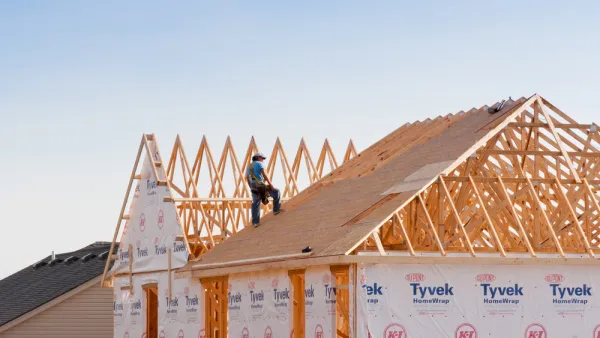
Will Innovative Financing Solve California's Housing Shortage?
Are housing and housing finance two separate problems? California Assemblymember David Chiu and others in housing discuss how available finance tools could be employed to expand the capital pool for affordable housing projects.
What Do Affordable Housing Developers Think of California's Potential Rent Control Initiative?
A California November 2018 ballot initiative seeking to repeal the Costa-Hawkins Rental Housing Act could have unintended consequences, according to Related California's Bill Witte.

Washington state to charge fee to drivers with fuel-efficient cars
Revenue from the fee will go towards supporting the state’s highways.

Illinois considers spending $1 billion in taxpayer money on data center
A quantum computing campus and data center are currently under construction in Chicago.

Trump to blast ‘hydrocarbon highway’ through ‘world’s longest art gallery’
Environmental and historic preservation groups are suing to stop the project.

NYC, state sue feds over mixed-immigration-status housing assistance rule
The state’s lawsuit argues that the rule change violates the Administrative Procedure Act.

Michigan to turn neighborhood into virtual power plant
Residents will soon be able to divert their excess energy to the grid in exchange for compensation.

Data center, mining project swarm to long-awaited Alaska railroad line
The state-owned railroad approved final plans for the spur line this week; the project is expected to cost $311 million, mostly funded by the federal government

FREE Course: Walkable City 1: Why Walkability?
After describing his path towards focusing on walkability as the essence of good planning, Jeff Speck marches through his five principal reasons for making more walkable places.
Reinventing Malls: Planning Alchemy—Turning Gray Fields Into Gold
The course focuses on the opportunities and imperatives that shape reinvention of mall sites.

City of Charlotte
City of Rosemead
Rutgers University, Edward J. Bloustein School of Planning and Public Policy
University of Michigan School for Environment and Sustainability (SEAS)
Hunter College, City University of New York (CUNY)
The Architects Foundation
University District Partnership