Bus ridership has dropped for many years in New York City, but much of the bleeding is concentrated in Manhattan and Brooklyn. Could the congestion problems of the central city be the reason for the declining use of bus transit?


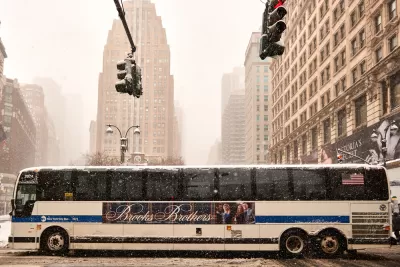
David Meyer reports:
Bus ridership in New York City fell 16 percent between 2002 and 2015 — a troubling trend that only gained steam last year. A look at the changes in each borough by transportation analyst Eric Goldwyn shows that since 2007, the bus ridership decline has been concentrated in Manhattan and Brooklyn.
Acknowledging that the reasons for the decline in Manhattan and Brooklyn are unclear, Meyer also considers the possibility that congestion—which traps buses and cars alike—could be making bus service a less and less attractive option. To Meyer, the implications of that challenge suggest that a systemwide approach will be necessary to speed bus service up in all five boroughs.
Meyer also references Mayor Bill de Blasio's expected congestion relief plan, of which there has already been discussion and debate.
Read the full story: Decline in NYC Bus Ridership Concentrated in Manhattan and Brooklyn

More Bus Service Translates to More Bus Riders
A new study finds that bus service determines bus ridership.
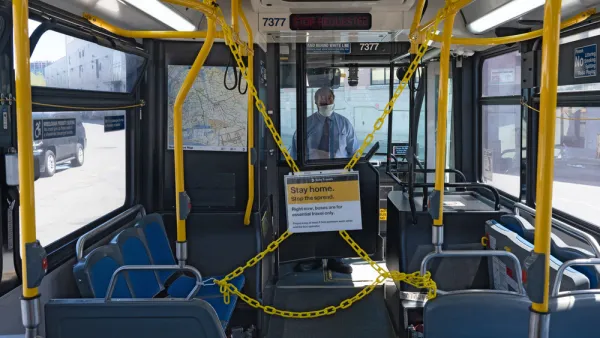
Ridership Up, Speeds Down for Buses in New York City
The new normal might be fleeting on buses in New York City, but it's already different than the normal routine during the early months of the pandemic.
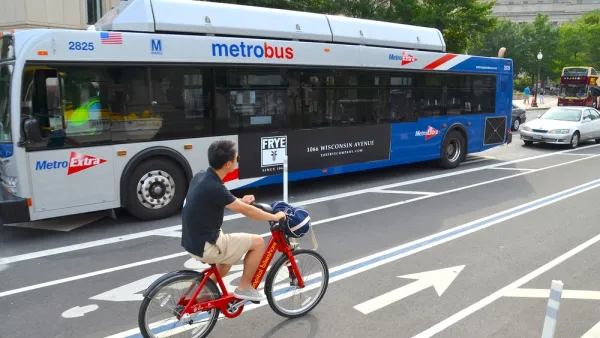
Report Lays Out a New Path for Bus Service in the D.C. Region
Ridership on the WMATA bus system, down an estimated 13 percent between 2012 and 2017, will need drastic innovations to reverse, according to a new report by the Bus Transformation project.

Planetizen Federal Action Tracker
A weekly monitor of how Trump’s orders and actions are impacting planners and planning in America.

‘Going backwards:’ Baltimore mayor, students rally against state's transit funding plan
Maryland's proposed six-year plan provides no funding for Baltimore’s BMORE bus program and reduces its road maintenance funding.

Detroit to transform waterfront with $2.2 billion investment
Developers will convert about 18 acres of unused parking lot space into civic spaces.

Californians can now transform balconies into power generators
Gov. Gavin Newsom has legalized plug-in solar technology, which allows residents to plug solar panels directly into their outlets

85-year-old ranch is Texas’ newest state park
The 650 acre ranch is one of the largest parcels of land along Lake Palestine.

MIT to create AI-powered hub for public transportation companies
Google awarded the project, titled the Public Transit Intelligence Hub, $2.1 million in funding.

FREE Course: Walkable City 1: Why Walkability?
After describing his path towards focusing on walkability as the essence of good planning, Jeff Speck marches through his five principal reasons for making more walkable places.
Reinventing Malls: Planning Alchemy—Turning Gray Fields Into Gold
The course focuses on the opportunities and imperatives that shape reinvention of mall sites.

City of Thousand Oaks
City of Wisconsin Rapids
Harvard University Graduate School of Design
The Architects Foundation
University of Cincinnati Online
Northern Illinois Transit Authority (NITA)
The Pocatello Development Authority
The Urban Renewal Agency of the City of Pocatello