A new study finds that bus service determines bus ridership.


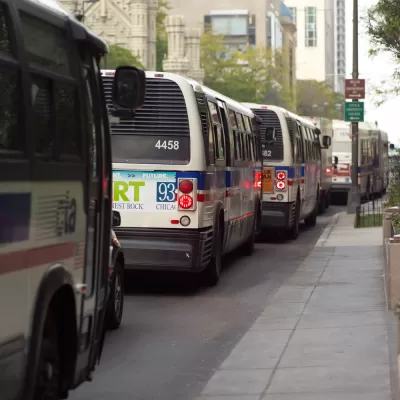
It's easy to blame gas prices or Uber for declining bus ridership, but the biggest determinant of ridership is service, according to a study from McGill University. Fares and other issues also had an impact, "…but the strongest determinant of ridership’s rise and fall may not be the lure of another mode—it’s service cuts on bus and train systems. According to a new study by researchers at McGill University’s department of urban planning, transit agencies are repelling riders by shrinking routes and schedules on buses in particular," Laura Biss writes for CityLab.
The metric used to measure the amount of service is VRK or the number of kilometers traveled by transit vehicles. "Transit service drove ridership more than any other factor: A 10 percent increase in VRK was associated with a roughly 8 percent increase in ridership, with all other variables constant, they found," Biss reports.
FULL STORY: More Routes = More Riders

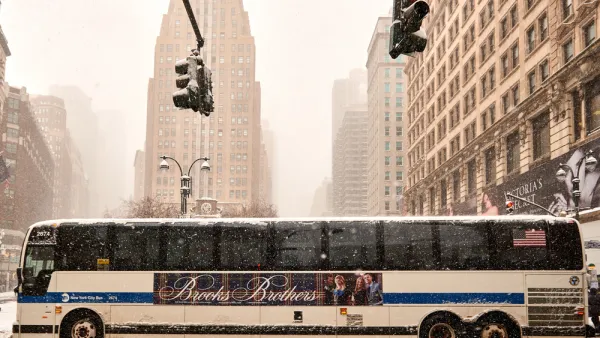
In New York: No Bus Ridership Without Congestion Relief
Bus ridership has dropped for many years in New York City, but much of the bleeding is concentrated in Manhattan and Brooklyn. Could the congestion problems of the central city be the reason for the declining use of bus transit?
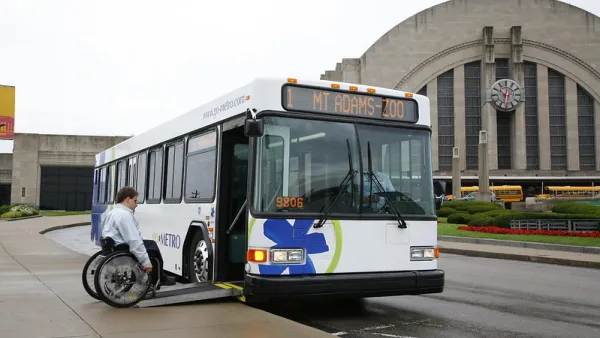
Gas Too Expensive? Cincinnati Metro Has You Covered With Free Rides
Cincinnati residents and visitors will have access to free transit for a week as the agency aims to boost ridership.
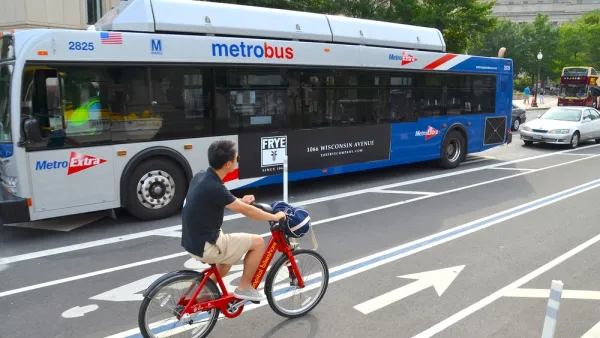
Report Lays Out a New Path for Bus Service in the D.C. Region
Ridership on the WMATA bus system, down an estimated 13 percent between 2012 and 2017, will need drastic innovations to reverse, according to a new report by the Bus Transformation project.

Planetizen Federal Action Tracker
A weekly monitor of how Trump’s orders and actions are impacting planners and planning in America.

The state-sanctioned urbicide of Austin
People don’t kill cities. Freeways do.

US to reduce Colorado River water deliveries to Mexico
A new Colorado Treaty amendment reduces Mexico’s Colorado River water allocation by 250,000 acre feet.

Guerilla urbanists are building DIY bus stop benches in Chicago
A before-and-after of one of the bus stops with a new bench. The new benches are not officially sanctioned or permitted, but the residents who placed them hope they will be the start of a network of DIY benches across the city.

Mamdani overhauls NYC's Vision Zero plan with 100 new policy goals
The overhaul aims to reduce traffic deaths and make streets safer for pedestrians, cyclists and drivers through lower speed limits, new safety infrastructure and more.

Amtrak not solely to blame for New Jersey commuter rail's unreliability, report finds
A new study from the Garden State Initiative found that NJ Transit’s budget grew 20% across a 4 year period, but reliability declined significantly over the same period.

FREE Course: Walkable City 1: Why Walkability?
After describing his path towards focusing on walkability as the essence of good planning, Jeff Speck marches through his five principal reasons for making more walkable places.
Reinventing Malls: Planning Alchemy—Turning Gray Fields Into Gold
The course focuses on the opportunities and imperatives that shape reinvention of mall sites.

Eagle County Government
Harvard University Graduate School of Design
Nashville Planning Department
The Architects Foundation
University of Cincinnati Online
The Pocatello Development Authority
The Urban Renewal Agency of the City of Pocatello
Journal of the American Planning Association