Ridership on the WMATA bus system, down an estimated 13 percent between 2012 and 2017, will need drastic innovations to reverse, according to a new report by the Bus Transformation project.


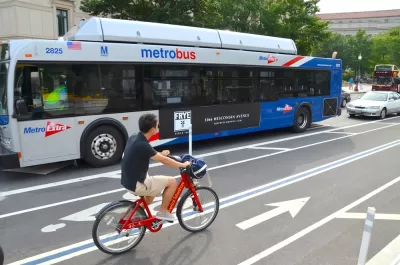
The Bus Transformation Project released a report that "lays out more than two dozen recommendations for transforming the Washington [D.C.] region’s bus network into one that is centered around customers’ needs, is financially sustainable and embraces innovation and technology," reports Luz Lazo.
The Bus Transformation Project was undertaken by leadership at the Washington Metropolitan Area Transit Authority, an executive steering committee chaired by Robert Puentes of the Eno Center for Transportation, a technical team, and a strategy advisory panel.
Among key actions recommended in the report: making boarding easier through mobile or off-board payment systems; enhancing affordable options with free transfers between bus and rail and reduced fare passes for low-income riders; and improving the rider experience with efficient next-bus technology, modern fleets, clear system maps, and safe and accessible bus stops.
FULL STORY: Study: It’s past time the D.C. region transform its bus network

More Bus Service Translates to More Bus Riders
A new study finds that bus service determines bus ridership.
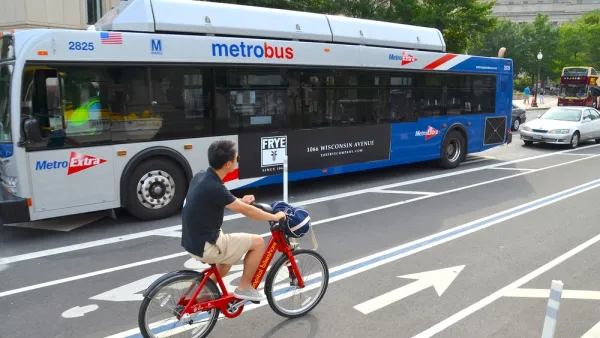
Four Ideas to Improve D.C. Buses
It isn't always easy, especially for politicians and engineers, but there are proven ways to save a floundering bus system.
In New York: No Bus Ridership Without Congestion Relief
Bus ridership has dropped for many years in New York City, but much of the bleeding is concentrated in Manhattan and Brooklyn. Could the congestion problems of the central city be the reason for the declining use of bus transit?

The state-sanctioned urbicide of Austin
People don’t kill cities. Freeways do.

US to reduce Colorado River water deliveries to Mexico
A new Colorado Treaty amendment reduces Mexico’s Colorado River water allocation by 250,000 acre feet.

New Jersey’s second-largest city bans standalone data centers
Jersey City will continue to allow co-location facilities, such as those meant for research institutions that store their own data.

Amtrak not solely to blame for New Jersey commuter rail's unreliability, report finds
A new study from the Garden State Initiative found that NJ Transit’s budget grew 20% across a 4 year period, but reliability declined significantly over the same period.

EPA erases limits on planet-warming pollution from power plants
Under Monday’s plan, power plants would still have some limits on how much mercury, arsenic and other contaminants they can emit.

Phoenix announces new on-demand transit service, more frequent RAPID buses
Both new services will launch in October, and are part of Phoenix's Project Effective Access Solutions for Easing Congestion.

FREE Course: Walkable City 1: Why Walkability?
After describing his path towards focusing on walkability as the essence of good planning, Jeff Speck marches through his five principal reasons for making more walkable places.
Reinventing Malls: Planning Alchemy—Turning Gray Fields Into Gold
The course focuses on the opportunities and imperatives that shape reinvention of mall sites.

Eagle County Government
Harvard University Graduate School of Design
Nashville Planning Department
The Architects Foundation
University of Cincinnati Online
The Pocatello Development Authority
The Urban Renewal Agency of the City of Pocatello
Journal of the American Planning Association