It isn't always easy, especially for politicians and engineers, but there are proven ways to save a floundering bus system.


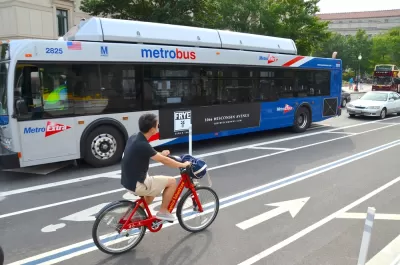
Alon Levy surveys the public transit scene in the Washington, D.C. region and sees a beleaguered Metrorail system as well a collection of proposed changes to the Metro bus system. "Where Metrorail's troubles lie in complicated funding, safety, and logistical challenges, the buses' are about network design–which happily, is relatively easy to change," writes Levy before proposing a list of four achievable ways to improve the bus system.
Levy notes that Metro's bus system isn't alone in seeking to implement improvements to the bus system, and there are plenty of good projects going on around the country, as well as Canada, to emulate.
Adding more detail in the source article, Levy includes the following list of guiding principles for Metro's bus system reconfiguration:
- Schedules should be frequent, and easily usable by riders.
- Simplify bus routes, and reduce branching
- Give the buses clearer route numbers
- Increase bus speed with off-board fare collection, dedicated bus lanes, and signal priority
While political difficult in some case, these challenges have the potential to improve ridership on a system that has seen declining volumes for years, according to Levy.
Read the full story: Here are four achievable ways to build a better bus system
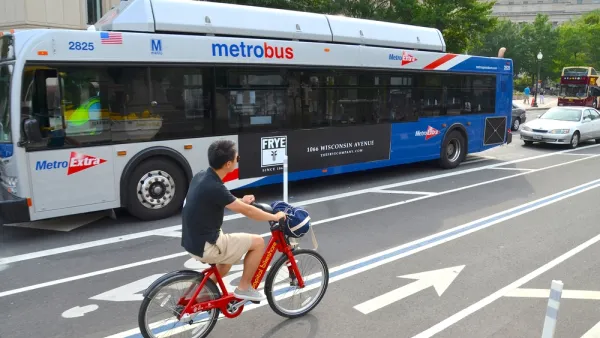
Report Lays Out a New Path for Bus Service in the D.C. Region
Ridership on the WMATA bus system, down an estimated 13 percent between 2012 and 2017, will need drastic innovations to reverse, according to a new report by the Bus Transformation project.
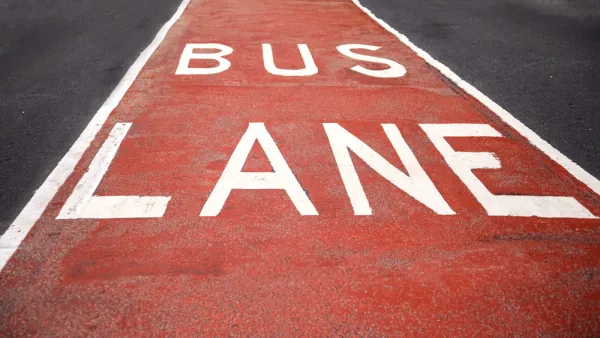
New Bus-Only Lanes Arrive in D.C.
The new bus lanes will operate at morning and afternoon rush hours starting today.
More Bus Service Translates to More Bus Riders
A new study finds that bus service determines bus ridership.

Planetizen Federal Action Tracker
A weekly monitor of how Trump’s orders and actions are impacting planners and planning in America.

California plans to bury El Niño’s downpour
If the state plays its cards right, it may be able to store a billion acre-feet of El Niño’s water in aquifers.

Desperate measures: Advocates weigh draining Lake Powell to fill Colorado River
Draining the reservoir could reduce evaporation losses by a couple hundred thousand acre-feet.

Mamdani’s pied-à-terre tax survives legal challenge
A panel of judges found that the plaintiffs failed to demonstrate injury as a result of New York City's implementation of the tax.

Eastern Nebraska is running out of electricity
Data centers and electrification are straining eastern Nebraska’s grid, throttling economic development.

Seattle passes record-breaking transit services expansion
Proposition 1 will double the city’s transit tax to add 95,000 more bus trips and preserve 180,000 bus trips annually.

FREE Course: Walkable City 1: Why Walkability?
After describing his path towards focusing on walkability as the essence of good planning, Jeff Speck marches through his five principal reasons for making more walkable places.
Reinventing Malls: Planning Alchemy—Turning Gray Fields Into Gold
The course focuses on the opportunities and imperatives that shape reinvention of mall sites.

City of Rosemead
Rutgers University, Edward J. Bloustein School of Planning and Public Policy
One Hundred Miles
University of Michigan School for Environment and Sustainability (SEAS)
Hunter College, City University of New York (CUNY)
The Architects Foundation
City of Cambridge
Montrose County
The Pocatello Development Authority