Track repairs and inconsistent service have lead to a 14 percent decrease in ridership, enough to wipe out the year's gains of all other U.S. rail systems put together.


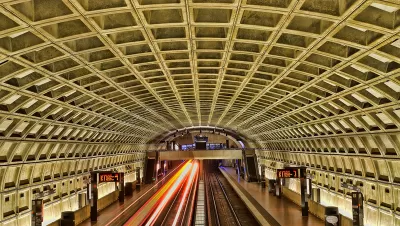
Without factoring in WMATA's Metrorail system, U.S. rail and subway ridership was up .6% between '15 and '16. But when you include the D.C. region's losses, that change becomes a .3% decrease in riders. "Most of the drop in Metro’s ridership can be attributed to the agency’s SafeTrack initiative, which is closing chunks of the system for weeks at a time for long-overdue repairs," Benjamin Freed writes for the Washingtonian.
TransitCenter, the New York research group that originally reported on these figures, says the other piece of the problem is that politicians in the region have not made the system a priority and failed to lead on the issue. Metro's issues look unlikely to be solved by federal money either. "Recently sworn-in Transportation Secretary Elaine Chao announced last month she will withhold federal funding from DC, Virginia, and Maryland until the three jurisdictions create a new safety commission to oversee Metro," Freed reports.
Read the full story: Metro Has Lost So Many Customers It’s Dragging Down National Ridership Figures
Density Increases Near Transit Station in D.C. But Ridership Does Not
D.C.'s ridership is down even as density around stations is up. More residents are choosing to drive or bike.
Showdown Over Late Night Hours on D.C. Metro
The general manager of D.C. Metro wants to extend limited late night rail service, in place for two years, into 2019 and beyond. Metro board members have had enough.
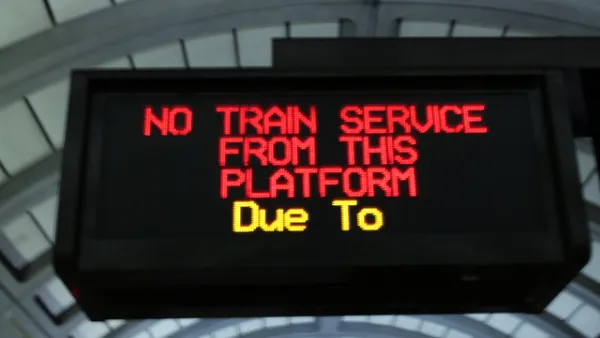
WMATA's SafeTrack: Behind Schedule and Over Budget
The SafeTrack repair program has shut down Metrorail lines for much of 2016—and the price for the repairs to the system keep going up.

Planetizen Federal Action Tracker
A weekly monitor of how Trump’s orders and actions are impacting planners and planning in America.

California plans to bury El Niño’s downpour
If the state plays its cards right, it may be able to store a billion acre-feet of El Niño’s water in aquifers.

Desperate measures: Advocates weigh draining Lake Powell to fill Colorado River
Draining the reservoir could reduce evaporation losses by a couple hundred thousand acre-feet.

Chicago voters approve permanent festival grounds, penalty for vacant property owners
Currently, major summer and fall festivals take over public parks for weeks at a time, drawing criticism from nearby residents

NYC votes to cut outdoor dining red tape, speed up permitting
New York City also voted to allow the Department of Transportation to begin work on urgent projects before notifying elected officials.

California appears to reject Prop. 45
The proposition would have expanded the projects that qualify for a streamlined environmental review, effectively paring down the California Environmental Quality Act.

FREE Course: Walkable City 1: Why Walkability?
After describing his path towards focusing on walkability as the essence of good planning, Jeff Speck marches through his five principal reasons for making more walkable places.
Reinventing Malls: Planning Alchemy—Turning Gray Fields Into Gold
The course focuses on the opportunities and imperatives that shape reinvention of mall sites.

City of Rosemead
Rutgers University, Edward J. Bloustein School of Planning and Public Policy
One Hundred Miles
Hunter College, City University of New York (CUNY)
The Architects Foundation
University of Cincinnati Online
City of Cambridge
Montrose County
The Pocatello Development Authority