A report from the Regional Plan Association maps out what might happen under 1, 3, and 6 feet of sea level rise. In the worst cases, several dense and populated regions are affected.


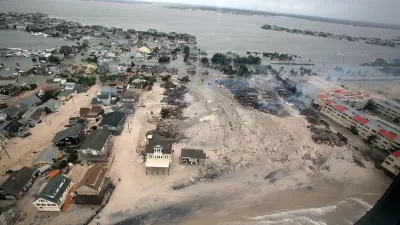
Using methodology developed by the National Oceanic and Atmospheric Administration, RPA's study "outlines the impact that 1, 3 and 6 feet of sea level rise could have on the [New York] region and the immediate actions that policymakers and residents should take to protect our region's most vulnerable places."
While beach communities along Long Island and the Jersey Shore often come to mind, flooding could impact populated areas throughout greater New York. Emily Thenhaus writes, "The communities of the Rockaways, Jamaica Bay and Coney Island are among the most threatened in New York City. With 6 feet of sea level rise, a possibility as soon as early next century, much of the Rockaway peninsula could be underwater."
Rising seas may also threaten the New Jersey Meadowlands if steps aren't taken. JFK airport is mostly protected from the brunt of the floods, but LaGuardia's runways are vulnerable.
There's more to come from RPA on the region's environmental future. "The study is a component of RPA's fourth regional plan, which will be released in 2017 and will put forth policies and proposals to mitigate climate change and confront its effects."
Read the full story: Under Water: How Sea Level Rise Threatens the Tri-State Region
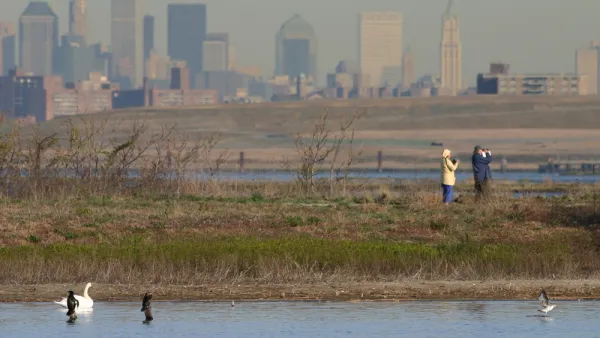
Life With Climate Change: A 100-Year Storm Every Year
The extreme weather events and sea-level rise of the relatively near future will overwhelm storm and flood infrastructure with startling regularity, according to new research.
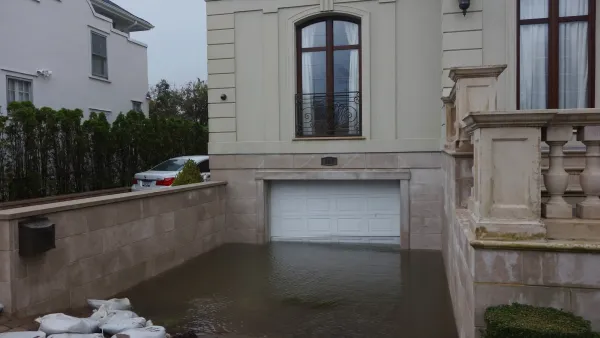
Over 500 NYC ‘Blue Zones’ at Risk of More Destructive Floods
High-risk flood zones cover roughly 20% of the city’s land.
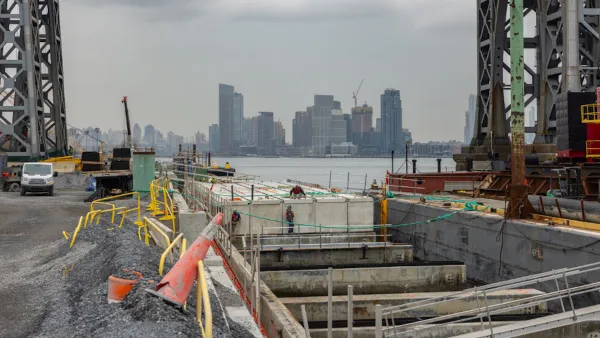
New York Flood Control Plan Takes Lessons From the Dutch
The Netherlands has a long history of flood mitigation. U.S. cities, threatened by coastal flooding and erosion, are taking note.

Planetizen Federal Action Tracker
A weekly monitor of how Trump’s orders and actions are impacting planners and planning in America.

California plans to bury El Niño’s downpour
If the state plays its cards right, it may be able to store a billion acre-feet of El Niño’s water in aquifers.

Desperate measures: Advocates weigh draining Lake Powell to fill Colorado River
Draining the reservoir could reduce evaporation losses by a couple hundred thousand acre-feet.

Chicago voters approve permanent festival grounds, penalty for vacant property owners
Currently, major summer and fall festivals take over public parks for weeks at a time, drawing criticism from nearby residents

NYC votes to cut outdoor dining red tape, speed up permitting
New York City also voted to allow the Department of Transportation to begin work on urgent projects before notifying elected officials.

California appears to reject Prop. 45
The proposition would have expanded the projects that qualify for a streamlined environmental review, effectively paring down the California Environmental Quality Act.

FREE Course: Walkable City 1: Why Walkability?
After describing his path towards focusing on walkability as the essence of good planning, Jeff Speck marches through his five principal reasons for making more walkable places.
Reinventing Malls: Planning Alchemy—Turning Gray Fields Into Gold
The course focuses on the opportunities and imperatives that shape reinvention of mall sites.


City of Rosemead
Rutgers University, Edward J. Bloustein School of Planning and Public Policy
One Hundred Miles
Hunter College, City University of New York (CUNY)
The Architects Foundation
University of Cincinnati Online
City of Cambridge
Montrose County
The Pocatello Development Authority