For the first time ever, Norway is crowdsourcing public safety information from kids—made possible through the powers of smart phones and gamification.


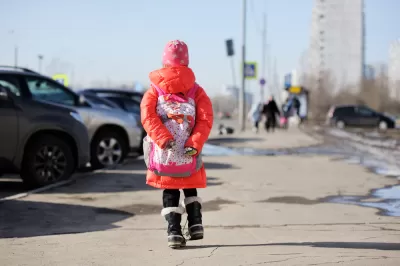
"If Pokémon Go has taught us anything," writes Naomi Larsson, "it’s that apps and gamification have the potential to change the way we interact with our cities; and as cities become smarter, citizens are increasingly having a greater influence on their development."
"A new Oslo-based app has taken that idea further and is giving power directly to the people who, when it comes to urban planning, are too-often left out of the conversation: children."
Larsson is describing the Traffic Agent app, which allows children to report safety hazards they encounter on the way to and from school. The app offers an opportunity not only to gather feedback from underrepresented members of community, but also to learn more about how children perceive their environments. The lessons of Pokémon Go are in the gamification aspects of the app: users are cast as "secret agents" in the city.
The article includes more details about how this app fits into Oslo's planned ban on automobiles in the city center and how the app addresses privacy concerns that might prevent parents from allowing their children to use the app.
Read the full story: The app that gives Oslo's children a direct say over their own road safety

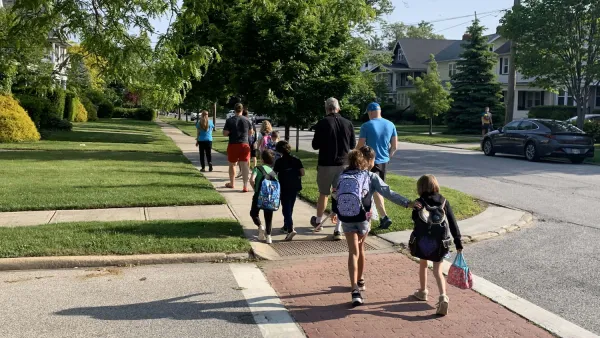
An Ohio School District is Known for its Walkability. A District Overhaul is Jeopardizing That.
Lakewood plans to close some schools and consolidate students to a centralized early education center, eliminating years of work that created safe walking routes to neighborhood schools.

Let’s End Traffic Stops
The technology to make traffic enforcement obsolete is becoming available. But in the U.S. willing to use it?
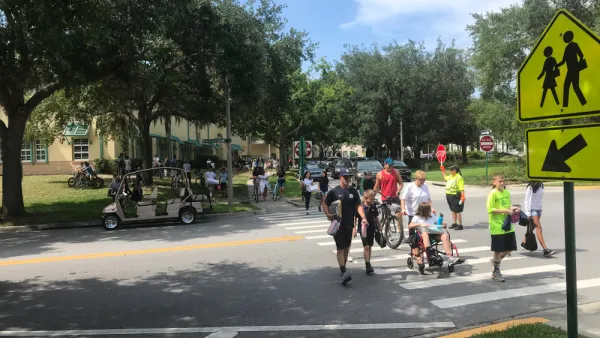
Earn Rewards for Traveling for by Foot, Bike, Bus, or Train
The city of Orlando is partnering with the Miles app.

Planetizen Federal Action Tracker
A weekly monitor of how Trump’s orders and actions are impacting planners and planning in America.

California plans to bury El Niño’s downpour
If the state plays its cards right, it may be able to store a billion acre-feet of El Niño’s water in aquifers.

Chicago breaks ground on $3 billion megadevelopment
The new neighborhood, titled Foundry Park, will one day host 3,700 residences.

California High-Speed Rail Authority CEO resigns after $600,000 scandal
Under Ian Choudri, the authority used taxpayer dollars to fund first class flights and trips to nightclubs.

Want to study the Missouri River? Soon, you may need unanimous approval from 10 states
Legislation would require 10 governors’ permission to study or build projects moving water outside the basin.

Desperate measures: Advocates weigh draining Lake Powell to fill Colorado River
Draining the reservoir could reduce evaporation losses by a couple hundred thousand acre-feet.

FREE Course: Walkable City 1: Why Walkability?
After describing his path towards focusing on walkability as the essence of good planning, Jeff Speck marches through his five principal reasons for making more walkable places.
Reinventing Malls: Planning Alchemy—Turning Gray Fields Into Gold
The course focuses on the opportunities and imperatives that shape reinvention of mall sites.

City of Rosemead
Rutgers University, Edward J. Bloustein School of Planning and Public Policy
One Hundred Miles
Hunter College, City University of New York (CUNY)
The Architects Foundation
University of Cincinnati Online
City of Cambridge
Montrose County
The Pocatello Development Authority