Three proposals, that is, save one. David Alpert wants to know why the public isn't considering another option for delivering necessary repairs to the D.C. Metro system.


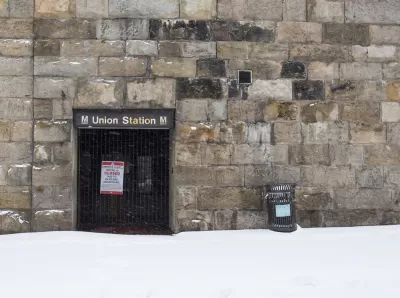
According to an article by David Alpert, "[D.C.] Metro has released three specific scenarios to cut late night service, but it offers still few specifics on why it's necessary or what alternatives there can be."
Metro staff is currently seeking go-ahead to hold public hearings on the end of late-night service. Public response to an initial service reduction proposal, announced in July, led Metro staff to proposed two alternative scenarios, which Alpert describes.
The question that's burning Alpert, however, is whether these service cuts are necessary for the track work needed around the system. One alternative not currently under consideration, but proposed rhetorically, at least, by Alpert, is to shut down the one line at a time. He posed that question to D.C. Metro General Manager Paul Wiedefeld, who responded that closing down one line at a time would be too confusing for riders.
Read the full story: Metro is pushing ahead to cut late-night service with three unsatisfying options

D.C. Metro Will End Late-Night Rail Service for Two Years
A tough decision that has been on the table since the summer has now been made official by the WMATA's board of directors.
D.C. Metro to Consider Reduced Rail Service Hours After SafeTrack Concludes
What was thought to be a temporary end to late night weekend service could become a permanent reality on the tracks of Metrorail.
How Will Partiers Travel Safely With D.C. Metro's Late-Night Service on Hold?
With late-night weekend service on hold as the Metrorail service commences its SafeTrack maintenance program, will partiers stay home or simply find new ways to get around?

Planetizen Federal Action Tracker
A weekly monitor of how Trump’s orders and actions are impacting planners and planning in America.
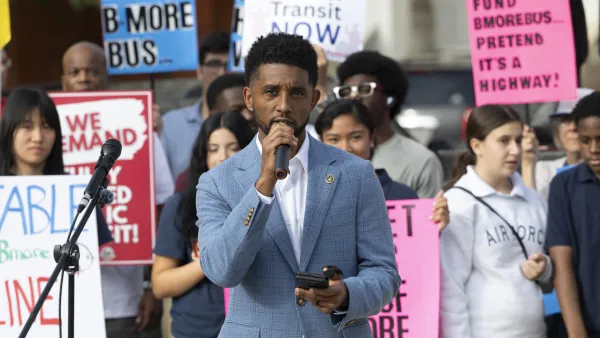
‘Going backwards:’ Baltimore mayor, students rally against state's transit funding plan
Maryland's proposed six-year plan provides no funding for Baltimore’s BMORE bus program and reduces its road maintenance funding.
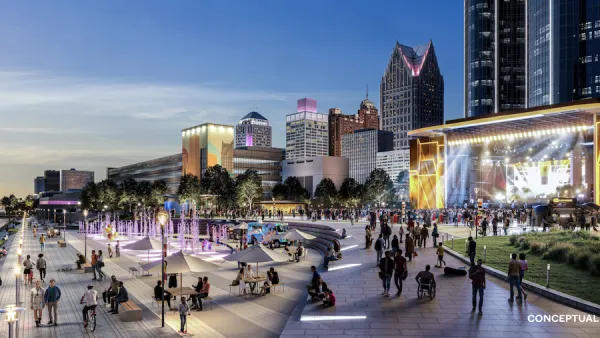
Detroit to transform waterfront with $2.2 billion investment
Developers will convert about 18 acres of unused parking lot space into civic spaces.

HUD, USDA agree on framework to simplify housing environmental review standards
Their agreement is a requirement of the 21st Century ROAD to Housing Act.

Cost of water rising at a faster pace than inflation, median household income
California and Maryland residents have seen their water bills grow especially high.

NYC building owners overwhelmingly comply with new emissions limits
The New York City Department of Buildings is fining owners who did not file emissions reports.

FREE Course: Walkable City 1: Why Walkability?
After describing his path towards focusing on walkability as the essence of good planning, Jeff Speck marches through his five principal reasons for making more walkable places.
Reinventing Malls: Planning Alchemy—Turning Gray Fields Into Gold
The course focuses on the opportunities and imperatives that shape reinvention of mall sites.

City of Thousand Oaks
City of Wisconsin Rapids
Harvard University Graduate School of Design
The Architects Foundation
University of Cincinnati Online
Northern Illinois Transit Authority (NITA)
The Pocatello Development Authority
The Urban Renewal Agency of the City of Pocatello