What was thought to be a temporary end to late night weekend service could become a permanent reality on the tracks of Metrorail.


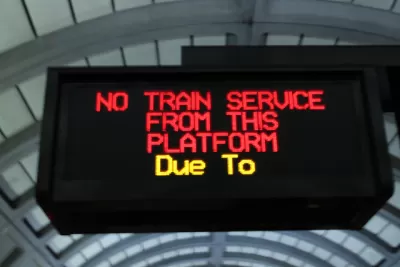
"Following rail expert and peer transit agency recommendations, Metro GM/CEO Paul J. Wiedefeld plans to propose closing the Metrorail system at 10 p.m. on Sunday nights and continue midnight closures on all other nights beyond the conclusion of the one-year SafeTrack program," according to a Washington Metropolitan Area Transit Authority press release dated July 26, 2016.
"Under the proposed schedule, the Metrorail system would be open 127 out of 168 hours in a week. Prior to SafeTrack, the system was open 135 hours per week," adds the release.
The SafeTrack maintenance program currently underway on the Metrorail system, after launching in June, ended late night service on weekends and prompted speculation about the new transit schedule's impact on entertainment and restaurant businesses located near Metro lines.
Read the full story: To support long-term maintenance strategy, Metro GM to propose closing rail system at 10 p.m. on Sundays and midnight every othe

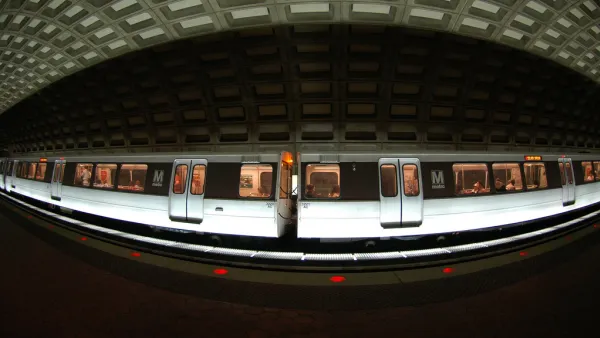
D.C. Metro Will End Late-Night Rail Service for Two Years
A tough decision that has been on the table since the summer has now been made official by the WMATA's board of directors.
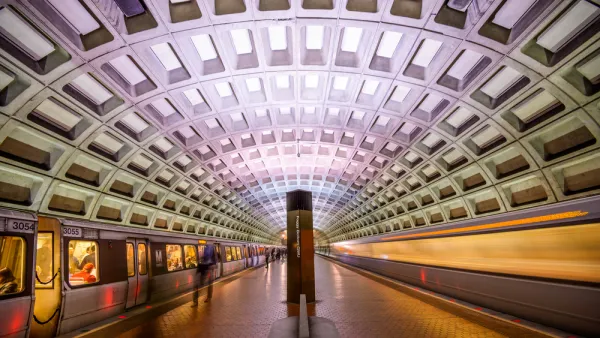
Showdown Over Late Night Hours on D.C. Metro
The general manager of D.C. Metro wants to extend limited late night rail service, in place for two years, into 2019 and beyond. Metro board members have had enough.
Additional Funding, Service Increase Sought by D.C. Metro Officials
For the first time in years, there is talk of expanding service on existing rail lines in the Washington Metropolitan Area Transit Authority (Metro) system.

Planetizen Federal Action Tracker
A weekly monitor of how Trump’s orders and actions are impacting planners and planning in America.

California plans to bury El Niño’s downpour
If the state plays its cards right, it may be able to store a billion acre-feet of El Niño’s water in aquifers.

Chicago breaks ground on $3 billion megadevelopment
The new neighborhood, titled Foundry Park, will one day host 3,700 residences.

California High-Speed Rail Authority CEO resigns after $600,000 scandal
Under Ian Choudri, the authority used taxpayer dollars to fund first class flights and trips to nightclubs.

Want to study the Missouri River? Soon, you may need unanimous approval from 10 states
Legislation would require 10 governors’ permission to study or build projects moving water outside the basin.

Desperate measures: Advocates weigh draining Lake Powell to fill Colorado River
Draining the reservoir could reduce evaporation losses by a couple hundred thousand acre-feet.

FREE Course: Walkable City 1: Why Walkability?
After describing his path towards focusing on walkability as the essence of good planning, Jeff Speck marches through his five principal reasons for making more walkable places.
Reinventing Malls: Planning Alchemy—Turning Gray Fields Into Gold
The course focuses on the opportunities and imperatives that shape reinvention of mall sites.

City of Rosemead
Rutgers University, Edward J. Bloustein School of Planning and Public Policy
One Hundred Miles
Hunter College, City University of New York (CUNY)
The Architects Foundation
University of Cincinnati Online
City of Cambridge
Montrose County
The Pocatello Development Authority