If you live in Detroit, Atlanta, Seattle, or Los Angeles, you have more to look forward to in November than choosing Donald or Hillary. Major decisions concerning regional transportation are on the line.



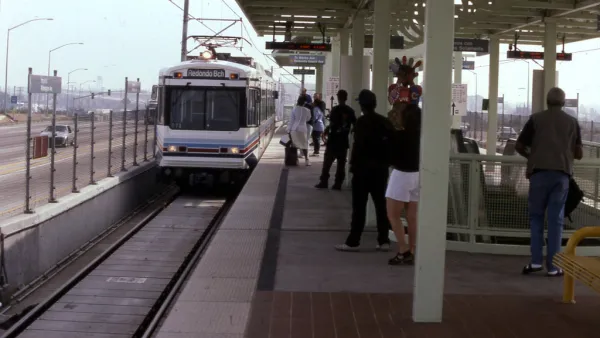
Voters in all four cities will decide on whether to increase taxes to fund major transportation projects, with a focus on transit. Daniel C. Vock writes, "But even though local transportation measures generally fare well at the ballot box, each of these particular metropolitan areas has had a tricky history with transit." See the article for more detail on each city's measures, summarized below.
- Detroit: "Voters in four Detroit-area counties will vote on whether to increase their property taxes by an average of $95 a year to vastly improve transit in the region." Plans include commuter rail between Detroit and Ann Arbor, new BRT, and integration between regional transit providers.
- Atlanta: "In another transit-starved area, Atlanta voters will decide whether to increase their sales taxes by 0.5 percent over 40 years to get better bus service, expanded rail routes and better incorporation of technology." Possible projects include circulator buses and new MARTA subway stations.
- Seattle: "Seattle's Sound Transit agency wants to double the size of its light rail network and expand its ability to reach the far-flung areas of Puget Sound. It's asking voters to approve $54 billion in new funding over 25 years."
- Los Angeles: "Transportation planners in Los Angeles County want to build on previous wins at the ballot box. They'll ask voters in November to make permanent a previous sales tax hike for transportation, plus add another half-cent sales tax hike to pay for both highway improvements and new transit projects. The tax increases would raise the cumulative sales tax in L.A. County to 9.5 percent."
Read the full story: Big Transit Plans Go Before Voters in November
Review of November 2016 Transportation Ballot Measures
About 50 transportation measures appeared on local ballots on November 8, 2016. To date, Planetizen reviewed outcomes in nine regions in six states. Here we compare the measures in terms of revenue, taxes, projects, and reasons for failure.

Learning loss and urban schools, part 2
Did test scores in progressive cities drop more post-COVID than test scores in moderate ones?
Racism Has Shaped Public Transit, and It’s Riddled with Inequities
Former Houston METRO Board Member Christof Spieler highlights the racism embedded even in the way transit agencies were created.

Planetizen Federal Action Tracker
A weekly monitor of how Trump’s orders and actions are impacting planners and planning in America.

California plans to bury El Niño’s downpour
If the state plays its cards right, it may be able to store a billion acre-feet of El Niño’s water in aquifers.

Desperate measures: Advocates weigh draining Lake Powell to fill Colorado River
Draining the reservoir could reduce evaporation losses by a couple hundred thousand acre-feet.

Chicago voters approve permanent festival grounds, penalty for vacant property owners
Currently, major summer and fall festivals take over public parks for weeks at a time, drawing criticism from nearby residents

NYC votes to cut outdoor dining red tape, speed up permitting
New York City also voted to allow the Department of Transportation to begin work on urgent projects before notifying elected officials.

California appears to reject Prop. 45
The proposition would have expanded the projects that qualify for a streamlined environmental review, effectively paring down the California Environmental Quality Act.

FREE Course: Walkable City 1: Why Walkability?
After describing his path towards focusing on walkability as the essence of good planning, Jeff Speck marches through his five principal reasons for making more walkable places.
Reinventing Malls: Planning Alchemy—Turning Gray Fields Into Gold
The course focuses on the opportunities and imperatives that shape reinvention of mall sites.

City of Rosemead
Rutgers University, Edward J. Bloustein School of Planning and Public Policy
One Hundred Miles
Hunter College, City University of New York (CUNY)
The Architects Foundation
University of Cincinnati Online
City of Cambridge
Montrose County
The Pocatello Development Authority