In the 1970s, the fear of getting mugged had some NYC pedestrians walking in the street. Nowadays, commuters are sharing space with cars for a very different reason: the sidewalks are too crowded.


Winnie Hu reports on a very New York phenomenon: veteran sidewalkers moving onto the street to bypass the crowd. One commuter reports that she "prefers dodging yellow cabs and bicyclists to navigating sidewalks teeming with commuters, tourists and cart-pushing vendors, all jostling for elbow room."
The problem is acute in Manhattan, where residents, commuters, and tourists mingle to take advantage of the nation's one truly pedestrian-focused city. As the city continues its boom, crowding has pushed many sidewalks to the limit.
The city has responded by "adding more pedestrian plazas across the city, expanding the presence of a streetscape feature first embraced by the administration of Mayor Michael R. Bloomberg. One is scheduled to open soon on 33rd Street near Penn Station. There are also plans to widen a half-dozen sidewalks in Flushing, Queens, in the next year."
On one hand, sidewalks are a shared space where all kinds of people can interact, making for a more cosmopolitan city. On the other, overcrowding can foul those waters. "Space on New York's sidewalks is at a premium at a time when the city's population of 8.5 million is higher than ever. Add in the record 59.7 million visitors who are expected to descend on the city this year, up from 48.8 million in 2010, and it is a recipe for thoroughfares packed like sardine cans."
And any urban pedestrian knows that other people aren't the only obstacle. "The problem was aggravated in some areas by sidewalk clutter such as construction scaffolding, large garbage bags, vendors and fixtures like lights, signs, newsstands, benches, planters and recycling bins."
Read the full story: New York’s Sidewalks Are So Packed, Pedestrians Are Taking to the Streets

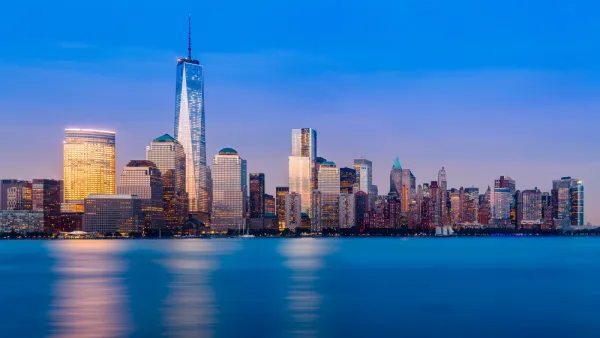
How Should Lower Manhattan Handle Its Crowd Problem?
In the period since 9/11, Lower Manhattan has undergone a residential boom. With daytime professionals and tourists also in the mix, the strain is showing.
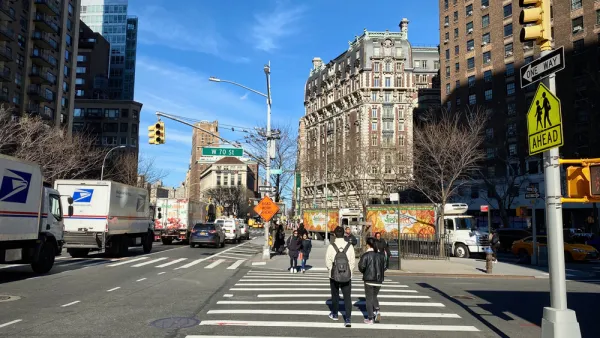
Learning About the City by Running for Office
When you are trying to get people's attention, a city feels very different.
More Projects Adopt Pedestrian-Friendly Sidewalk Shed
Last year more than 9,000 sidewalk sheds dotted New York streets, protecting public safety and inspiring universal frustration.

Planetizen Federal Action Tracker
A weekly monitor of how Trump’s orders and actions are impacting planners and planning in America.

Amtrak, CN end decades-long dispute with eight-year agreement
The new operating agreement establishes an updated framework for the companies to work together, including processes to resolve disputes.

Northwest rail fans eager for Sept. 30 debut of Amtrak’s Airo fleet
Get ready for that new train smell and more seats. But they won’t go faster or run more frequently on the Cascades route in Washington and Oregon.

Airo trainsets begin service on Amtrak Cascades route
The trains feature panoramic windows, complementary wifi and over 300 seats per train set.

As El Niño approaches, Newsom vetos bill aimed at protecting California levees from flooding
Gov. Gavin Newsom said the state’s allocated $170 million was enough funding; State experts estimate it will cost $3.3 billion to repair the California Delta's levees.

Boston sues Trump administration over revoked infrastructure grant
The Trump administration withdrew the infrastructure grant because less than 1% of the money would go to electric vehicle charging infrastructure.

FREE Course: Walkable City 1: Why Walkability?
After describing his path towards focusing on walkability as the essence of good planning, Jeff Speck marches through his five principal reasons for making more walkable places.
Reinventing Malls: Planning Alchemy—Turning Gray Fields Into Gold
The course focuses on the opportunities and imperatives that shape reinvention of mall sites.

City of Thousand Oaks
City of Wisconsin Rapids
Harvard University Graduate School of Design
The Architects Foundation
University of Cincinnati Online
The Pocatello Development Authority
The Urban Renewal Agency of the City of Pocatello