A June 7 ballot measure in Richmond, California would permit 59 single family homes to be built on a 5-acre bayfront lot within walking distance to a future ferry landing for San Francisco service. The site is zoned for high-density housing.


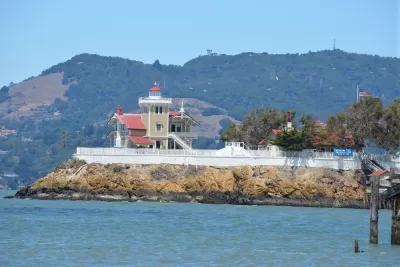
Developer and landowner Richard Poe, founder of Virtual Development Corporation, opposes building high-density apartments on his property, so he has qualified an initiative, "Riveria Project" (Measure N) to get voter approval on Tuesday to permit the low density project to bypass Richmond's general plan.
The measure "is the focus of a fierce political battle over how much housing will get built in the East Bay city" of 107,000, writes Rachel Swan, who covers Oakland and the surrounding East Bay cities for the San Francisco Chronicle. Richmond is in Contra Costa County.
Poe’s Measure N would loosen the city’s general plan that calls for high-density apartments and office buildings near transit corridors so that his project could sail through.
The Richmond ferry terminal, to be built by the San Francisco Bay Area Water Emergency Transportation Authority (WETA), is scheduled to open in 2018. The limited service to and from San Francisco, approved by WETA in March 2015, will be subsidized by the Contra Costa Transportation Authority (CCTA) and the City of Richmond.
“The development he’s proposed is totally inappropriate,” said Mayor Tom Butt, who has donated $2,500 to defeat Measure N. “It’s basically a suburban, almost rural project in an area that should be focused on high-intensity building.”
"The measure calls for altering the city's general plan — a document that took years of work and reflects the input of thousands of Richmond residents — to suit Poe's desires," wrote John Geluardi for the East Bay Express on Nov. 11, 2015 when Poe announced his intention to bypass the city approval process and gather signatures.
For decades, large, dense developments have bypassed Richmond, while cities like San Francisco, Oakland, Emeryville, and Berkeley have undergone revenue-generating building booms. That's why the Richmond general plan designated Poe's five-acre site as "high intensity mixed use" and zoned the site for structures of up to 135 feet and residential density of up to 625 units. But Poe wants to build 59 expensive, single-family homes with a maximum height of 35 feet.
Poe's activism didn't stop with Measure N. He also qualified Measure O for Tuesday's ballot which would limit the pay of the city manager. Mayor Butt opined in The Richmond Standard that the measure was done as an act of "collateral spite towards City staff who did not embrace his project."
Also on the June 7 ballot in the Bay Area is the first 9-county regional measure, AA, that calls for an annual $12 parcel tax for wetland restoration that would also mitigate coastal flooding and sea level rise.
Correspondent's notes: The Chronicle article may not be accessible without subscription. Please click on East Bay Express and The Richmond Standard for more information on the two measures.
In addition to above links to Ballotpedia, see the city of Richmond webpage for June 7 ballot measures and potential Nov. 8 ballot measures.
Read the full story: Richmond fights for apartments; developer wants ‘Riviera’ homes


Bay Area Election Roundup: Wetlands, Housing, Ballot-Box Planning, Sales Tax
A regional measure to tax all property owners in the 9-county Bay Area to adapt to sea level rise passes; S.F. voters support raising the affordable housing bar; Richmond voters reject ballot-box planning; San José approves sales tax increase.
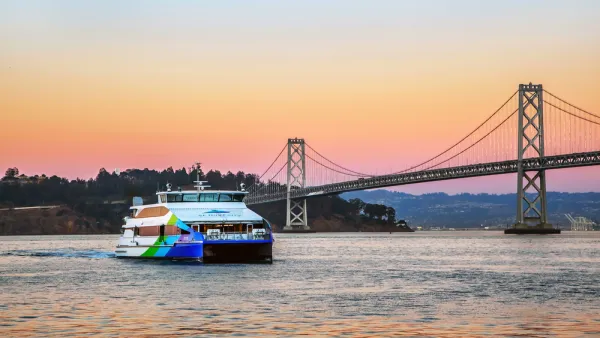
Ferry Service Expanding to Keep Pace With Bay Area Growth
Ridership on Water Emergency Transportation Authority ferries, which operate around the San Francisco Bay, has grown 78 percent since 2012. Investment in new and expanded facilities is preparing for even more growth.
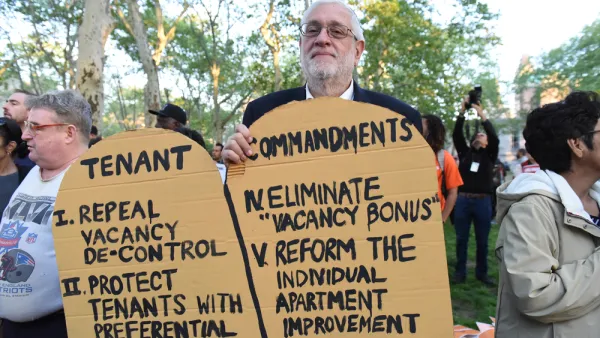
Rent and Eviction Controls on the November Ballot in Six Bay Area Cities
Voters in six Bay Area cities in four Bay Area counties will determine the outcome of eight ballot measures on rent and eviction control. Two of the cities will have city council-sponsored measures competing against voter initiatives.

Planetizen Federal Action Tracker
A weekly monitor of how Trump’s orders and actions are impacting planners and planning in America.

Amtrak, CN end decades-long dispute with eight-year agreement
The new operating agreement establishes an updated framework for the companies to work together, including processes to resolve disputes.

Judges permit Denver to divert 77,000 acre feet from the Colorado River for reservoir expansion
Overuse and climate change have caused the Colorado River’s water levels to plummet.

Boston has spent millions making the Green Line more accessible — and there’s no end in sight
While the city has invested millions into expanding and adding platforms to the Green Line to make it more accessible, new train cars set to arrive next year will be too tall for disabled passengers to board without raising the current platforms.

Idaho may see an 18% drop in federal surface transit funding — the largest estimated cut in the US
Transit systems in rural communities are much more reliant on federal funding to provide their services.

How ‘post-disaster gentrification’ alters neighborhoods after natural calamities
After hurricanes, fires or other calamities, the original residents of a community are often replaced by younger, wealthier residents.

FREE Course: Walkable City 1: Why Walkability?
After describing his path towards focusing on walkability as the essence of good planning, Jeff Speck marches through his five principal reasons for making more walkable places.
Reinventing Malls: Planning Alchemy—Turning Gray Fields Into Gold
The course focuses on the opportunities and imperatives that shape reinvention of mall sites.

Harvard University Graduate School of Design
KFH Group Inc.
Greater Baltimore Committee
The Architects Foundation
University of Cincinnati Online
The Pocatello Development Authority
The Urban Renewal Agency of the City of Pocatello