Next month, along with picking presidential, U.S. Senate and legislative candidates, and local ballot measures in a primary election, voters in the Bay Area will also determine the outcome of the first regionwide measure in Bay Area history.



Credit: Ballotpedia. (Click here for expanded map [PDF].)
The measure is sponsored by a regional government agency that few in the Bay Area may be aware of: the San Francisco Bay Restoration Authority. Created by Assembly Bill 2954 in 2008, it "is a regional government agency charged with raising and allocating resources for the restoration, enhancement, protection, and enjoyment of wetlands and wildlife habitat in the San Francisco Bay and along its shoreline."
"Measure AA would implement a $12-a-year parcel tax, raising about half a billion dollars over 20 years," writes Lauren Sommer for KQED Science. "The money would go toward building up the bay’s defense against sea level rise by restoring [about 35,000 acres of] marshes."
“The marshes are a great buffer because the plants in the wetlands slow down the wave action and reduce the flooding,” says David Lewis, executive director of the non-profit Save the Bay.
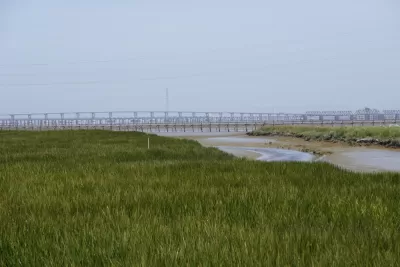
Low-lying plants in tidal marshes, such as those on the Richmond shoreline, act like sponges, Lewis says, absorbing surges from big waves and floods.
Around 80 percent of the bay’s marshes have been lost since the Gold Rush, many paved over for development.
A "Highly" Regressive form of Property Tax
Unlike property taxes based on the assessed value of a property, parcel taxes are the same, whether it be be a mansion, of which there is no shortage of in the Bay Area, or a modest cottage, which will still cost you a pretty penny in most of the region.
A Unique Tax Measure
If the measure passes, it’ll be a first. Coastal cities like New Orleans have turned to federal grants to protect themselves. But raising money directly from the public for climate change could be a model for other coastal areas.
Unlike the two prior regional ballot measures that needed majority support, Measure AA would require a two-thirds threshold for passage.
The decision to place a ballot measure before Bay Area voters was made by the district’s governing board in a 6-0 vote in January, wrote Peter Fimrite for the San Francisco Chronicle.
For more information on the measure and the campaign, see "Yes on AA."
For SF Gate and San Francisco Chronicle (may be subscription-only) articles on the San Francisco Bay Restoration Authority and the tax measure dating back to 2008, click here (some may be subscription-only).
FULL STORY: Measure AA Asks Bay Area Residents to Help Protect Against Sea Level Rise


Bay Area Election Roundup: Wetlands, Housing, Ballot-Box Planning, Sales Tax
A regional measure to tax all property owners in the 9-county Bay Area to adapt to sea level rise passes; S.F. voters support raising the affordable housing bar; Richmond voters reject ballot-box planning; San José approves sales tax increase.
Bay Area's First Climate Adaptation Project Could Be a North Bay Highway
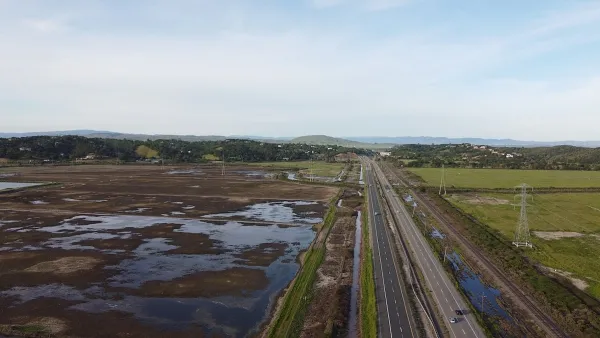
State Route 37 is a vital highway connecting four North Bay counties plagued by two unrelated problems: chronic flooding during high tides and traffic congestion. Fixing the problem will set a precedent for Bay Area climate adaptation.
Sinking Into Wetlands, This Northern California Highway Needs a Rescue
A plan to elevate the roadway and restore adjacent wetlands could take decades to complete.

The state-sanctioned urbicide of Austin
People don’t kill cities. Freeways do.

US to reduce Colorado River water deliveries to Mexico
A new Colorado Treaty amendment reduces Mexico’s Colorado River water allocation by 250,000 acre feet.

New Jersey’s second-largest city bans standalone data centers
Jersey City will continue to allow co-location facilities, such as those meant for research institutions that store their own data.

Amtrak not solely to blame for New Jersey commuter rail's unreliability, report finds
A new study from the Garden State Initiative found that NJ Transit’s budget grew 20% across a 4 year period, but reliability declined significantly over the same period.

EPA erases limits on planet-warming pollution from power plants
Under Monday’s plan, power plants would still have some limits on how much mercury, arsenic and other contaminants they can emit.

Phoenix announces new on-demand transit service, more frequent RAPID buses
Both new services will launch in October, and are part of Phoenix's Project Effective Access Solutions for Easing Congestion.

FREE Course: Walkable City 1: Why Walkability?
After describing his path towards focusing on walkability as the essence of good planning, Jeff Speck marches through his five principal reasons for making more walkable places.
Reinventing Malls: Planning Alchemy—Turning Gray Fields Into Gold
The course focuses on the opportunities and imperatives that shape reinvention of mall sites.

Eagle County Government
Harvard University Graduate School of Design
Nashville Planning Department
The Architects Foundation
University of Cincinnati Online
The Pocatello Development Authority
The Urban Renewal Agency of the City of Pocatello
Journal of the American Planning Association