Changing demographics and mobility choices along the historic Market Street in Philadelphia have planners looking for ways to implement a road diet and put safety first.


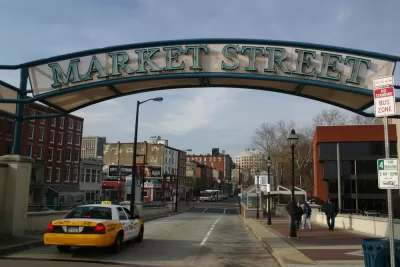
Philadelphia Inquirer architecture critic Inga Saffron takes a look at a changing approach to street design in a changing part of the city—Market Street in Old City. For a little background, automobile traffic Market Street "has plunged by a third, even as the neighborhood's old cast-iron warehouses were filling up with thousands of new residents." That trend inspired an opportunity for the recently released Vision 2026 ("more of a wish list than a master plan," explains Saffron) to propose "a profound shift in thinking among neighborhood leaders." That is, "the Old City District - a business group that is usually all about bringing more traffic into the neighborhood - eagerly embraced the idea of making Market Street less like a highway-style thoroughfare and more like a friendly neighborhood Main Street."
Saffron notes that similar ideas about complete streets are also finding traction in "in many of the recent master plans issued by other neighborhoods that straddle Market Street." Schuylkill Yards, the Science Center, and the Center City District, explains Saffron, "all are looking for ways to tame traffic."
The rest of the article takes a closer look at some of the precedent-setting master plans, the bad recent track record of fatalities along Market Street, and an important suggestion about how to get the most from the planning efforts underway in Old City and along and around Market Street.

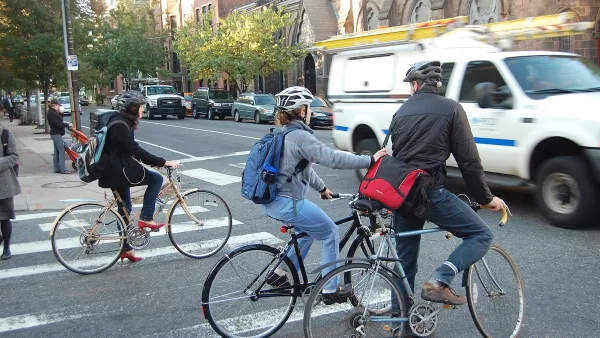
Philadelphia Swaps Car Lanes for Bikeways in Unanimous Vote
The project will transform one of the handful of streets responsible for 80% of the city’s major crashes.
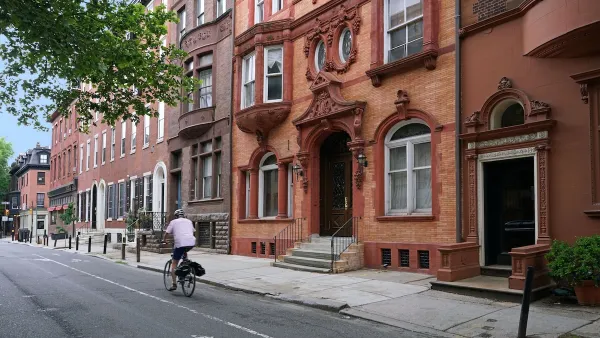
Philly Council Wants to Crack Down on Bike Lane Parking
The city council passed a bill that would raise penalties and eliminate a grace period for drivers who stop in bike lanes.
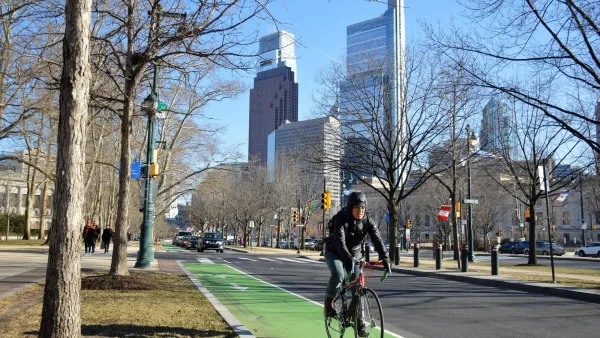
Philly Road Safety Advocates Call for Action From the City
Mayor Parker’s administration is proposing massive cuts to the city’s Vision Zero program while pedestrian and cyclist deaths remain high.

Planetizen Federal Action Tracker
A weekly monitor of how Trump’s orders and actions are impacting planners and planning in America.

The state-sanctioned urbicide of Austin
People don’t kill cities. Freeways do.

US to reduce Colorado River water deliveries to Mexico
A new Colorado Treaty amendment reduces Mexico’s Colorado River water allocation by 250,000 acre feet.

Brightline West’s future may rely on $6 billion federal loan
The company has until Nov. 2 to make a $400 million equity investment into its proposed high-speed rail line.

LA Metro’s ultimatum: no extra buses for LA28 if federal funding isn’t imminently secured
If Metro does not provide additional buses, LA28 organizers will have to find a new way to manage Olympic traffic. LA28’s budget does not include a line item for transit.

Colorado’s Largest Data Center Could Rise Next to Homes — Without a Public Hearing
The proposed campus would consume 11 times the power of Denver International Airport; as it has across the country, opposition mounts.

FREE Course: Walkable City 1: Why Walkability?
After describing his path towards focusing on walkability as the essence of good planning, Jeff Speck marches through his five principal reasons for making more walkable places.
Reinventing Malls: Planning Alchemy—Turning Gray Fields Into Gold
The course focuses on the opportunities and imperatives that shape reinvention of mall sites.

Eagle County Government
Harvard University Graduate School of Design
Nashville Planning Department
The Architects Foundation
University of Cincinnati Online
The Pocatello Development Authority
The Urban Renewal Agency of the City of Pocatello
Journal of the American Planning Association