The "Inequality Chronicles," now in their third installment by Places Journal, are essential reading.


Alec MacGillis's article examines how public investment "and disinvestment" in public transit "figured greatly in the persistence of racial and economic inequality" in Baltimore.
The article begins with the riot of April 27, 2015, exacerbated by a decision to shutdown of public transportation after the memorial service for Freddie Gray had concluded. The remainder of the article traces a history that begins with Reconstruction, following the Civil War, through the Great Migration, into Baltimore's unique pattern of white flight, which spanned either side of World War II, and into the transit and transportation planning decisions of recent decades.
Supplemental reading for the recent transit planning decisions can be found in an editorial published by the Baltimore Sun earlier this week, which calls for a transformative investment in public transit.
Earlier installments of the "Inequality Chronicles" covered Memphis and Houston.
Read the full story: The Third Rail

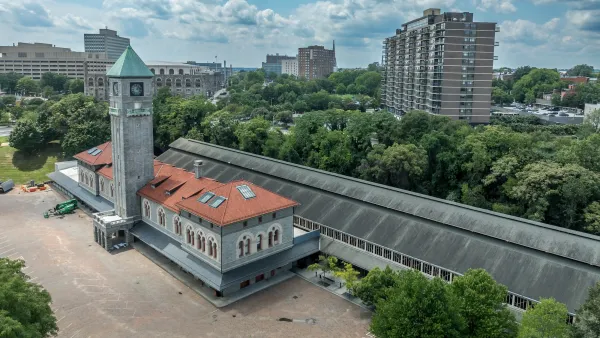
Maryland unveils plan for 5,000 homes near transit
Gov. Moore announced a plan to activate housing construction on 134 acres of state-owned land near transit stations.
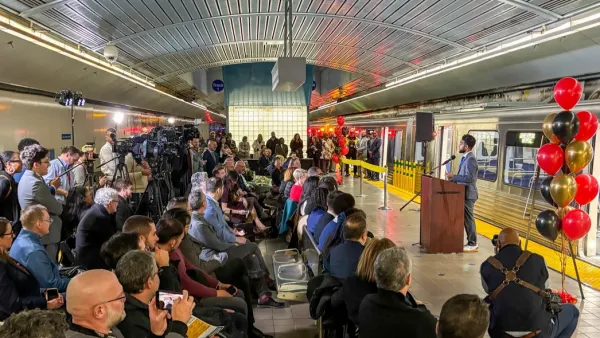
Baltimore Metro Receives First of 78 Japanese Bullet Train Cars
The first six cars are part of the system’s first major equipment overhaul since 1983.
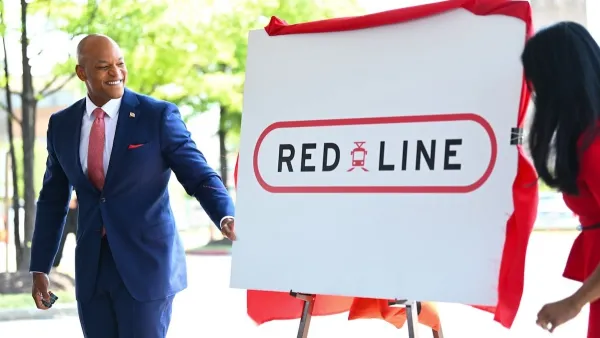
Feds Pause Baltimore Red Line Permits
The MTA says it is committed to continuing work on the light rail project, but the pause signals a potential shift in federal funding for the east-west line.

Planetizen Federal Action Tracker
A weekly monitor of how Trump’s orders and actions are impacting planners and planning in America.

Amtrak, CN end decades-long dispute with eight-year agreement
The new operating agreement establishes an updated framework for the companies to work together, including processes to resolve disputes.

Judges permit Denver to divert 77,000 acre feet from the Colorado River for reservoir expansion
Overuse and climate change have caused the Colorado River’s water levels to plummet.

NYC DOT wants faster, more permanent street upgrades
The city is examining ways to build more concrete infrastructure without getting entangled in 'decades-long' projects.

'Something we’ve never seen before:' rising utility rates could strain city finances nationwide
Data centers, climate change and other factors have caused utility rates in the United States to increase by 38% since 2020.

Trump to overrule local leaders, lease millions of acres of America’s Pacific Island territories’ seafloors to mining companies
International law says that the Indigenous people of America’s territories have a right to prior and informed consent regarding projects that impact their countries.

FREE Course: Walkable City 1: Why Walkability?
After describing his path towards focusing on walkability as the essence of good planning, Jeff Speck marches through his five principal reasons for making more walkable places.
Reinventing Malls: Planning Alchemy—Turning Gray Fields Into Gold
The course focuses on the opportunities and imperatives that shape reinvention of mall sites.

Harvard University Graduate School of Design
KFH Group Inc.
Greater Baltimore Committee
The Architects Foundation
University of Cincinnati Online
The Pocatello Development Authority
The Urban Renewal Agency of the City of Pocatello