California's much-needed rains took their toll Monday night on an Altamont Corridor Express (ACE) train transporting commuters between the San Joaquin and Silicon Valleys. Mudslides and a possible tree fall derailed two of the five passenger cars.


Eastbound ACE train #10, carrying 214 passengers, was headed to Pleasanton having just left the Fremont Station 7:08pm, having departed San Jose at 6:38pm, when it derailed about 1 mile west of Sunol. Nine passengers were sent to local hospitals, writes Michael Cabanatuan, transportation reporter for the San Francisco Chronicle, with Evan Sernoffsky and Kale Williams.
Credit: Altamont Corridor Express
"Our preliminary investigation indicates there was a mudslide in the area [see map]," said Francisco Castillo, a spokesman for the Union Pacific which owns the track that ACE operates on, "adding that a tree may have been pushed onto the tracks causing two of the five passenger cars of ACE Train No. 10 to jump the rails," writes Cabanatuan.
[See "related links" below. Two articles indicate the cause of the derailment to be a tree. Cabanatuan's piece is the most recent on the incident.]
The derailment occurred in Alameda County in an area known as the Niles Canyon (see detailed map). The first car, a cab car where the engineer operates the train as it is pushed by a locomotive from the rear, known as a push-pull train, fell into Alameda Creek. [See photo gallery.] The car behind it derailed as well but stayed upright. Three cars and the locomotive remained on the track.
It’s a minor miracle no one died,” said Sgt. J.D. Nelson, a spokesman for the Alameda County Sheriff’s Office. “It looks horrendous, like a scene from the movie ‘The Fugitive.’ That’s the best way I know how to describe it.” [See Reuters video.]
The rural area east of Fremont were saturated Monday after a pair of weekend storms dropped about two inches of rain near where the train derailed, according to the National Weather Service. The slope above the tracks is steep, in some places nearly vertical, as the tree-covered hillside rises at least a few hundred feet.
"All service on the line, which runs between San Jose and Stockton and carries 5,000 to 6,000 passengers a day, was halted Tuesday," write the Chronicle reporters. "ACE typically runs four trains on the 86 miles of rails from Stockton to San Jose in the morning and four in the evening."
In addition, three freight trains daily use the tracks, note the Chronicle reporters. "The derailment marks the first major incident for ACE Train in its nearly 18-year history."
ACE serves nine stops from Stockton to San Jose in San Joaquin, Alameda, and Santa Clara Counties. It is administered by the San Joaquin Joint Powers Authority. It got its start in 1990 when San Joaquin County residents passed Measure K, a half-cent sales tax measure for transportation.
FULL STORY: Mudslide eyed in East Bay train derailment

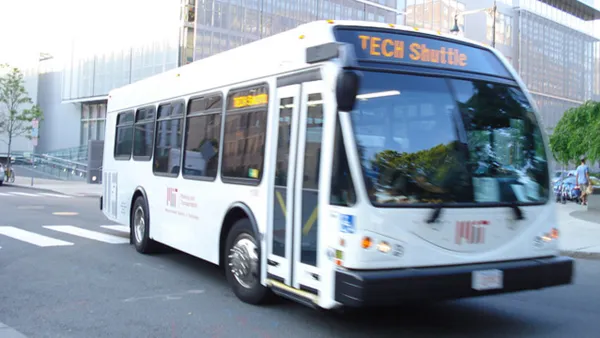
Tech Buses: Not Just for Techies, and Not Just for San Francisco
What began as Google buses, transporting highly paid engineers from San Francisco to Silicon Valley, has transformed into multi-company fleets serving white- and blue-collar workers in the 3,000-square-mile Northern California megaregion.
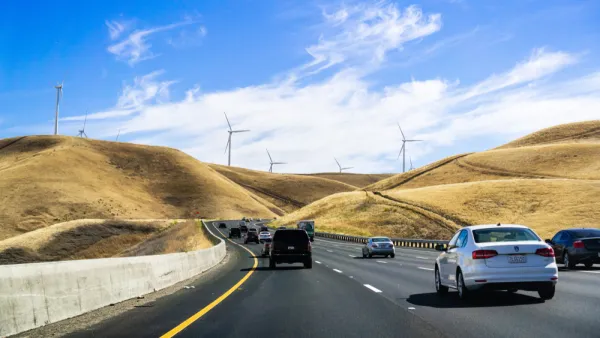
Counties Outside of Bay Area Eye Transportation Mega Measure in 2020
Northern San Joaquin Valley transit officials are eying a $100 billion Bay Area transportation measure to potentially fund a $1 billion rail tunnel for two commuter railroads to bring workers to the East Bay and Silicon Valley.
Will Columbia River Gorge Oil Train Derailment Be a 'Death Knell' for Bakken Crude-by-Rail?
After a long night fighting a fire that erupted when a 96-car oil train carrying Bakken crude from North Dakota derailed on June 3 in Mosier, Oregon, the fire chief called for an end to shipping the volatile oil by rail.

The state-sanctioned urbicide of Austin
People don’t kill cities. Freeways do.

US to reduce Colorado River water deliveries to Mexico
A new Colorado Treaty amendment reduces Mexico’s Colorado River water allocation by 250,000 acre feet.

New Jersey’s second-largest city bans standalone data centers
Jersey City will continue to allow co-location facilities, such as those meant for research institutions that store their own data.

Amtrak not solely to blame for New Jersey commuter rail's unreliability, report finds
A new study from the Garden State Initiative found that NJ Transit’s budget grew 20% across a 4 year period, but reliability declined significantly over the same period.

EPA erases limits on planet-warming pollution from power plants
Under Monday’s plan, power plants would still have some limits on how much mercury, arsenic and other contaminants they can emit.

Phoenix announces new on-demand transit service, more frequent RAPID buses
Both new services will launch in October, and are part of Phoenix's Project Effective Access Solutions for Easing Congestion.

FREE Course: Walkable City 1: Why Walkability?
After describing his path towards focusing on walkability as the essence of good planning, Jeff Speck marches through his five principal reasons for making more walkable places.
Reinventing Malls: Planning Alchemy—Turning Gray Fields Into Gold
The course focuses on the opportunities and imperatives that shape reinvention of mall sites.

Eagle County Government
Harvard University Graduate School of Design
Nashville Planning Department
The Architects Foundation
University of Cincinnati Online
The Pocatello Development Authority
The Urban Renewal Agency of the City of Pocatello
Journal of the American Planning Association