Drawing on his experience with the Washington D.C. and Chicago departments of transportation, Gabe Klein shared his thoughts about transportation improvements in the capital—if money were no object.


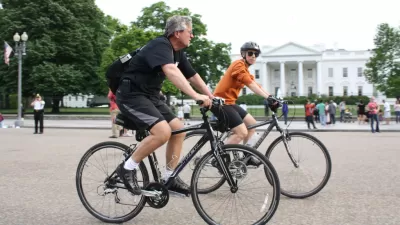
Klein's ideas emphasize improved transit, concentrated parking, bike infrastructure, and a wholehearted embrace of autonomous vehicles.
On parking: "I would love to see D.C. embrace parking maximums vs. minimums, and shared parking facilities in areas with multiple large developments vs. dedicated on-premise garages."
On an ideal 37-mile streetcar network: "Having a consortium of the world's finest contractors working to design and build a system that they are going to run, maintain, and share in the financial outcomes assures accountability for the long term."
On self-driving, shared transport schemes: "With autonomous vehicles — self-driving, in other words — and other autonomous transportation as service-business models, we can get rid of 85 percent of cars in cities, based on reputable studies."
Read the full story: Self-Driving Cars, More Bikes: How Gabe Klein Would Improve Mobility In D.C.

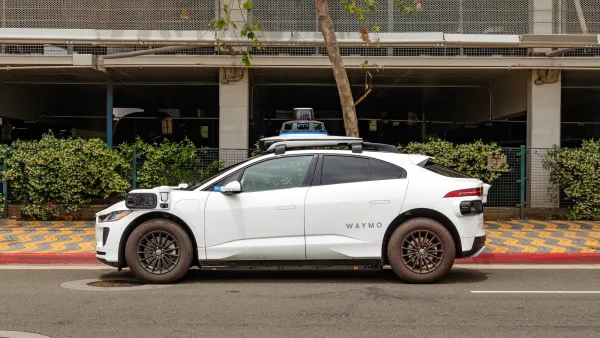
Austin Waymos rack up nearly $10k in parking tickets
The robotaxis have been cited for parking in tow zones and double parking, among other violations.

Study: Autonomous Cars Won’t Solve the Parking Problem
In hyper-dense cities where incentives to reduce car use and eliminate parking are already high, mass adoption of AVs won’t significantly reduce parking demand.
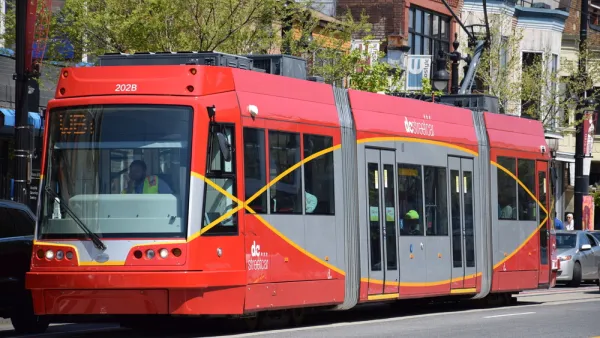
A Sneak Peak at D.C.'s Streetcar Extension Plans
With the controversy about the value of its newly opened streetcar ongoing, Washington, D.C. has commenced with a planning process for extending the line to Georgetown.

Planetizen Federal Action Tracker
A weekly monitor of how Trump’s orders and actions are impacting planners and planning in America.

Amtrak, CN end decades-long dispute with eight-year agreement
The new operating agreement establishes an updated framework for the companies to work together, including processes to resolve disputes.

Northwest rail fans eager for Sept. 30 debut of Amtrak’s Airo fleet
Get ready for that new train smell and more seats. But they won’t go faster or run more frequently on the Cascades route in Washington and Oregon.

Brightline Florida files for bankruptcy
The transit company is over $5 billion in debt.

St. Louis Metro to test if single-car trains can reduce operating costs, maintain rider satisfaction
The pilot program will run from October to spring 2027, and begin with one single-car train operating on Metrolink’s Red and Blue lines.

Pennsylvania is building data centers in abandoned mines
Housing data centers in mines provides an alternative to destroying local forests and may spare residents from data centers’ noise and air pollution.

FREE Course: Walkable City 1: Why Walkability?
After describing his path towards focusing on walkability as the essence of good planning, Jeff Speck marches through his five principal reasons for making more walkable places.
Reinventing Malls: Planning Alchemy—Turning Gray Fields Into Gold
The course focuses on the opportunities and imperatives that shape reinvention of mall sites.

City of Thousand Oaks
City of Wisconsin Rapids
Harvard University Graduate School of Design
The Architects Foundation
University of Cincinnati Online
The Pocatello Development Authority
The Urban Renewal Agency of the City of Pocatello