Carper, a Democrat, hopes to take advantage of historically low gas prices to hike the federal fuel taxes four cents a year for four years to end reliance on General Funds to fund transportation spending. Increased credits would offset the tax hike.


"Sen. Tom Carper is introducing legislation that would nearly double the 18.4-cents-per-gallon federal gas tax to help pay for road and transit projects around the nation," writes Keith Laing for The Hill. "The Delaware senator said the failure of Congress to pass a long-term transportation bill this summer showed it is time to raise the gas tax, which has not been increased since 1993."
"Over the past seven years, Congress has passed 13 short-term, stopgap-funding measures, costing our Treasury nearly $73 billion, instead of approving a long-term solution, costing our country jobs, lost productivity, and overall economic growth," state Carper in his August 6 press release.
Carper's bill, the Traffic Relief Act (S. 1994), would also apply to the 24.4 cent diesel tax. After four years, both gas and diesel taxes would be indexed to inflation.
"At a time when gas prices are some of the lowest we've seen in recent memory, we should be willing to make the hard choice to raise the federal gas tax," adds Carper. To illustrate how falling oil prices mitigate tax increases, AASHTO Journal reports that Washington state gas prices have decreased since gas taxes increased by seven cents-a-gallon on August 1.
In addition, Jim Camden of The Spokesman-Review explains that gas tax hikes do not necessarily increase gas prices, regardless of oil prices.
"One thing to remember is that motorists don’t directly pay the tax on an individual purchase at the pump; it’s not like a sales tax on a pair of shoes. It’s imposed on wholesalers who collect it from distributors and passed on to retailers, who ostensibly factor it into their prices."
"To balance the 16-cent cost of a gas tax hike, I've suggested making permanent certain expiring tax cuts that will directly benefit hard-working Americans," adds Carper.
The legislation would also extend and expand the earned income (EITC) and child (CTC) tax credits. It would make both credits permanent, as well as expand the EITC for childless workers, index the CTC to inflation, and make it easier for working Americans who qualify to claim the EITC.
Politico's Jennifer Scholtes writes that the bill would generate "an estimated $220 billion over a decade." She adds that "Carper has snagged a key supporter to sign onto his new gas tax bill — Senate Minority Whip Dick Durbin."
It’s no secret the Dem leader is in favor of hiking fuel fees to come up with more cash to fund transportation infrastructure investment. But Durbin’s support of Carper’s plan, in particular, is telling of the traction the proposal could gain.
In June 2014, Sens. Bob Corker (R-Tenn.) and Chris Murphy (D-Conn.) proposed a 12-cent gas and diesel tax increase over two years. However, the plan has yet to be introduced as legislation. Likewise, Sen. Barbara Boxer (D-Calif.) has suggested a wholesale oil tax.
Several House bills have been introduced to hike and/or index the gas tax, the most recent being the 10-cents-per-gallon "Highway Trust Fund Certainty Act" by Rep. Tom Rice (R-S.C.).
FULL STORY: Senate bill would nearly double the gas tax

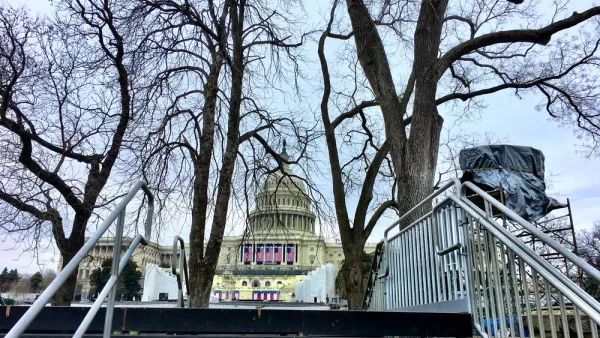
House Democrats Prepared to Work with Trump Administration on Infrastructure
The incoming chair of the House Transportation and Infrastructure Committee, Peter DeFazio (D-Ore.), points to gubernatorial races and a California ballot initiative to show there's no peril for legislators to hike the gas tax.
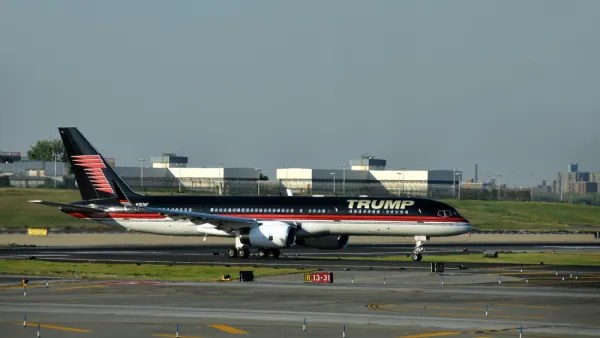
Trump's 25-Cent Infrastructure Tax?
During a closed-door meeting Wednesday with Democratic and Republican lawmakers, President Trump endorsed hiking the gas tax by 25-cents per gallon to help pay for the $200 billion investment and restore solvency to the Highway Trust Fund.
10-Cent Fuel Tax Introduced by Conservative Republican
The basics of South Carolina Rep. Tom Rice's "Highway Trust Fund Certainty Act": Increase federal gas and diesel taxes by 10.1 cents in one year, index to inflation, and issue an income tax credit for $133.

Planetizen Federal Action Tracker
A weekly monitor of how Trump’s orders and actions are impacting planners and planning in America.

The state-sanctioned urbicide of Austin
People don’t kill cities. Freeways do.

US to reduce Colorado River water deliveries to Mexico
A new Colorado Treaty amendment reduces Mexico’s Colorado River water allocation by 250,000 acre feet.

Mamdani overhauls NYC's Vision Zero plan with 100 new policy goals
The overhaul aims to reduce traffic deaths and make streets safer for pedestrians, cyclists and drivers through lower speed limits, new safety infrastructure and more.

Amtrak not solely to blame for New Jersey commuter rail's unreliability, report finds
A new study from the Garden State Initiative found that NJ Transit’s budget grew 20% across a 4 year period, but reliability declined significantly over the same period.

EPA erases limits on planet-warming pollution from power plants
Under Monday’s plan, power plants would still have some limits on how much mercury, arsenic and other contaminants they can emit.

FREE Course: Walkable City 1: Why Walkability?
After describing his path towards focusing on walkability as the essence of good planning, Jeff Speck marches through his five principal reasons for making more walkable places.
Reinventing Malls: Planning Alchemy—Turning Gray Fields Into Gold
The course focuses on the opportunities and imperatives that shape reinvention of mall sites.

Eagle County Government
Harvard University Graduate School of Design
Nashville Planning Department
The Architects Foundation
University of Cincinnati Online
The Pocatello Development Authority
The Urban Renewal Agency of the City of Pocatello
Journal of the American Planning Association