The age-old conflict between cars and bikes finally has the attention of one of the giants. Ford's Info Cycle project mounts sensors on street bikes to map out how multi-modal city travelers move around.


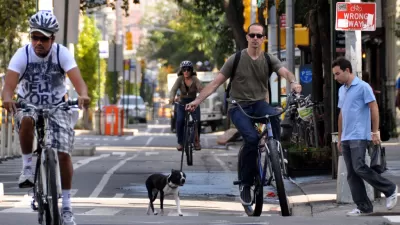
You know multi-modal alternatives are catching on when Ford steps into the ring. "More than a century after Ford itself fatally disrupted the horse carriage industry, the people at the prototypical 20th-century manufacturing company are confronting a proliferation of 21st-century alternatives to the old paradigm of one person, one car, in which simply pushing new models off assembly lines each year won't cut it."
Developed in Palo Alto, Ford's Info Cycle project uses a sensor system to gather bicycle movement data, "along with OpenXC data gathered from its cars, to track the changing way people are moving around cities." Mounted on a whole fleet of bikes, "the sensor is capable of recording a variety of data, including location, pedal speed, ambient light, temperature, altitude, and speed. The data is then available for analysis."
In addition to providing insight for Ford, the data collected could aid street design to improve safety and usability. As of right now, Ford appears to view the project as a study in the kind of disruptive innovation many 20th-century behemoths have fallen prey to.
Says Sudipto Aich, a principal research engineer for Info Cycle, "Ask anyone who rides in the city the top thing they are mindful of, it's a car [...] that in itself is potentially a huge opportunity. Now, bike companies aren't thinking about cars, and car companies aren't thinking about bikes."
Read the full story: Ford Tries to Figure Out Bicycles

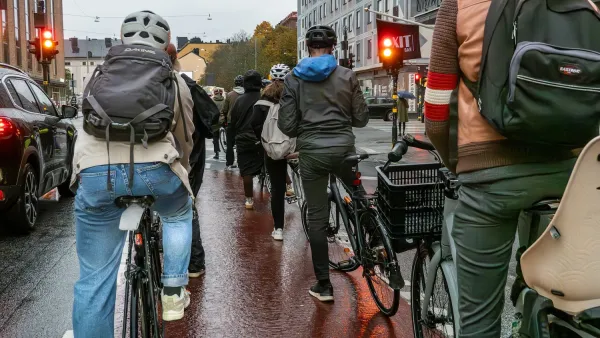
Cyclists may be Right to run Stop Signs and Red Lights. Here’s why
One researcher argues that the Idaho stop might not be such a bad idea after all.
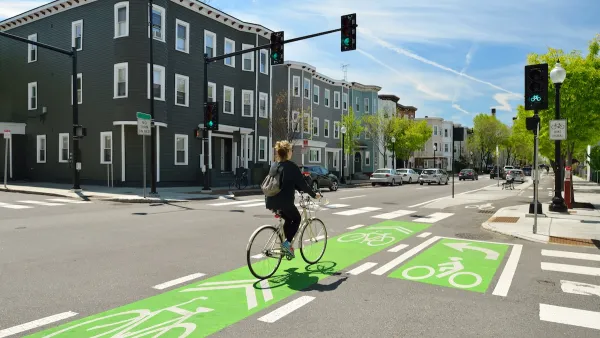
NACTO Releases Updated Urban Bikeway Guide
The third edition of the nationally recognized road design guide includes detailed design advice for roads that prioritize safety and accessibility for all users.

US Street Design Manual Inches Toward Safer Roads
The guiding document for U.S. road design is starting to recognize the needs of people walking and biking, but safe streets advocates say more significant changes are needed to reduce the high number of pedestrian deaths and improve connectivity for all road users.

Amtrak, CN end decades-long dispute with eight-year agreement
The new operating agreement establishes an updated framework for the companies to work together, including processes to resolve disputes.

Northwest rail fans eager for Sept. 30 debut of Amtrak’s Airo fleet
Get ready for that new train smell and more seats. But they won’t go faster or run more frequently on the Cascades route in Washington and Oregon.

Judges permit Denver to divert 77,000 acre feet from the Colorado River for reservoir expansion
Overuse and climate change have caused the Colorado River’s water levels to plummet.

NYC to turn city-owned property into thousands of homes
The city has scheduled a public hearing regarding the development for October.

Buses travel at 5mph along this route in NYC. The Bronx's first-ever busway looks to change that
Prior to the busway, buses on the Bx36 route traveled as slowly as 5 miles per hour.

Pittsburg launches 'EZ permits,' aims for one-day turnaround for low-risk permits
The pilot ‘fast lane’ for permits is part of a bundle of modernization efforts for Pittsburg’s permitting process.

FREE Course: Walkable City 1: Why Walkability?
After describing his path towards focusing on walkability as the essence of good planning, Jeff Speck marches through his five principal reasons for making more walkable places.
Reinventing Malls: Planning Alchemy—Turning Gray Fields Into Gold
The course focuses on the opportunities and imperatives that shape reinvention of mall sites.

City of Thousand Oaks
City of Wisconsin Rapids
Harvard University Graduate School of Design
The Architects Foundation
University of Cincinnati Online
The Pocatello Development Authority
The Urban Renewal Agency of the City of Pocatello