The United Nations is looking for cities to model best practices in resilience planning. Look no further than Hoboken, New Jersey.


"The United Nations Office for Disaster Risk Reduction (UNIDR) this week named Hoboken a role model city," reports Marielle Mondon.
"Hoboken joined the UN’s 'Making Cities Resilient' campaign in 2013. It’s now one of 45 cities worldwide to be considered by the UN to be a role model, and only the second in the U.S. — the other is San Francisco," adds Mondon.
According to the UN's announcement of the achievement, Hoboken has made substantial strides in the wake of Hurricane Katrina, when the city experienced significant flooding:
"The City of Hoboken is pursuing a variety of strategies to mitigate flood risk. This week, the City Council will be asked to support low-interest financing to build the Southwest Resiliency Park, which is also designed to hold over 200,000 gallons of rainwater, and funding to acquire 6 acres of land for a Northwest Resiliency Park, which will be designed to hold at least a million gallons of stormwater. Last week, the Council approved financing for Hoboken’s second wet weather pump station, which will alleviate flooding in western Hoboken."
Read the full story: UN Names Hoboken Role Model for Resilience
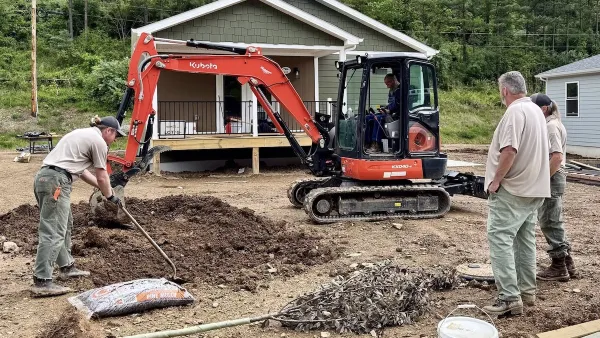
Kentucky Nonprofits Build ‘Higher Ground’ Homes
After destructive floods displaced thousands of Kentucky families, developers are building climate-resilient homes away from flood-prone areas.

How Cities Can Support Climate Adaptation
In the face of federal cuts to climate resilience funding, a panel at ULI’s Resilience Summit offered suggestions for maintaining managed retreat and other climate adaptation programs.
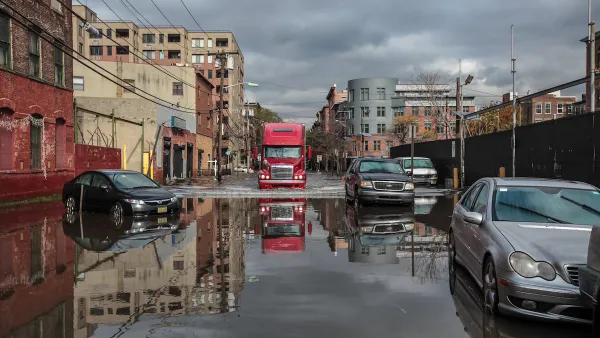
FEMA Resilience Program Cuts Grant Funding
The Building Resilient Infrastructure and Communities program funded projects from flood prevention to power station upgrades.

Planetizen Federal Action Tracker
A weekly monitor of how Trump’s orders and actions are impacting planners and planning in America.

California plans to bury El Niño’s downpour
If the state plays its cards right, it may be able to store a billion acre-feet of El Niño’s water in aquifers.

Desperate measures: Advocates weigh draining Lake Powell to fill Colorado River
Draining the reservoir could reduce evaporation losses by a couple hundred thousand acre-feet.

Los Angeles just elected an urban planner as its mayor
Transportation analysts are optimistic that Raman will be more aggressive in addressing transit issues than Bass.

Mamdani’s pied-à-terre tax survives legal challenge
A panel of judges found that the plaintiffs failed to demonstrate injury as a result of New York City's implementation of the tax.

Eastern Nebraska is running out of electricity
Data centers and electrification are straining eastern Nebraska’s grid, throttling economic development.

FREE Course: Walkable City 1: Why Walkability?
After describing his path towards focusing on walkability as the essence of good planning, Jeff Speck marches through his five principal reasons for making more walkable places.
Reinventing Malls: Planning Alchemy—Turning Gray Fields Into Gold
The course focuses on the opportunities and imperatives that shape reinvention of mall sites.

City of Rosemead
Rutgers University, Edward J. Bloustein School of Planning and Public Policy
One Hundred Miles
University of Michigan School for Environment and Sustainability (SEAS)
Hunter College, City University of New York (CUNY)
The Architects Foundation
City of Cambridge
Montrose County
The Pocatello Development Authority