After no small amount of debate, delay, and controversy, the first phase of D.C. Metro's Silver Line will launch passenger service today. The line will connect Washington D.C. to northwestern Virginia, including four stops in Tysons Corner.


Paul Duggan previews the weekend's opening of phase 1 of the Silver Line by detailing the final preparations and testing for the new route.
"After countless rounds of political debate, stop-and-start technical planning that began a half-century ago and the arduous, multibillion-dollar construction work that started in 2009, the Silver Line faced its most important challenge this week," reports Duggan.
"And the result: The Silver Line…'is ready for its close-up.'"
After this weekend's hoopla, the real business of the line will commence: "After Saturday’s opening, the next big test will come Monday morning, when the first workday rush-hour crowds show up at the new stations. Unlike Saturday and Sunday, when trains will run every 12 minutes, the Silver Line, like other lines, will operate on a rush-hour schedule from 5 a.m to 9 a.m. and from 3 p.m. to 7 p.m. on weekdays, with trains every six minutes."
The article also includes a lot of interactive features about how and where the Silver Line will operate as well as more info about its expected impact on the region.
Read the full story: Metro declares Silver Line ‘is ready for its close-up’

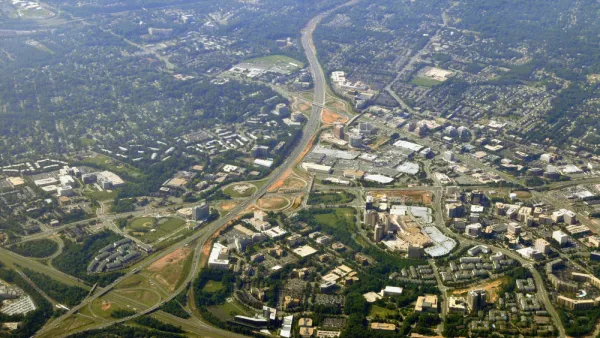
D.C.'s New Metro Line Already Influencing the Suburbs
The Silver Line opened two and a half months ago. Already, with strong ridership in both directions, some businesses are seeing new opportunities.
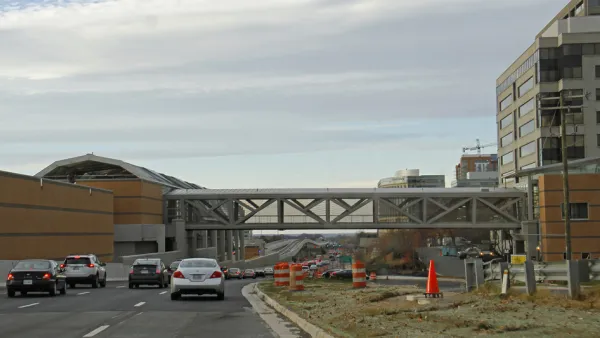
D.C. Metro Considering Privatization of Operations and Maintenance on New Silver Line
A proposal to privatize operations and maintenance of stations and track on the Silver Line has taken an initial, tentative step forward.

Arlington County Reduces Parking Requirements for Multi-Family Developments on Metro Corridors
In addition to reducing parking requirements to 0.2 to 0.6 spaces per unit for developments "approved by special exception," the board went a step further by requiring mitigations if developers provide more than 1.65 spaces per unit.

Planetizen Federal Action Tracker
A weekly monitor of how Trump’s orders and actions are impacting planners and planning in America.

California plans to bury El Niño’s downpour
If the state plays its cards right, it may be able to store a billion acre-feet of El Niño’s water in aquifers.

Chicago breaks ground on $3 billion megadevelopment
The new neighborhood, titled Foundry Park, will one day host 3,700 residences.

California High-Speed Rail Authority CEO resigns after $600,000 scandal
Under Ian Choudri, the authority used taxpayer dollars to fund first class flights and trips to nightclubs.

Want to study the Missouri River? Soon, you may need unanimous approval from 10 states
Legislation would require 10 governors’ permission to study or build projects moving water outside the basin.

Desperate measures: Advocates weigh draining Lake Powell to fill Colorado River
Draining the reservoir could reduce evaporation losses by a couple hundred thousand acre-feet.

FREE Course: Walkable City 1: Why Walkability?
After describing his path towards focusing on walkability as the essence of good planning, Jeff Speck marches through his five principal reasons for making more walkable places.
Reinventing Malls: Planning Alchemy—Turning Gray Fields Into Gold
The course focuses on the opportunities and imperatives that shape reinvention of mall sites.

City of Rosemead
Rutgers University, Edward J. Bloustein School of Planning and Public Policy
One Hundred Miles
Hunter College, City University of New York (CUNY)
The Architects Foundation
University of Cincinnati Online
City of Cambridge
Montrose County
The Pocatello Development Authority