Google, partnering with the Environmental Defense Fund, has created a series of maps locating methane leaks around three cities in the United States. The question of just how much methane is leaking in a given city comes down to infrastructure.


In three U.S. cities, Boston, Staten Island, and Indianapolis, "Google cars roamed over the past year equipped with sensors to record methane leaks from utility pipes," according to Anya Litvak.
Their purpose: partnering with the Environmental Defense Fund, to map methane leaks. Methane is the second most prevalent greenhouse gas emitted by the human activity of the United States, according to the U.S. Environmental Protection Agency, although it is 21-times as powerful as carbon dioxide at trapping heat in the atmosphere.
"Gas utilities are required to calculate and report their lost gas rate to the state Public Utility Commission annually, but they don’t map the leaks and categorize them by flow rate the way EDF and Google did."
Read the full story: Google, nonprofit map gas leaks in U.S. cities
Methane Emissions Replace CO2 Emissions— Is This Progress?
For the first time, electricity generated from burning natural gas will surpass coal, largely due to fracking of shale. While that means that carbon dioxide emissions will continue to drop, it also means that methane emissions will increase.
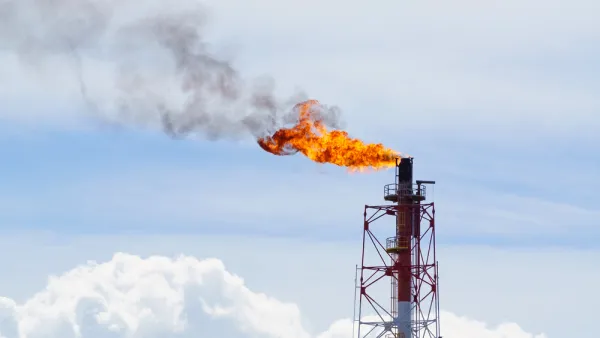
Big Oil Not Happy With Methane Regulation Rollback
The Trump administration's rollback on August 29 of an Obama-era regulation to reduce methane emissions in the production and distribution of oil and natural gas did not sit well with large oil and gas companies who see value in reducing emissions.
Latest Obama-Era Regulations Targeted by the Trump Administration: Methane Rules
One Obama-era climate regulation still on the books deals with methane leakage from oil and gas wells. The greenhouse gas is 25 times more powerful than carbon dioxide. Another methane regulation targeted deals with flaring on federal lands.

Desperate measures: Advocates weigh draining Lake Powell to fill Colorado River
Draining the reservoir could reduce evaporation losses by a couple hundred thousand acre-feet.

Eastern Nebraska is running out of electricity
Data centers and electrification are straining eastern Nebraska’s grid, throttling economic development.
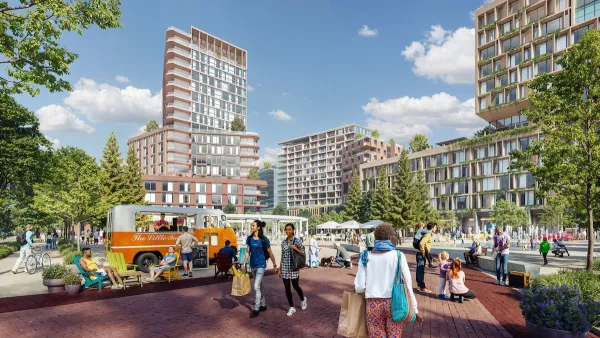
Malls are becoming the midtowns of the future
Mall and office park redevelopments are a generational opportunity to create new nodes of urbanity.

NYC breaks ground on anti-flooding infrastructure project
New York City's new system will reduce stormwater flows to local sewers by 90%.

One Kentucky town’s secret to affordable housing
The Smoketown Community Land Trust has already built seven affordable homes for community members.

Houston gains petal-shaped cooling infrastructure to make streets more ‘delightful’
The city has installed the pavilions along 15 blocks in Houston.

FREE Course: Walkable City 1: Why Walkability?
After describing his path towards focusing on walkability as the essence of good planning, Jeff Speck marches through his five principal reasons for making more walkable places.
Reinventing Malls: Planning Alchemy—Turning Gray Fields Into Gold
The course focuses on the opportunities and imperatives that shape reinvention of mall sites.

City of Rosemead
Rutgers University, Edward J. Bloustein School of Planning and Public Policy
One Hundred Miles
University of Michigan School for Environment and Sustainability (SEAS)
Hunter College, City University of New York (CUNY)
The Architects Foundation
City of Cambridge
Montrose County
The Pocatello Development Authority