Should helmets be an optional accessory, rather than an absolute requirement? Or are helmets a sign of a culture not yet ready to embrace biking as a normal, safe activity?


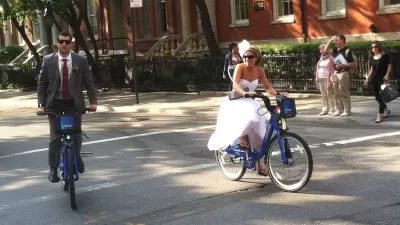
Joseph Stromberg crunches data from around the world about bicycle safety and the question of whether helmets should be required for bikers. The title of the article "Stop Making People Wear Helmets" makes the politics of the article clear, but here's the crux of Stromberg's argument: "Most importantly, requiring helmets deters many normal people from biking in the first place — in Australia, bike commuting rates plummeted when mandatory helmet laws went into effect. And, when there are fewer bikes on the road overall, biking becomes more dangerous."
Stromberg backs this up this claim with a number of data-backed arguments—including the relative danger of biking compare to walking and driving, the effectiveness of helmets in reducing injuries, and the surprising point that helmets might, in fact, make accidents more likely (although that final point is hard to prove scientifically).
A final, thought-provoking point: "Let's stop thinking of helmets as a critical protection against the risky activity of biking. Let's start thinking of biking as a normal, safe activity, like walking — and helmets as an optional accessory for people who are really into it."
Read the full story: Stop forcing people to wear bike helmets

Legislation would Require Bike Helmets, Reflective Clothing for Bike Riders
A newly proposed bill in California comes down hard on one side of a hotly contested issue regarding the necessity of helmets in ensuring the safety of bikers.
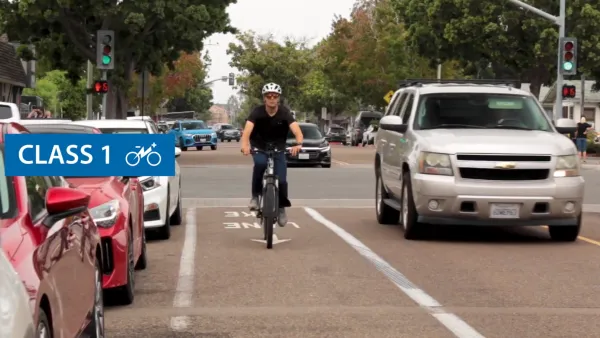
Carlsbad, California Could Set Age Limits for E-bikes
Some California jurisdictions say a minimum age limit is necessary for high-powered e-bikes due to the high number of injuries in recent years.
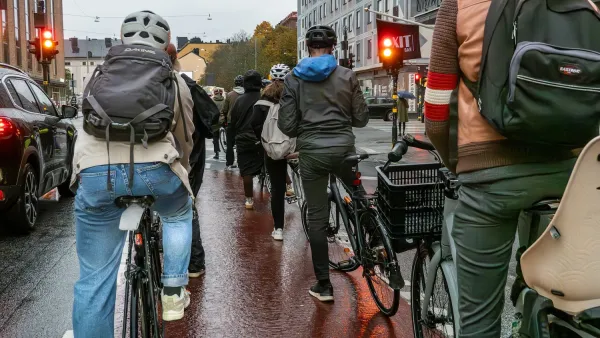
Cyclists may be Right to run Stop Signs and Red Lights. Here’s why
One researcher argues that the Idaho stop might not be such a bad idea after all.

Planetizen Federal Action Tracker
A weekly monitor of how Trump’s orders and actions are impacting planners and planning in America.

Amtrak, CN end decades-long dispute with eight-year agreement
The new operating agreement establishes an updated framework for the companies to work together, including processes to resolve disputes.

Northwest rail fans eager for Sept. 30 debut of Amtrak’s Airo fleet
Get ready for that new train smell and more seats. But they won’t go faster or run more frequently on the Cascades route in Washington and Oregon.

Trump administration unlawfully slashed $7 billion in clean energy grants, judge rules
The Environmental Protection Agency ended the Solar For All program, which provided the grants, after President Donald Trump’s inauguration.

Record-breaking wildlife overpass in Colorado brings 91% reduction in animal collisions
Prior to the overpass, vehicles were hitting one deer per day on Colorado’s Interstate 25.

California lawmakers approve just 5% of much-needed LA28 transportation funding
State legislators appear just as unwilling as Trump to pay for Olympics-related transportation projects.

FREE Course: Walkable City 1: Why Walkability?
After describing his path towards focusing on walkability as the essence of good planning, Jeff Speck marches through his five principal reasons for making more walkable places.
Reinventing Malls: Planning Alchemy—Turning Gray Fields Into Gold
The course focuses on the opportunities and imperatives that shape reinvention of mall sites.

City of Thousand Oaks
City of Wisconsin Rapids
Harvard University Graduate School of Design
The Architects Foundation
University of Cincinnati Online
The Pocatello Development Authority
The Urban Renewal Agency of the City of Pocatello