Fairly sizable funding contingencies still have to be resolved, but the so-called Red-Purple Bypass Project could increase rush hour capacity at a critical North Side junction by 30 percent.


The Chicago Transit Authority recently announced plans “to build a bridge or bypass for the Brown Line where it crosses the Red and Purple line over Clark Street a couple of blocks south of Wrigley Field,” according to a report by Greg Hinz.
The CTA Red-Purple Bypass Project would “unsnarl a mid-North Side rail junction that ties up hundreds of Red, Brown and Purple line trains a day.” Hinz reports that CTA Vice President Michael McLaughlin told a recent conference call that the “CTA will be able to run an additional 69 trains through the junction each rush hour, 30 percent more than now…”
The work still requires a full engineering and a source for the hefty estimated price tag of $320 million. Chicago did recently get a big windfall with a federal “core capacity” grant, but as part of much larger capital investment plans, the project will require serious political will to achieve the needed funding.
Read the full story: CTA moves to unsnarl North Side el tracks
Environmental Review Backs Flyover Plans for El Tracks on Chicago's Northside
After an initial proposal a year ago, prompting immediate and strong criticism, the Chicago Transit Authority has completed its environmental assessment of a proposal designed to improve service capacity at the infamous bottleneck of Clark Junction.
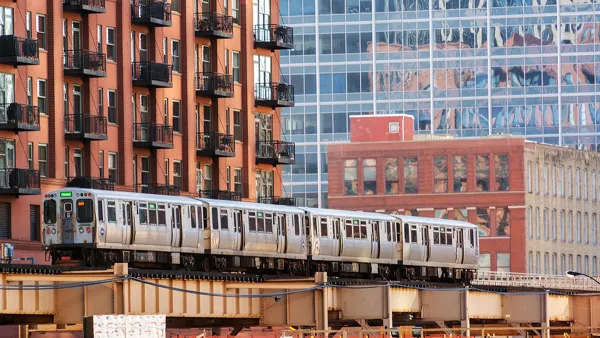
High Profile Opposition to Chicago Transit Authority's Flyover Project
A Pulitzer Prize-winning architecture critic invokes the most influential planning battles in the country's history in critiquing the proposed Red-Purple Bypass Project sought by the Chicago Transit Authority and Mayor Rahm Emanuel.
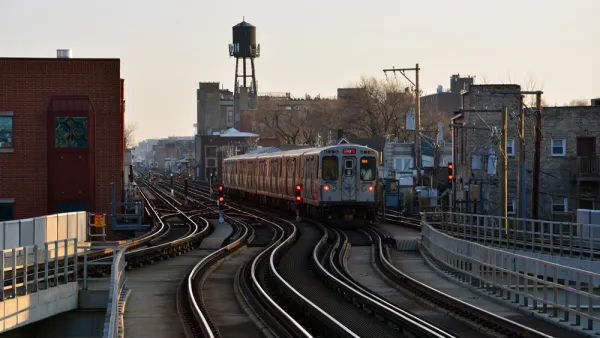
Work Ready to Begin on $2.1 Billion Red and Purple Line Modernization in Chicago
The Chicago Transit Authority's largest-ever construction project, also one of its most controversial projects, will begin construction soon.

Planetizen Federal Action Tracker
A weekly monitor of how Trump’s orders and actions are impacting planners and planning in America.

California plans to bury El Niño’s downpour
If the state plays its cards right, it may be able to store a billion acre-feet of El Niño’s water in aquifers.

Desperate measures: Advocates weigh draining Lake Powell to fill Colorado River
Draining the reservoir could reduce evaporation losses by a couple hundred thousand acre-feet.

Housing is the top priority of Seattle’s sole new councilmember
Jenks campaigned on building 1,000 new units of affordable housing.

New tax cuts may slash $1.5 billion in funding for Miami transit, public parks
Amendment 3 will save Miami-Dade homeowners $2,700 in 2028.

Arizona, Wisconsin, Pennsylvania hope to finally advance climate goals post-midterms
The three states have spent years under Republican or divided control.

FREE Course: Walkable City 1: Why Walkability?
After describing his path towards focusing on walkability as the essence of good planning, Jeff Speck marches through his five principal reasons for making more walkable places.
Reinventing Malls: Planning Alchemy—Turning Gray Fields Into Gold
The course focuses on the opportunities and imperatives that shape reinvention of mall sites.

City of Rosemead
Rutgers University, Edward J. Bloustein School of Planning and Public Policy
One Hundred Miles
University of Michigan School for Environment and Sustainability (SEAS)
Hunter College, City University of New York (CUNY)
The Architects Foundation
City of Cambridge
Montrose County
The Pocatello Development Authority