Last Friday night, more than 1,000 Londoners staged an unusual protest against the official response to a spate of fatal accidents involving cyclists.


In what they referred to as a “die-in,” the protesters participated in a vigil before lying down in the road in front of the Transport for London building. According to John Stuttle, who attended and helped organize the “die-in,” the event was put together in less than two weeks.
The “die-in” and other protests are part of an ongoing feud between cyclists and city officials. Cyclists complain that existing biking infrastructure puts them at risk for collisions with vehicles, including HGVs and buses. London’s mayor, meanwhile, has resisted calls for an independent review of cycling safety in the city, and Assembly Member Boris Johnson recently angered many with remarks implying that cyclists, not drivers, were to blame for the recent accidents.
FULL STORY: Over 1,000 cyclists stage die-in protest outside Transport for London HQ

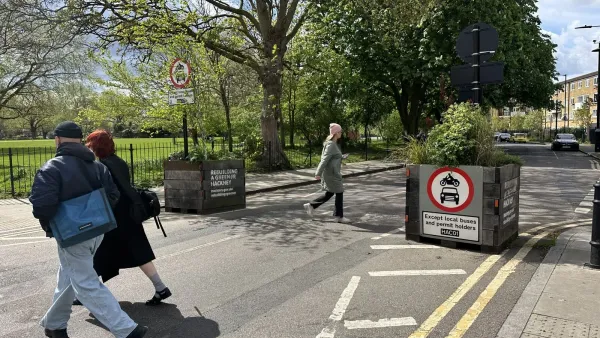
Low-Traffic Neighborhoods Are Reclaiming London’s Streets From Cars
A controversial but effective policy is keeping residential streets quiet, getting more people walking and reducing pollution.
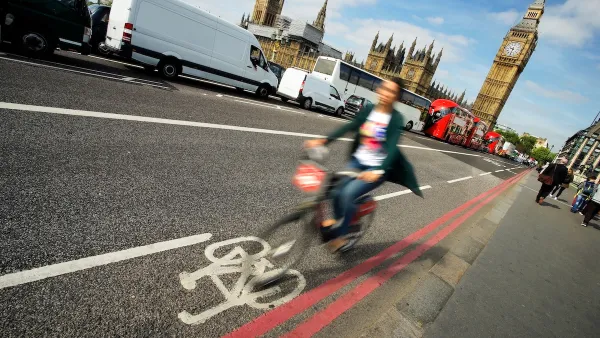
Biking in London Grew by 20 Percent Since 2019
Pandemic-induced changes and improved bike infrastructure have contributed to the impressive growth of cycling as a mode share.
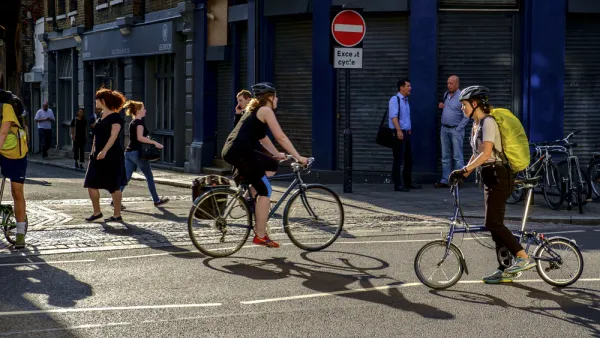
How Boosting Biking Could Improve London's Economy
A new study outlines the potential economic, environmental, and public health benefits of increasing cycling mode share in London, which has pledged to achieve net-zero emissions by 2030.

The state-sanctioned urbicide of Austin
People don’t kill cities. Freeways do.

US to reduce Colorado River water deliveries to Mexico
A new Colorado Treaty amendment reduces Mexico’s Colorado River water allocation by 250,000 acre feet.

New Jersey’s second-largest city bans standalone data centers
Jersey City will continue to allow co-location facilities, such as those meant for research institutions that store their own data.

Amtrak not solely to blame for New Jersey commuter rail's unreliability, report finds
A new study from the Garden State Initiative found that NJ Transit’s budget grew 20% across a 4 year period, but reliability declined significantly over the same period.

EPA erases limits on planet-warming pollution from power plants
Under Monday’s plan, power plants would still have some limits on how much mercury, arsenic and other contaminants they can emit.

Phoenix announces new on-demand transit service, more frequent RAPID buses
Both new services will launch in October, and are part of Phoenix's Project Effective Access Solutions for Easing Congestion.

FREE Course: Walkable City 1: Why Walkability?
After describing his path towards focusing on walkability as the essence of good planning, Jeff Speck marches through his five principal reasons for making more walkable places.
Reinventing Malls: Planning Alchemy—Turning Gray Fields Into Gold
The course focuses on the opportunities and imperatives that shape reinvention of mall sites.

Eagle County Government
Harvard University Graduate School of Design
Nashville Planning Department
The Architects Foundation
University of Cincinnati Online
The Pocatello Development Authority
The Urban Renewal Agency of the City of Pocatello
Journal of the American Planning Association