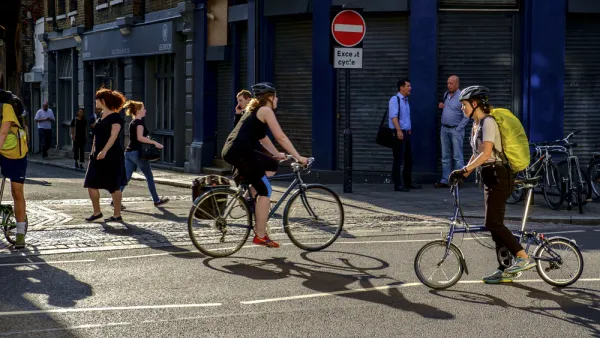
Pandemic-induced changes and improved bike infrastructure have contributed to the impressive growth of cycling as a mode share.



The popularity of cycling grew by 20 percent between 2019 and 2023, according to a report from Travel in London noted in an article for Momentum Magazine by Ron Johnson.
According to Johnson, “The pandemic-induced changes, such as hybrid working practices, have left a lasting impact on commuter cycling volumes, particularly in central London.”
Aside from a growth in trips, cycling patterns changed in other ways. Cyclists in London are making shorter trips and traveling more at off-peak hours. Santander Cycles, the city’s bike share program, saw a 5 percent increase in demand in 2022, and an e-scooter pilot program has provided over 3 million rides.
Infrastructure is likely a contributing factor to the growth. “The Cycling Action Plan 2, published in June 2023, aims to have 40% of Londoners living within 400 meters of the strategic cycle network by 2030. As of November 2023, 24.2% of Londoners already lived within this proximity, up from 21.9% in 2022 and a mere 5% in 2016.”
FULL STORY: London cycling numbers up a whopping 20% since the pandemic

How Boosting Biking Could Improve London's Economy
A new study outlines the potential economic, environmental, and public health benefits of increasing cycling mode share in London, which has pledged to achieve net-zero emissions by 2030.

Paris Bike Boom Leads to Steep Drop in Air Pollution
The French city’s air quality has improved dramatically in the past 20 years, coinciding with a growth in cycling.

Fort Worth To Relaunch Bike Share System in January
Trinity Metro shuttered its current system at the end of November and plans to relaunch with a mostly-electric system.

The state-sanctioned urbicide of Austin
People don’t kill cities. Freeways do.

US to reduce Colorado River water deliveries to Mexico
A new Colorado Treaty amendment reduces Mexico’s Colorado River water allocation by 250,000 acre feet.

New Jersey’s second-largest city bans standalone data centers
Jersey City will continue to allow co-location facilities, such as those meant for research institutions that store their own data.

Amtrak not solely to blame for New Jersey commuter rail's unreliability, report finds
A new study from the Garden State Initiative found that NJ Transit’s budget grew 20% across a 4 year period, but reliability declined significantly over the same period.

EPA erases limits on planet-warming pollution from power plants
Under Monday’s plan, power plants would still have some limits on how much mercury, arsenic and other contaminants they can emit.

Phoenix announces new on-demand transit service, more frequent RAPID buses
Both new services will launch in October, and are part of Phoenix's Project Effective Access Solutions for Easing Congestion.

FREE Course: Walkable City 1: Why Walkability?
After describing his path towards focusing on walkability as the essence of good planning, Jeff Speck marches through his five principal reasons for making more walkable places.
Reinventing Malls: Planning Alchemy—Turning Gray Fields Into Gold
The course focuses on the opportunities and imperatives that shape reinvention of mall sites.

Eagle County Government
Harvard University Graduate School of Design
Nashville Planning Department
The Architects Foundation
University of Cincinnati Online
The Pocatello Development Authority
The Urban Renewal Agency of the City of Pocatello
Journal of the American Planning Association