The old cool: Sealing yourself inside suburban air conditioning. The new cool? According to Howard Blackson, it's the joy to be found outside, connecting with one another and the world we share.


"As we re-populate our downtowns, and watch the crime statistics drop, people are seeing safety in numbers. Jane Jacobs was right about eyes on the street reducing crime. With the sense that it’s indeed safe to be in cities again, it appears that citizens are re-learning how to be connected in an urban context. Downtown’s street cafes, shops and plazas, filled with activity, are proof that we’re succeeding in bringing people back downtown. Safely. This wasn’t always so."
"For many, perhaps the majority, of us, our suburban lives were spent sealed in air-conditioning, interspersed with moments of purported discomfort as we transitioned between the homes, cars, McMansions, big boxes, gyms, schools, Olive Gardens, and Arby’s drive-thrus that characterized our daily lives. Suburban yards became meaningless, as were the landscape berms surrounding our banal office parks and multi-family apartments."
Howard Blackson goes on to explore the city-suburban migration cycle, and concludes that accessible public spaces -- both urban and natural -- are more essential than ever to both sustainability and satisfaction.
FULL STORY: Next Urbanism Lab 04: Dare to live outdoors

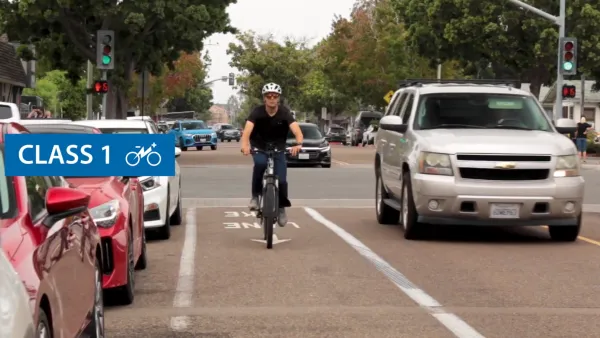
Carlsbad, California Could Set Age Limits for E-bikes
Some California jurisdictions say a minimum age limit is necessary for high-powered e-bikes due to the high number of injuries in recent years.
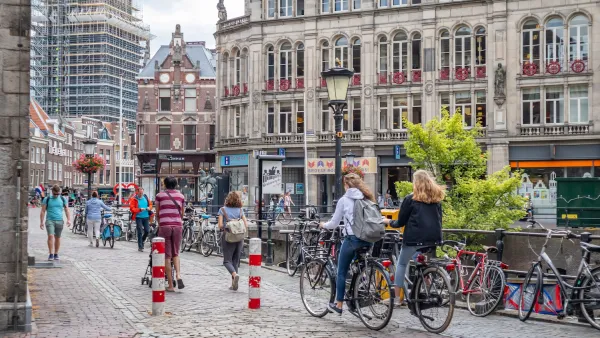
2025's 30 Most Bike-friendly Cities
Copenhagenize has released its list of top cities for cyclists. Spoiler alert: the United States doesn’t make the list.
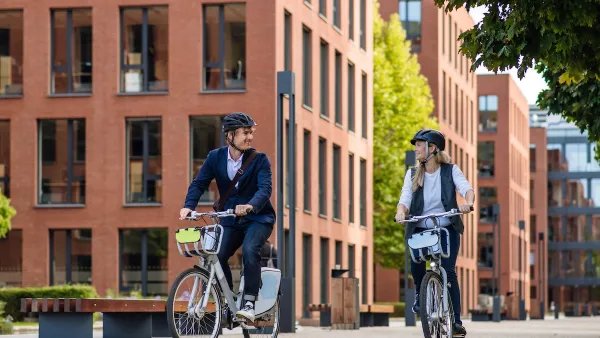
7 Ways Cyclists are Winning in the AI Revolution
For individual cyclists and transportation planners, AI offers some useful tools for understanding bike riders’ behavior and assessing gaps in a city’s bike infrastructure.

The state-sanctioned urbicide of Austin
People don’t kill cities. Freeways do.

US to reduce Colorado River water deliveries to Mexico
A new Colorado Treaty amendment reduces Mexico’s Colorado River water allocation by 250,000 acre feet.

New Jersey’s second-largest city bans standalone data centers
Jersey City will continue to allow co-location facilities, such as those meant for research institutions that store their own data.

Amtrak not solely to blame for New Jersey commuter rail's unreliability, report finds
A new study from the Garden State Initiative found that NJ Transit’s budget grew 20% across a 4 year period, but reliability declined significantly over the same period.

EPA erases limits on planet-warming pollution from power plants
Under Monday’s plan, power plants would still have some limits on how much mercury, arsenic and other contaminants they can emit.

Phoenix announces new on-demand transit service, more frequent RAPID buses
Both new services will launch in October, and are part of Phoenix's Project Effective Access Solutions for Easing Congestion.

FREE Course: Walkable City 1: Why Walkability?
After describing his path towards focusing on walkability as the essence of good planning, Jeff Speck marches through his five principal reasons for making more walkable places.
Reinventing Malls: Planning Alchemy—Turning Gray Fields Into Gold
The course focuses on the opportunities and imperatives that shape reinvention of mall sites.

Eagle County Government
Harvard University Graduate School of Design
Nashville Planning Department
The Architects Foundation
University of Cincinnati Online
The Pocatello Development Authority
The Urban Renewal Agency of the City of Pocatello
Journal of the American Planning Association