The BMW Guggenheim Lab has released an online urban planning game called "Urbanology," which asks a serious of questions to determine the type of city you think is the future.


To his surprise, Planetizen Editor Tim Halbur apparently puts a low priority on livability and a high priority on innovation, making him an ideal citizen of a future Houston.
Itir Sonuparlak of The City Fix summarizes the game:
"Each player assumes the role of a decision maker and answers questions to determine the priorities of a fictitious city. By answering 'yes' or 'no' to questions like, 'Will you double the cost of public transport to fund its conversion to a carbon-neutral system?' or 'Will you pay for a free bike service in your city?' players build a city that best matches their urban ideology. As we've written about before, 'serious gaming' like this 'can help people become astute, collaborative and creative problem-solvers.'"
Thanks to Jeffrey Riecke
Read the full story: Friday Fun: Urbanology by the BMW Guggenheim Lab

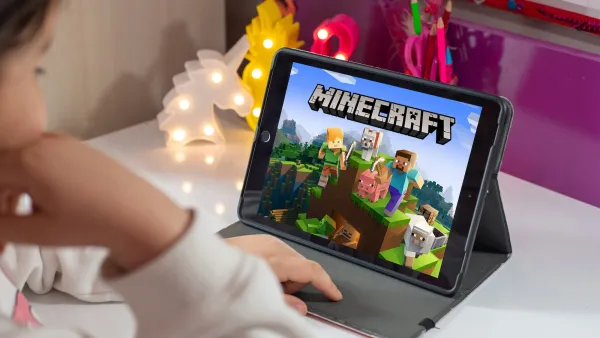
Children in 55 countries are redesigning their cities in Minecraft
A U.N.-backed program lets students and community members reimagine sites in their neighborhoods in the game — and translate them into real-life buildings.

January Must-Reads: Top 10 Articles From Last Month
How a tidal wave of potential changes at the federal level could throw many programs planners depend on into chaos, a roundup of last year’s zoning stories, and the continuing ripple effects of a landmark Supreme Court case.
On the Risks and Responsbilities of Living (in Cities)
Last summer, most of the nation was justifiably outraged when Raquel Nelson was convicted of vehicular homicide because her four-year old son stepped off a median into oncoming traffic and was killed. Common sense alone should have kept this case from going to trial, but I believe this case should have raised a bigger and more encompassing issue for planners and a question of social ethics: What is the responsibility we take as individuals for the choices we make living in an urban environment?

Planetizen Federal Action Tracker
A weekly monitor of how Trump’s orders and actions are impacting planners and planning in America.

Amtrak, CN end decades-long dispute with eight-year agreement
The new operating agreement establishes an updated framework for the companies to work together, including processes to resolve disputes.

Judges permit Denver to divert 77,000 acre feet from the Colorado River for reservoir expansion
Overuse and climate change have caused the Colorado River’s water levels to plummet.

NYC DOT wants faster, more permanent street upgrades
The city is examining ways to build more concrete infrastructure without getting entangled in 'decades-long' projects.

'Something we’ve never seen before:' rising utility rates could strain city finances nationwide
Data centers, climate change and other factors have caused utility rates in the United States to increase by 38% since 2020.

Trump to overrule local leaders, lease millions of acres of America’s Pacific Island territories’ seafloors to mining companies
International law says that the Indigenous people of America’s territories have a right to prior and informed consent regarding projects that impact their countries.

FREE Course: Walkable City 1: Why Walkability?
After describing his path towards focusing on walkability as the essence of good planning, Jeff Speck marches through his five principal reasons for making more walkable places.
Reinventing Malls: Planning Alchemy—Turning Gray Fields Into Gold
The course focuses on the opportunities and imperatives that shape reinvention of mall sites.

Harvard University Graduate School of Design
KFH Group Inc.
Greater Baltimore Committee
The Architects Foundation
University of Cincinnati Online
The Pocatello Development Authority
The Urban Renewal Agency of the City of Pocatello