How a tidal wave of potential changes at the federal level could throw many programs planners depend on into chaos, a roundup of last year’s zoning stories, and the continuing ripple effects of a landmark Supreme Court case.



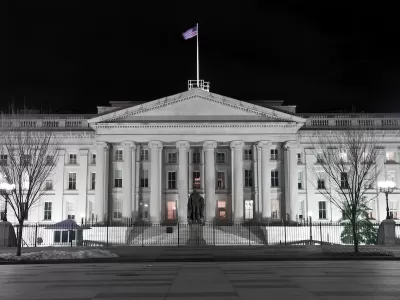
The sweeping and immediate impacts of the election dominate much of the news in January, with executive orders already affecting infrastructure funding, clean energy projects, housing programs, and transportation grants. Our top story documents the effects of last year’s Grants Pass v. Johnson Supreme Court ruling in Nevada, where lawmakers now feel empowered to enact harsher policies against unhoused people. Other top stories focused on how the Safe System approach to road design can improve traffic safety, the potential of small supermarkets to serve as neighborhood anchors, and how urban design and architecture affect the human psyche.
The full list of January’s most-read stories:
1. Nevada Cities Pass Punitive Anti-Homeless Laws
State legislators rejected a proposed bill that would have enshrined a “Homeless Person’s Bill of Rights” in state law, while multiple jurisdictions passed harsher laws against camping in public space.
2. How the Trump Presidency Could Impact Urban Planning
Changes in federal policy and funding could have major effects on housing, transportation, and infrastructure around the country.
3. How Smaller Supermarkets Could Transform American Communities
Small-scale neighborhood stores have the power to boost local economic development and promote community.
4. National Housing Group Criticizes Executive Orders
According to the National Low Income Housing Coalition (NLIHC), the actions, if implemented, “would make it harder for our nation to ensure that everyone has access to an affordable, accessible place to call home.”
5. Research Links Urban Design and Human Happiness
How the study of “neuroarchitecture” is making new revelations about the links between architecture, public space design, and human emotions.
6. Save Lives on Our Roads Using the Safe System Approach
How centering a strategy that acknowledges and accounts for human error can make roads safer for all users.
7. Executive Order Pauses Infrastructure, Clean Energy Funds
In the early days of the administration, President Trump issued an order freezing federal funding disbursements, putting infrastructure and energy projects around the country into jeopardy.
A roundup of key zoning stories from last year that tackled parking minimums, state preemption, modular housing, and more.
9. Midburbs: A New Definition of Suburbs
Walkable, compact communities connected by transit to larger cities aren’t suburbs; they’re something else entirely.
10. San Diego Housing Assistance, Homelessness Programs Facing Major Cuts
Over a dozen programs that provide supportive housing and other services will see drastically reduced budgets as federal and other outside funding sources diminish.

September Must-Reads: Top 10 Articles From Last Month
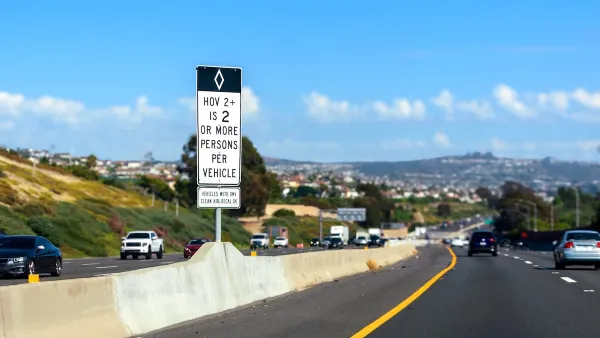
EV drivers can no longer use carpool lanes alone, Bay Area transit is saved — for now — by a $750 million loan, and a Florida commuter rail line loses its state subsidy, jeopardizing its future.
As Housing Crisis Continues, Cities Take New Approaches
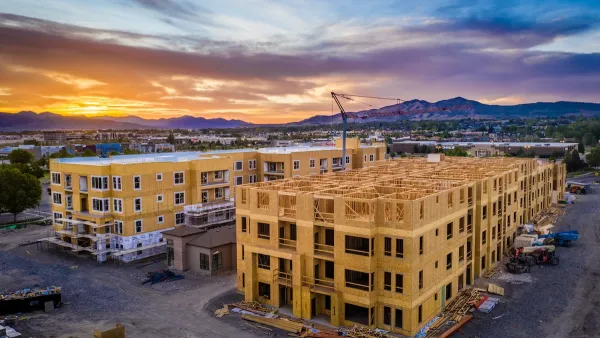
How U.S. cities are seeking to diversify their funding sources for housing assistance programs and eliminate barriers to housing construction.

National Housing Group Criticizes Executive Orders
The National Low Income Housing Coalition issued a statement charging that Trump’s executive orders would worsen the housing crisis.

Planetizen Federal Action Tracker
A weekly monitor of how Trump’s orders and actions are impacting planners and planning in America.

The state-sanctioned urbicide of Austin
People don’t kill cities. Freeways do.

US to reduce Colorado River water deliveries to Mexico
A new Colorado Treaty amendment reduces Mexico’s Colorado River water allocation by 250,000 acre feet.

5 New England states march closer to 800 megawatt wind energy project
Securing federal approval for the project may be complicated under the Trump administration, which has historically been hostile towards domestic wind power.

Baltimore to break ground on $50 million Transit Priority Project
The project will bring faster bus trips, safer streets and better bike connections to Baltimore.

Airbnb launches $250 million 'last-dollar financing' housing accelerator, makes first investment in Austin
The company will put $6.4 million towards affordable housing development in Texas’ capital.

FREE Course: Walkable City 1: Why Walkability?
After describing his path towards focusing on walkability as the essence of good planning, Jeff Speck marches through his five principal reasons for making more walkable places.
Reinventing Malls: Planning Alchemy—Turning Gray Fields Into Gold
The course focuses on the opportunities and imperatives that shape reinvention of mall sites.

Eagle County Government
Harvard University Graduate School of Design
Nashville Planning Department
The Architects Foundation
University of Cincinnati Online
The Pocatello Development Authority
The Urban Renewal Agency of the City of Pocatello
Journal of the American Planning Association

