British cities report 9% fewer car trips per person and a 5% decline in distance traveled by car. That's because fewer young people are deciding to learn how to drive, says Prof. Phil Goodwin of the University of West of England.


10% fewer young adults in Britain today have gotten a driver's license than in 1992, says Goodwin. Cost is most likely a factor, as gas and insurance have increased in price. Goodwin and Lynn Sloman, director of Transport for Quality of Life, are tracking what they're calling "peak car."
From the Independent (U.K.):
""If the future is going to be on a different trajectory to the path predicted by the Department for Transport, then that has a very big impact on what types of infrastructure are invested in," says Sloman. Over the next few years, Sloman, Goodwin and the Institute for Public Policy Research will be poring over National Travel Survey data in order to "dissect the peak"."
Thanks to Jeffrey Riecke
Read the full story: Is This the End of the Car?
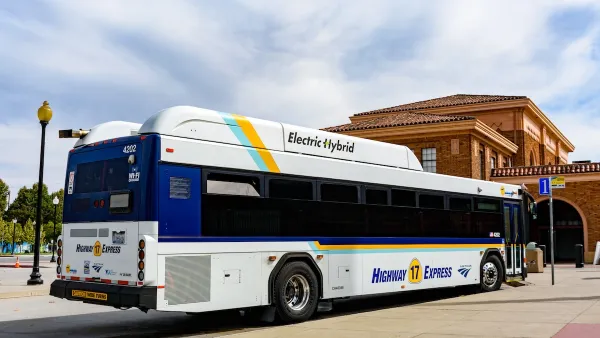
Beyond Congestion Pricing: Strategies for Revolutionizing Urban Mobility
How cities are leveraging data and technology to improve their transportation networks and reduce traffic.
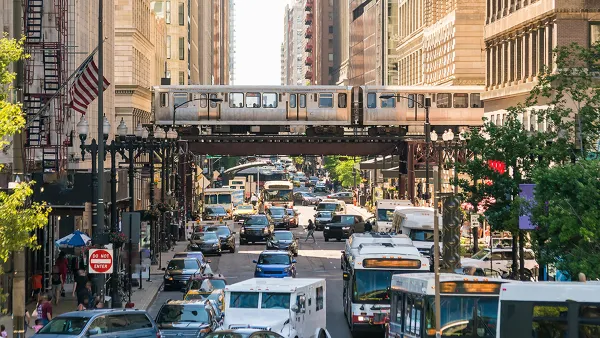
Planning for Congestion Relief
The third and final installment of Planetizen's examination of the role of the planning profession in both perpetuating and solving traffic congestion.
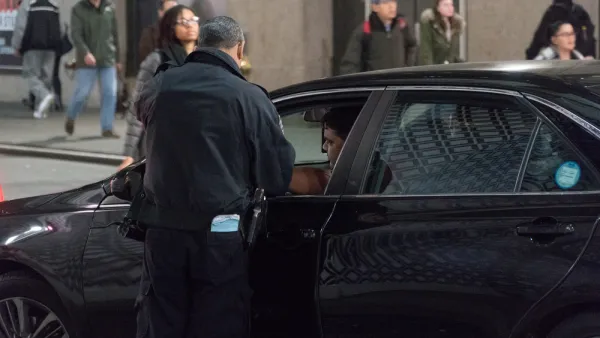
Investment in Public Transit Could Reduce the Need for Police Traffic Enforcement
In Nick Demarsh and Rick Banks' opinion, defunding the police requires cities to reconsider car culture.

Planetizen Federal Action Tracker
A weekly monitor of how Trump’s orders and actions are impacting planners and planning in America.

California plans to bury El Niño’s downpour
If the state plays its cards right, it may be able to store a billion acre-feet of El Niño’s water in aquifers.

Desperate measures: Advocates weigh draining Lake Powell to fill Colorado River
Draining the reservoir could reduce evaporation losses by a couple hundred thousand acre-feet.

Los Angeles just elected an urban planner as its mayor
Transportation analysts are optimistic that Raman will be more aggressive in addressing transit issues than Bass.

Mamdani’s pied-à-terre tax survives legal challenge
A panel of judges found that the plaintiffs failed to demonstrate injury as a result of New York City's implementation of the tax.

Eastern Nebraska is running out of electricity
Data centers and electrification are straining eastern Nebraska’s grid, throttling economic development.

FREE Course: Walkable City 1: Why Walkability?
After describing his path towards focusing on walkability as the essence of good planning, Jeff Speck marches through his five principal reasons for making more walkable places.
Reinventing Malls: Planning Alchemy—Turning Gray Fields Into Gold
The course focuses on the opportunities and imperatives that shape reinvention of mall sites.

City of Rosemead
Rutgers University, Edward J. Bloustein School of Planning and Public Policy
One Hundred Miles
University of Michigan School for Environment and Sustainability (SEAS)
Hunter College, City University of New York (CUNY)
The Architects Foundation
City of Cambridge
Montrose County
The Pocatello Development Authority