A federal appeals court upheld a federal district court ruling that the Metropolitan Transportation Commission, the Bay Area's transportation planning and funding agency, does not discriminate against minorities in the way it funds buses and trains


The court ruled on Feb. 16 that the suit by brought by the East Bay's AC Transit riders lacked "evidence of racial disparities - much less discrimination - in the Metropolitan Transportation Commission's selection of projects to receive funding."
The basis of the suit was the bus riders' claim that "the commission's per-passenger funding for AC Transit was less than half the amount it provided for BART and less than one-fourth the subsidy for Caltrain."
The appeals court noted that U.S. Magistrate Elizabeth Laporte "should have dismissed the suit earlier (in March 2009) because overall ridership figures don't reflect the communities served by projects that the commission funded."
Ironically, the court pointed to high-priced rail projects like S.F.'s Central Subway and the Fremont-San Jose Bart extension that litigants questioned to show that they would help minority transit users.
From MTC Press Release: "We are pleased with this victory and happy that after nearly six years of litigation we can finally put this matter behind us," said (MTC) Commission Chair Scott Haggerty, who also serves as an Alameda County Supervisor. "MTC has been forced to spend millions of scarce public dollars defending itself from a misguided lawsuit at a time when there is an urgent need to stabilize and improve all Bay Area transit systems."
Read the full story: Court: No racial bias in Bay Area transit funding
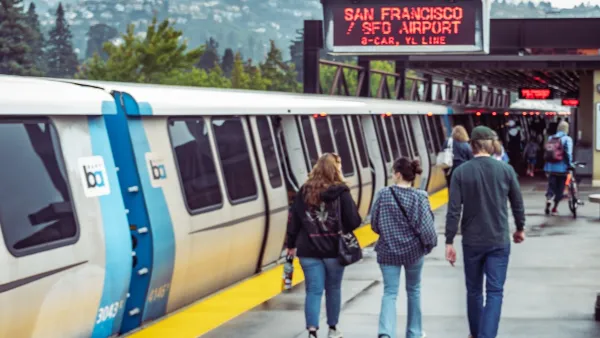
Bay area voters pass ‘crucial lifeline’ for transit
Proposition RTM, which will fund Bay Area transit, has approval from 61% of voters as of 9:45 p.m. on Nov. 3.

Caltrain may slash over one-third of its stations
If Bay Area voters reject two transit tax measures, Caltrain, BART and AC Transit will see steep service cuts.
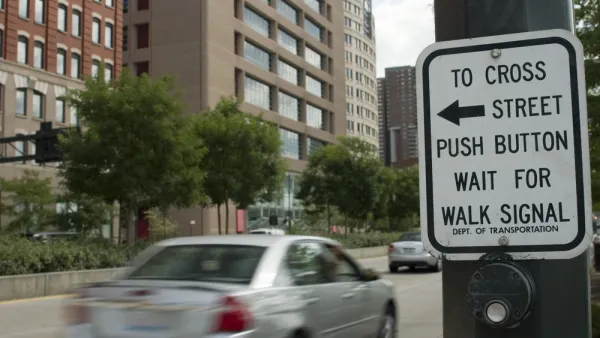
'Beg Buttons' Quietly Appearing at East Bay Crosswalks
Critics of pedestrian crosswalk buttons say the devices, meant to help improve bus speeds, give pedestrians the 'absolute lowest priority' on city streets.

Planetizen Federal Action Tracker
A weekly monitor of how Trump’s orders and actions are impacting planners and planning in America.

California plans to bury El Niño’s downpour
If the state plays its cards right, it may be able to store a billion acre-feet of El Niño’s water in aquifers.

Desperate measures: Advocates weigh draining Lake Powell to fill Colorado River
Draining the reservoir could reduce evaporation losses by a couple hundred thousand acre-feet.

Housing is the top priority of Seattle’s sole new councilmember
Jenks campaigned on building 1,000 new units of affordable housing.

New tax cuts may slash $1.5 billion in funding for Miami transit, public parks
Amendment 3 will save Miami-Dade homeowners $2,700 in 2028.

Arizona, Wisconsin, Pennsylvania hope to finally advance climate goals post-midterms
The three states have spent years under Republican or divided control.

FREE Course: Walkable City 1: Why Walkability?
After describing his path towards focusing on walkability as the essence of good planning, Jeff Speck marches through his five principal reasons for making more walkable places.
Reinventing Malls: Planning Alchemy—Turning Gray Fields Into Gold
The course focuses on the opportunities and imperatives that shape reinvention of mall sites.

City of Rosemead
Rutgers University, Edward J. Bloustein School of Planning and Public Policy
One Hundred Miles
University of Michigan School for Environment and Sustainability (SEAS)
Hunter College, City University of New York (CUNY)
The Architects Foundation
City of Cambridge
Montrose County
The Pocatello Development Authority