Tensions have arisen between the Obama administration and Oberstar, who is anxious to get working on the transportation reauthorization bill. DOT Secretary LaHood is calling for an extension of the 2005 highway bill instead.


Could the problem be that the $500 billion that Oberstar has in mind would require an increase in the gas tax?
"Hours after (Oberstar) began circulating his plan last spring ...Transportation Secretary Ray LaHood simply called for an extension of the 2005 highway bill - effectively cutting off long-term expansion plans.
From Politico: "That was the beginning of a less-than-good working relationship," said John Horsley, executive director of the American Association of State Highway and Transportation Officials.
The relationship soured from there, as a frustrated Oberstar slammed White House economic advisers..."
"I don't know why they [the White House] don't want to move forward" on a new highway bill, Oberstar's top lieutenant, Rep. Peter DeFazio (D-Ore.), lamented in a recent interview."
Thanks to Ron McClinden
Read the full story: James Oberstar stymied on transit bill

Do You Have $600 Billion For A New Transportation Bill?
DOT Secretary Ray LaHood is taped while speaking at a community meeting in Manhattan's Chinatown expressing enthusiasm for 'tolling', though it's not clear what roads or bridges would be tolled, which was clarified in a subsequent email.
The Future of National Surface Transportation Policy
That was the title the U.S. Senate Committee on Commerce, Science & Transportation chose for a hearing on April 28. Panelists: Ray LaHood, DOT Secretary; Steve Heminger, MTC; Jame Corless, T4America; Ann Canby, STPP, and Ned Holmes, TX Transp. Comm.
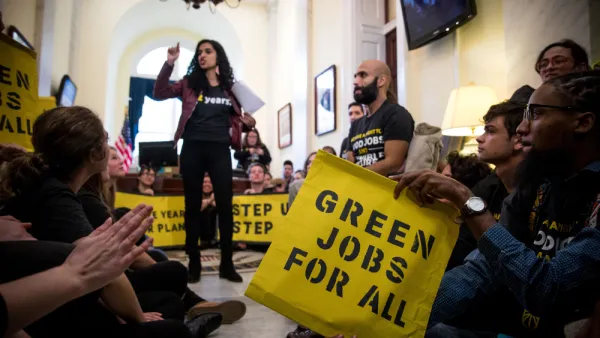
Democrats Reveal a $760 Billion Transportation Framework
Congressional Democrats hope transportation infrastructure can be a winning political point during a campaign year following the impeachment of President Donald Trump.

Amtrak, CN end decades-long dispute with eight-year agreement
The new operating agreement establishes an updated framework for the companies to work together, including processes to resolve disputes.

Judges permit Denver to divert 77,000 acre feet from the Colorado River for reservoir expansion
Overuse and climate change have caused the Colorado River’s water levels to plummet.
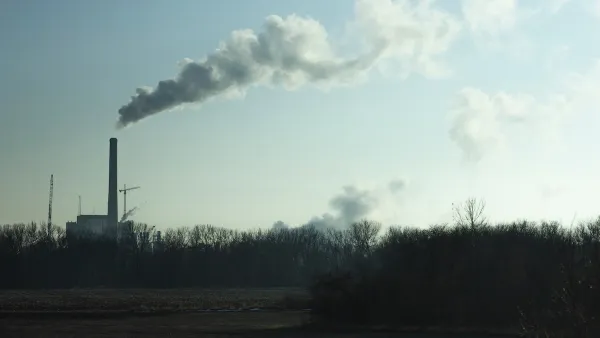
Nation's most wind-powered state turns to coal as data centers increase energy demand
For the first time in decades, Iowa has increased its generation of coal power.

Boston has spent millions making the Green Line more accessible — and there’s no end in sight
While the city has invested millions into expanding and adding platforms to the Green Line to make it more accessible, new train cars set to arrive next year will be too tall for disabled passengers to board without raising the current platforms.

Idaho may see an 18% drop in federal surface transit funding — the largest estimated cut in the US
Transit systems in rural communities are much more reliant on federal funding to provide their services.

How ‘post-disaster gentrification’ alters neighborhoods after natural calamities
After hurricanes, fires or other calamities, the original residents of a community are often replaced by younger, wealthier residents.

FREE Course: Walkable City 1: Why Walkability?
After describing his path towards focusing on walkability as the essence of good planning, Jeff Speck marches through his five principal reasons for making more walkable places.
Reinventing Malls: Planning Alchemy—Turning Gray Fields Into Gold
The course focuses on the opportunities and imperatives that shape reinvention of mall sites.

City of Wisconsin Rapids
Harvard University Graduate School of Design
KFH Group Inc.
The Architects Foundation
University of Cincinnati Online
The Pocatello Development Authority
The Urban Renewal Agency of the City of Pocatello