How the "road tribes" — the impenetrable scrum of bureaucrats, politicians and industry that benefit from an ever-expanding program of road construction — are literally paving the road to national ruin in Japan.


"The results have been a disaster. Certainly, Japan has a lot of roads: four to five times the number of any other Group of Seven country when measured by kilometers of road to usable land. The trouble is, a lot of these roads are in places where they are not needed. The country has an impressive network of toll roads that will never be profitable. It has expressways that connect industrial parks to ports and airports that industries do not want to use, and monumental bridges that suck people and money out of rural towns rather than reviving them. Yet despite decades worth of road and other infrastructure projects, projects that people actually need remain undone: In 2007 the government identified 110,000 km of roads where there was a high risk of accidents because, for example, children used them to walk to school (including 40,000 km of streets lacking separated sidewalks!). Adding sidewalks to streets used by small children simply doesn't fit the agenda of the road tribes as well as a four-lane expressway to nowhere does."
Read the full story: Japan's many roads to ruin

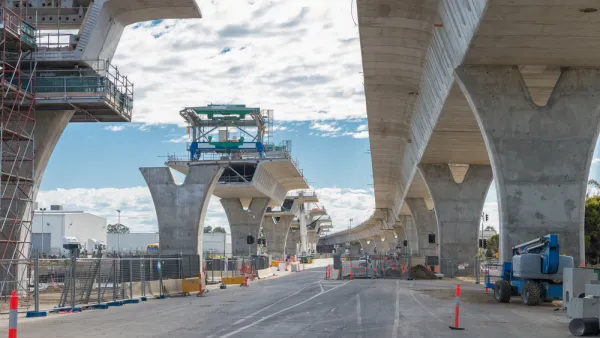
Highway Construction Costs Grow for 11th Straight Quarter
FHWA data shows a 23.9 percent rise in costs in the last year.
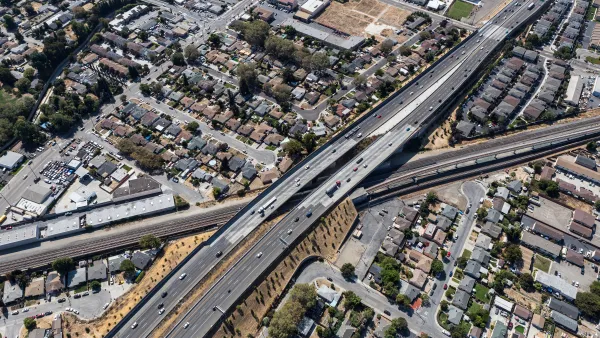
The Limitations of ‘Reconnecting Communities’
The Biden administration has pledged to correct the damage imposed on communities by highways and infrastructure, but many projects are only committing to minor improvements, not transformative changes.
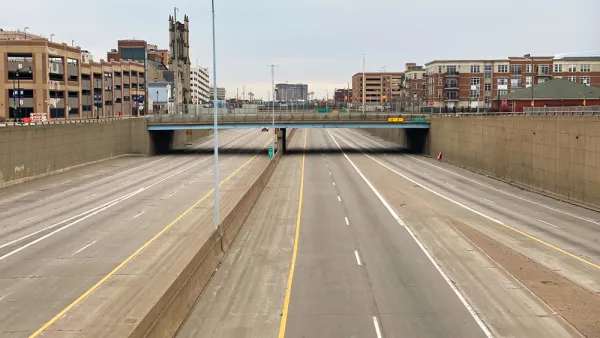
How Policymakers Are Grappling With the Racist Legacy of Urban Freeways
In Michigan, the state's Department of Transportation is looking for ways to mitigate the damage caused by decades of urban renewal policies and reconnect neighborhoods cut off from amenities and opportunities by highway projects.

Planetizen Federal Action Tracker
A weekly monitor of how Trump’s orders and actions are impacting planners and planning in America.

‘Going backwards:’ Baltimore mayor, students rally against state's transit funding plan
Maryland's proposed six-year plan provides no funding for Baltimore’s BMORE bus program and reduces its road maintenance funding.
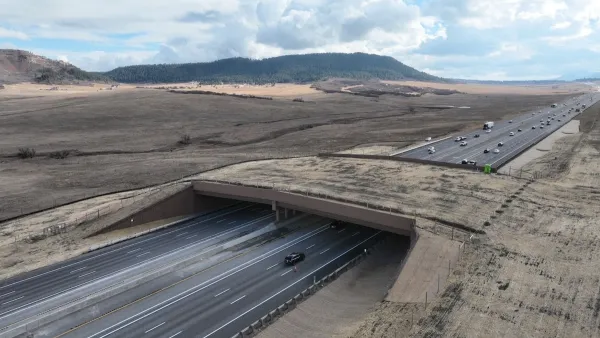
Record-breaking wildlife overpass in Colorado brings 91% reduction in animal collisions
Prior to the overpass, vehicles were hitting one deer per day on Colorado’s Interstate 25.

Mamdani sent nearly 6,000 pied-à-terre tax warnings to homes that didn’t qualify
A judge has ordered the administration to cancel thousands of pied-à-terre tax notices after it sent 35% of them erroneously.

Detroit to transform waterfront with $2.2 billion investment
Developers will convert about 18 acres of unused parking lot space into civic spaces.

‘Going backwards:’ Baltimore mayor, students rally against state's transit funding plan
Maryland's proposed six-year plan provides no funding for Baltimore’s BMORE bus program and reduces its road maintenance funding.

FREE Course: Walkable City 1: Why Walkability?
After describing his path towards focusing on walkability as the essence of good planning, Jeff Speck marches through his five principal reasons for making more walkable places.
Reinventing Malls: Planning Alchemy—Turning Gray Fields Into Gold
The course focuses on the opportunities and imperatives that shape reinvention of mall sites.

City of Thousand Oaks
City of Wisconsin Rapids
Harvard University Graduate School of Design
The Architects Foundation
University of Cincinnati Online
Northern Illinois Transit Authority (NITA)
The Pocatello Development Authority
The Urban Renewal Agency of the City of Pocatello