Auto-centric Growth
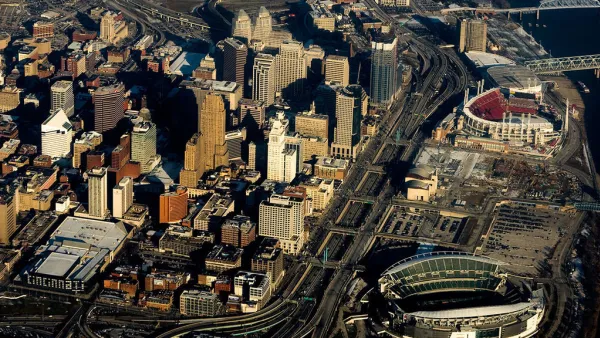
The Invisible Hand That Designed Your City
Years of subtle changes to land use and zoning have slowly become the invisible forces that shape our behavior, whether we realize it or not.
Feds Coming Around to Level of Service Reform
Streetsblog USA notes that the federal government is following the lead of California in awakening to the negative effects of Level of Service.
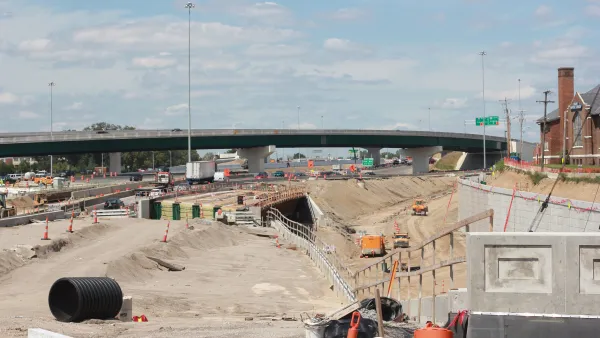
Denver's I-70 Expansion Undercuts Alternatives
To fund a wider I-70 on its route through Denver, the regional planning commission set aside $50 million in federal funds before considering other projects.
Could General Stores Reduce Car Trips in The Suburbs?
Belinda Lanks details architect Frank Ruchala's scheme to bring general stores back into America's residential areas. He believes "a general store could work just as well in a (suburban) subdivision as it did in small villages a hundred years ago."
Urban Accessibility in India
Infrastructure for pedestrians and cyclists in Indian cities is glaringly absent, says Prof. Sudhir Chella Rajan. India needs to decide between an auto-oriented future like the U.S. or a European, pedestrian model.
Accessibility Vs. Mobility Redux
I’m going to riff off a recent Interchange Blog post by Michael Lewyn on the relationship between mobility and accessibility. Given the positive comments from the planning community to Michael’s post, a little engagement may be necessary for both clarity as well as fully understanding the implications of reading too much into the accessibility versus mobility debate.
How the Road Construction Industry is Destroying Japan
How the "road tribes" — the impenetrable scrum of bureaucrats, politicians and industry that benefit from an ever-expanding program of road construction — are literally paving the road to national ruin in Japan.
Challenges Ahead for Tyson's Corner To Become Livable City
Tyson's Corner, an auto-oriented suburb of Washington, D.C., reveals ambitious plans to become a dense, urban community. Officials are bracing themselves for tough opposition from locals. The Washington Post story includes a video report.

FREE Course: Walkable City 1: Why Walkability?
After describing his path towards focusing on walkability as the essence of good planning, Jeff Speck marches through his five principal reasons for making more walkable places.
Reinventing Malls: Planning Alchemy—Turning Gray Fields Into Gold
The course focuses on the opportunities and imperatives that shape reinvention of mall sites.

City of Rosemead
Rutgers University, Edward J. Bloustein School of Planning and Public Policy
One Hundred Miles
University of Michigan School for Environment and Sustainability (SEAS)
Hunter College, City University of New York (CUNY)
The Architects Foundation
City of Cambridge
Montrose County
The Pocatello Development Authority









